-
E-mail
yyang@industrialphysics.com
-
Phone
15821974398
-
Address
Room 803, Building 1, Lane 88, Shengrong Road, Pudong New Area, Shanghai
Industrial Physics
Accuracy Optimization and Error Analysis of Water Vapor Transmittance Analyzer
Date: 2025-10-10Read: 0
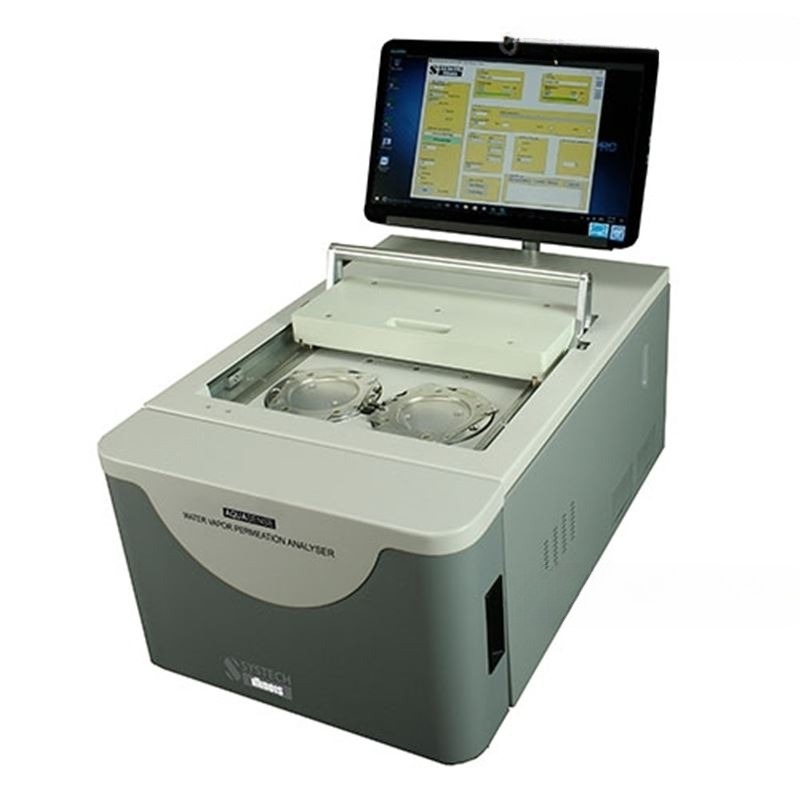
The water vapor transmission rate analyzer is a device used to measure the water vapor transmission performance of materials, widely used in packaging materials, films, coatings, and various food and drug packaging. With the development of materials science and packaging industry, accuracy and reliability have become key research issues. Precision optimization and error analysis are the core contents to improve performance and ensure the accuracy of test data.
1、 Precision optimization method
to improveWater vapor permeability analyzerThe accuracy can be optimized from the following aspects:
1. Optimization of temperature and humidity control system: In order to eliminate the impact of environmental fluctuations on test results, optimizing the temperature and humidity control system is crucial. By using high-precision temperature and humidity sensors, real-time monitoring of temperature and humidity changes in the testing environment is achieved, and the environment is maintained stable through an automatic adjustment system. In addition, an airflow control system can be added to the instrument to reduce the interference of air on the test and improve the accuracy of the test.
2. Instrument calibration and standardization: Regular calibration is an important means to improve measurement accuracy. By comparing with standard materials with known transmittance, ensure that the test results are consistent with the standard data. Standardized operating procedures and testing conditions can also reduce human errors, ensuring the reproducibility and reliability of results.
3. Sample processing and preparation: In order to improve the accuracy of testing, strict processing and preparation of the test material should be carried out before testing. Including surface cleaning, uniformity inspection, and precise measurement of sample thickness. In the selection of materials, samples with surface defects or uneven structures should be avoided.
4. Data processing and analysis: In the calculation process of water vapor permeability, the methods of data processing and analysis also need to be optimized. By using more advanced algorithms to process test data, eliminating noise interference, and improving data accuracy and stability. Meanwhile, by measuring multiple times and taking the average, measurement errors can be further reduced.
2、 Error analysis
The sources of error in water vapor transmission rate analyzers can be divided into two categories: systematic error and random error.
1. Systematic error
Systematic errors typically stem from design flaws in instruments or inadequate control of environmental conditions. For example, inaccurate calibration of temperature and humidity sensors, deviation of flow meters, sensor aging, etc., can all lead to continuous deviation of test results. Therefore, regular calibration of instruments, checking the stability of the system, and timely replacement of aging components are all effective methods to eliminate system errors.
2. Random error
Random errors mainly come from environmental changes, microscopic differences in materials, and uncertainties in operations. Although random errors cannot be eliminated, their impact can be reduced by increasing the number of tests, optimizing the operation process, and improving sample consistency.
The accuracy optimization and error analysis of water vapor transmission rate analyzer are the core to ensure the reliability and accuracy of test data. By controlling temperature and humidity, optimizing instrument design, strictly following operating procedures, and strengthening sample preparation, precision can be effectively improved. Meanwhile, regular calibration and error analysis are also important means to ensure the quality of testing.
Next Article: Application of Headspace Gas Analyzer in Food Packaging