-
E-mail
3330545829@qq.com
-
Phone
19907484062
-
Address
No. 32 Yulian Road, Xuexue Street, Yuelu District, Changsha City, Hunan Province, China
Hunan Wangxuan Technology Co., Ltd
Unique Proceq Schmidt Rebound Tester
Date: 2025-07-28Read: 0
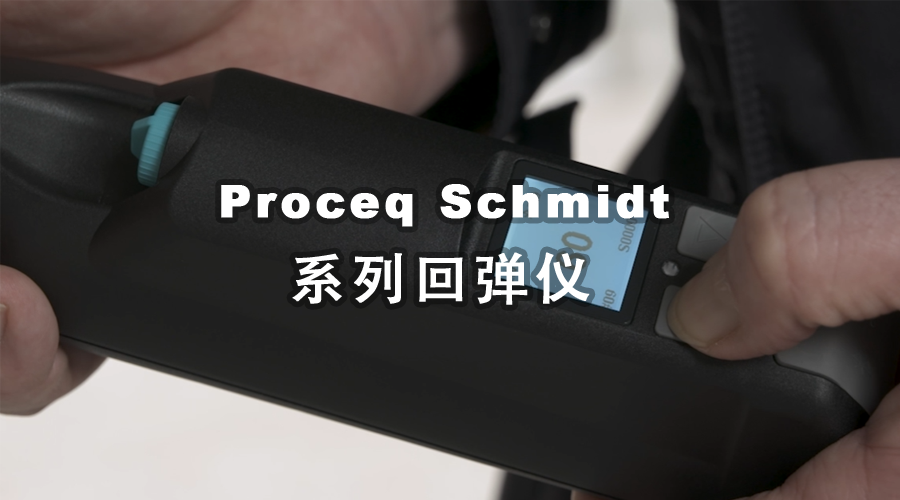
In the field of non-destructive strength testing of concrete, Schmidt Hammer is one of the representative equipment. However, there are various types of rebound testers on the market, each with its own performance characteristics. This article will compare and analyze the key performance differences between Schmidt rebound tester and other rebound testers, helping engineering and technical personnel choose more suitable instruments based on specific project conditions to optimize the accuracy of concrete strength evaluation.
The rebound method, as a mature non-destructive testing technique, is widely used in on-site evaluation of the compressive strength of concrete. Although rebound testers are commonly used tools for such evaluations, there may be significant differences in performance between different models and brands of instruments.
In the field of rebound method, Proceq's Schmidt rebound tester has pioneering significance. As the inventor of this technology, Proceq's Original Schmidt Hammer rebound tester is widely recognized and often regarded as a reference benchmark in the industry due to its long-term validated accuracy, reliability, and standardized design.

Although the initial purchase cost of Schmidt rebound tester is relatively high, it is still a very cost-effective choice, and we can refer to its significant market competitiveness in comprehensive life cycle cost.

Industry practice and relevant standards (such as ISO 7500-1) generally recommend that rebound testers need to be calibrated or maintained after approximately 2000 impacts. The Schmidt OS8000 excels in this key indicator: its excellent structural durability and design reliability have been proven in rigorous testing to significantly extend maintenance intervals and reduce calibration frequency.
Directly translate its durability into significant cost advantages:
▶ Reduce maintenance costs:Reduce calibration and service costs.
▶ Reduce downtime losses:To avoid on-site work delays caused by equipment inspection and calibration.
▶ Avoiding the risk of repeated testing:Effectively prevent additional costs incurred due to rework and retesting caused by instrument deviation.
In addition, compared to traditional mechanical rebound testers, Proceq's Schmidt rebound tester brings a qualitative leap in work efficiency:
▶ Efficient data collection and management:The fully digital operation mode saves testing and recording time.
▶ Automated report generation:Quickly generate standardized test reports to reduce the burden of manual organization.
The core advantage lies in its powerful software ecosystem:
▶ Instant data backup:Ensure the security of test data without loss.
▶ Cloud collaboration and traceability:Support team members to remotely access data, achieving project collaboration and complete data traceability.
▶ Workflow optimization:Seamless integration of data processing, report generation, and storage processes significantly improves overall work efficiency and project management level.
Following the requirements of international mainstream standards such as ASTM C805 and ISO 7500-1, the rebound tester must undergo regular calibration and validation, which is the cornerstone of ensuring the reliability and compliance of test results. The Proceq Schmidt Rebound Tester and its accompanying digital ecosystem provide excellent solutions in this regard:
Intelligent calibration tracking and reminder:
▶ The instrument is equipped with an impact counter to accurately record the intensity of use.
▶ The supporting application actively monitors the calibration status and automatically issues warning notifications when approaching or exceeding the standard calibration cycle (such as based on impact frequency or time interval), effectively preventing equipment from "exceeding its service life".
Standardized and automated verification process:
▶ The application integrates standardized verification programs that meet standard requirements.
▶ Users can easily complete key performance verification (such as pointer friction, impact energy verification, etc.) within the application.
▶ The verification process is automatically executed and the results are recorded, generating electronic verification reports that meet the standards in real-time. These reports can be directly attached to the final test report, improving process efficiency and document integrity.
Three intelligent functions to enhance testing efficiency and accuracy:
The digital platform standard setting of Schmidt rebound tester is higher than basic compliance management, which further empowers the testing process:
▶ Automatic calculation and validity check: The rebound value (R value) is automatically calculated in real-time, and the validity of the test series is automatically checked based on set rules (such as outlier removal).
▶ Customized strength estimation: supports user input or selection of customized material related curves to achieve strength estimation that is more in line with actual material characteristics.
▶ Structured testing management: Provide testing area/component positioning function and clearly record testing locations.
▶ Full angle adaptation: Integrated automatic impact angle compensation function ensures comparability of results under different testing angles.
▶ Diversified operation modes: Provide multiple testing modes (such as single, continuous, peak hold, etc.) to adapt to different on-site needs.
By integrating hardware reliability, standard compliance verification, and powerful digital capabilities, Proceq Schmidt rebound tester provides systematic support for strict adherence to standards, ensuring data reliability, and improving testing efficiency.

Another major advantage of Proceq Schmidt Rebound Tester is its accompanying Schmidt OS application. This software, designed specifically for iOS and Android platforms, digitizes, standardizes, and intelligentizes the complex concrete and rock strength testing process, significantly improving on-site work efficiency and data management capabilities
Simplify testing and improve accuracy:
▶ The intuitive interface guides users to complete the testing process and reduces the threshold for operation.
▶ Support loading customized strength curves to ensure that test results are more in line with specific material characteristics and improve strength estimation accuracy.
Efficient report generation and management:
▶ One click generation of standardized PDF test reports, including all key data and charts, simplifies the report production process, and facilitates instant sharing and archiving.
▶ Integrated structured logging function allows testers to record additional information such as on-site observations, component locations, photos, etc. at any time, which can be automatically integrated into the final report, enhancing the completeness and traceability of the report.
Three seamless data streams and cloud collaboration:
▶ The application ensures stable and real-time transmission of test data between the instrument and mobile devices.
▶ Seamless cloud synchronization is achieved through the Workspace intelligent detection platform.
▶ Secure centralized storage: All test data and reports are automatically backed up to the cloud.
▶ Team collaboration and sharing: Support project team members to access data in real-time and collaborate on task processing.
▶ Project centralized management: Provide a unified platform to manage multiple projects and test data.
The Schmidt OS application is not only an operating interface, but also a core hub connecting on-site testing, data processing, team collaboration, and project management. Together with the Schmidt rebound tester hardware, it forms a complete end-to-end strength assessment solution.

THE END