-
E-mail
2790500667@qq.com
-
Phone
13308491826
-
Address
3rd and 4th floors, Building B, Qingshan Road International Cybersecurity Industrial Park (Military Civilian Integration Industrial Park), High tech Development Zone, Changsha City, Hunan Province
Hunan Kotianjian Optoelectronic Technology Co., Ltd
New perspective on fault diagnosis: the key role of industrial grade high-speed cameras in mechanical vibration analysis
Date: 2025-11-17Read: 40
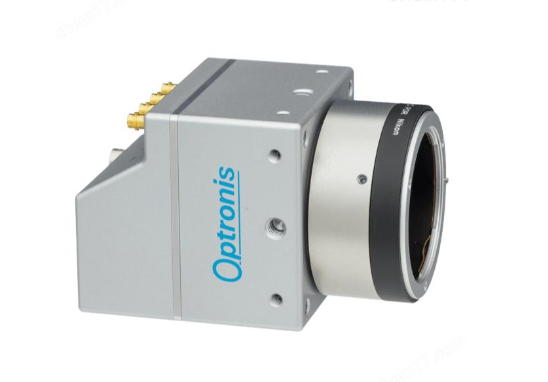
Mechanical vibration is one of the common causes of equipment failure. Although traditional vibration analysis methods can provide certain diagnostic information, they still have limitations in some complex situations. In recent years, the emergence of industrial grade high-speed cameras has brought a new perspective to mechanical vibration analysis. It can capture the details of mechanical motion at high frame rates, providing more intuitive and comprehensive data support for fault diagnosis.
1、 Capture mechanical motion details and provide intuitive diagnostic basis
The core advantage of industrial grade high-speed cameras is their ability to capture every detail of mechanical motion at high frame rates. In mechanical vibration analysis, traditional methods often rely on data collected by sensors. Although these data can reflect the frequency and amplitude of vibration, they are difficult to intuitively present the actual state of mechanical motion. High speed cameras, on the other hand, can clearly display the displacement, deformation, and interaction of mechanical components during vibration through high frame rate video recording, providing technicians with intuitive visual diagnostic basis.
For example, in large rotating equipment such as fans or motors, high-speed cameras can capture the dynamic behavior of blades or rotors, and technicians can observe whether there are imbalances, looseness, or other abnormal phenomena through video playback. This intuitive visual information can help technicians quickly locate problems, reducing the time and cost of fault diagnosis.
2、 Multi dimensional analysis to improve diagnostic accuracy
In addition to providing intuitive visual information, industrial grade cameras can also be combined with traditional vibration sensors to achieve multi-dimensional fault diagnosis. By synchronously collecting video data and vibration data, technicians can analyze vibration signals while observing the actual motion status of mechanical components, thereby more accurately determining the cause of faults.
For example, when analyzing the vibration problem of a gearbox, a high-speed camera can capture the meshing process of the gears, and technicians can combine vibration data and video information to determine whether there is gear wear, excessive backlash, or other mechanical faults. This multidimensional analysis method not only improves the accuracy of diagnosis, but also avoids misjudgments caused by a single data source, ensuring the stable operation of the equipment.
3、 Dynamic monitoring, early warning of potential faults
The real-time monitoring function of industrial grade high-speed cameras enables them to dynamically capture changes in mechanical vibrations during equipment operation. By setting reasonable monitoring parameters, technicians can observe the motion status of mechanical components in real time and detect potential signs of faults in a timely manner. This dynamic monitoring capability provides strong support for preventive maintenance of equipment, effectively reducing the occurrence of sudden failures and lowering equipment downtime.
For example, during the operation of high-precision machine tools, high-speed cameras can monitor the vibration of cutting tools in real time. Once abnormal tool vibration is detected, technicians can adjust machining parameters or replace the tool in a timely manner to avoid machining quality problems and equipment failures caused by tool damage. This early warning function not only improves the operational efficiency of the equipment, but also extends its service life.
In summary, industrial grade high-speed cameras play a crucial role in mechanical vibration analysis. It provides technicians with intuitive diagnostic basis through high frame rate video capture; By combining multidimensional data analysis, the accuracy of fault diagnosis has been improved; Through dynamic monitoring, early warning of potential faults has been achieved; And it also contributes to the development of industrial intelligence, providing strong support for the stable operation and efficient maintenance of equipment.