-
E-mail
2790500667@qq.com
-
Phone
13308491826
-
Address
3rd and 4th floors, Building B, Qingshan Road International Cybersecurity Industrial Park (Military Civilian Integration Industrial Park), High tech Development Zone, Changsha City, Hunan Province
Hunan Kotianjian Optoelectronic Technology Co., Ltd
Industrial grade high-speed camera: an instrument to enhance industrial production, integrating precise monitoring and analysis
Date: 2025-09-22Read: 44
In modern industrial production, production efficiency and product quality are key factors in enterprise competition. As a monitoring and analysis tool, industrial grade high-speed cameras provide precise visual support for industrial production, greatly improving production efficiency and product quality, and becoming a powerful "instrument" for industrial production.
1、 Visual Requirements in Industrial Production
In complex industrial production environments, many production processes require precise visual monitoring. Whether it is mechanical processing, electronic manufacturing, or automated assembly, real-time monitoring of every link in the production process is necessary to ensure smooth production processes and stable product quality. Traditional monitoring equipment often cannot meet the high-speed and high-precision production needs, and the emergence of industrial grade cameras provides effective technical means to solve this problem.
2、 Characteristics
It has the characteristics of high frame rate, high resolution, and high sensitivity, and can capture every tiny action and change in the production process. High frame rates enable cameras to record large amounts of image data in a short amount of time, thereby achieving clear capture of high-speed moving objects. High resolution ensures that the details of the image can be accurately recorded, facilitating subsequent analysis and processing. High sensitivity enables the camera to operate normally even in low light conditions and adapt to various complex production environments. These characteristics enable industrial grade cameras to meet the high requirements for visual monitoring in industrial production.
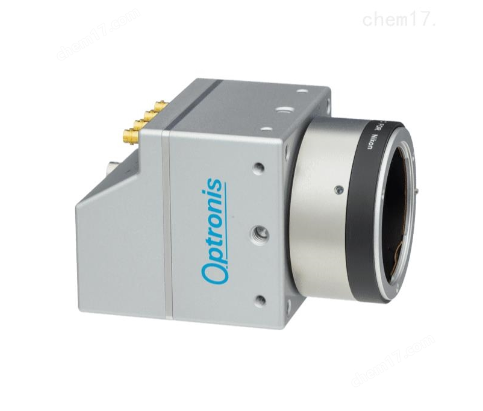
3、 Integration of precise monitoring and analysis
Industrial grade high-speed cameras can not only perform precise monitoring, but also be combined with analysis software to achieve the integration of monitoring and analysis. By integrating with machine vision systems, cameras can automatically identify and analyze various issues in the production process, such as product defects, equipment failures, etc., and issue timely alerts. This integrated monitoring and analysis system can greatly improve production efficiency, reduce manual intervention, and lower production costs. For example, in automobile manufacturing, industrial grade cameras can be used to detect the assembly accuracy of body parts, timely detect assembly errors, and ensure product quality. In electronic manufacturing, it can be used to detect the soldering quality of chips, timely detect soldering defects, and improve product reliability.
4、 Application in industrial production
It has been widely applied in multiple industrial fields. In mechanical manufacturing, it is used to monitor the machining process of machine tools, detect tool wear and machining errors in real time, and improve machining accuracy. In electronic manufacturing, it is used to detect the welding and assembly quality of electronic components, ensuring the performance and reliability of electronic products. In food processing, industrial grade cameras can be used to detect the packaging quality of food, ensuring its safety and hygiene. In the pharmaceutical industry, it is used to monitor the production process of drugs, ensuring their quality and compliance. In addition, industrial grade cameras can be used to monitor the movements of robots on automated assembly lines, improving assembly efficiency and accuracy.
5、 Instruments to enhance industrial production
As an important industrial "instrument", industrial grade high-speed cameras are not limited to monitoring and analysis. It can also provide support for optimizing the production process through data collection and analysis. By recording image data during the production process, enterprises can analyze bottleneck links in the production process, optimize production layout, and improve production efficiency. Meanwhile, by analyzing historical data, enterprises can predict equipment failures and quality issues, take maintenance measures in advance, reduce downtime, and lower production costs.
6、 Future prospects
With the continuous advancement of technology, industrial grade cameras will become more intelligent and efficient. Future industrial grade cameras will have stronger self-learning capabilities, able to automatically recognize and adapt to different production environments and tasks. Meanwhile, with the development of artificial intelligence and big data technology, industrial grade cameras will be able to provide more in-depth analysis and prediction functions, providing enterprises with more comprehensive production management solutions. In addition, the trend of integration and miniaturization of industrial grade high-speed cameras will also enable them to be applied in more industrial fields, promoting the intelligent and automated development of industrial production.
7、 Conclusion
As an industrial "instrument", industrial grade high-speed cameras provide precise monitoring and analysis support for industrial production. It can not only improve production efficiency and product quality, but also provide support for optimizing the production process through data collection and analysis.