-
E-mail
liufeng@hignal.com
-
Phone
18066728578
-
Address
No. 211 Fute North Road, China (Shanghai) Pilot Free Trade Zone
Higona (Shanghai) Technology Co., Ltd
Layout of sampling points for VOC online monitoring equipment: Analysis of environmental regulations for chemical industrial parks and printing workshops
Date: 2025-12-18Read: 0
Online monitoring of volatile organic compounds (VOCs) is the core link in air pollution prevention and control, and the scientific layout of sampling points directly determines the authenticity and representativeness of monitoring data. The complex pollution sources in the chemical industrial park and the closed working conditions of the printing workshop require differentiated requirements for the layout of sampling points. It is necessary to strictly follow standards such as HJ75 "Determination of Volatile Organic Compounds in Fixed Pollution Source Exhaust Gas Solid Phase Adsorption/Thermal Desorption Gas Chromatography Method" and HJ76 "Technical Specifications for Monitoring Volatile Organic Compounds in Fixed Pollution Source Exhaust Gas", and plan accurately based on the characteristics of the scene. Below are the deployment standards and practical skills for two typical scenarios to assist in compliance monitoring for enterprises.
The layout of VOC online monitoring sampling points in chemical industrial parks follows the principle of "full coverage+key focus", which is in line with the requirement of "equal emphasis on pollution source monitoring and regional monitoring" in HJ76. The sampling points for regional monitoring should be arranged according to the "grid layout method", and the grid spacing should be determined based on the area of the park: the time interval for areas ≤ 5km ² is 500-1000m, and the time interval for areas>5km ² can be expanded to 1000-2000m, ensuring coverage of the park boundary and the downwind direction area dominated by the wind. Key pollution source monitoring should be targeted at key nodes such as chemical plants, storage tank areas, and wastewater treatment stations. Sampling points for production plants should be set at a distance of 1.5 times the diameter of the exhaust pipe from the ground, and located in the uniform mixing section of the exhaust gas, avoiding positions such as bends and valves that are prone to vortex generation; A circular sampling point should be set up 1 meter above the sealing ring of the floating roof tank in the storage tank area. Each tank should have at least 2 sampling points with a spacing of no more than 30 meters. At the same time, it should meet the requirements of HJ75 for sampling pipelines, using inert materials (such as polytetrafluoroethylene) to avoid VOC adsorption loss. The sampling point should be at least 3 meters above the ground to prevent ground dust interference.
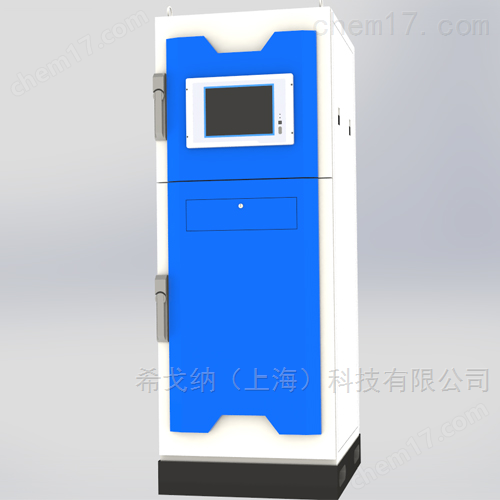
As a typical fixed pollution source, the sampling points in the printing workshop are arranged with "source control+process monitoring" as the core, strictly implementing the special specification of "confined space monitoring" in HJ76. Sampling points in the workshop should be arranged according to the principle of "pollution source dominance": sampling points should be set up at a distance of 1-2m and a height of 1.5-1.8m from the pollution source in areas with high VOC emissions such as ink mixing area, printing machine exhaust outlet, and drying device exhaust outlet. At least one point should be set up in each independent work unit; The overall monitoring of the workshop needs to be set up at central areas and exits to ensure monitoring coverage. For printing equipment using a closed gas hood, the sampling point should be located in the stable airflow section inside the hood, with a distance of not less than 3 times the diameter of the pipeline from the opening of the hood. If the air volume of the hood is ≥ 1000m ³/h, sampling points should be set up at both ends of the hood. In addition, the sampling points in the printing workshop should avoid areas disturbed by airflow such as air vents, doors and windows, and be no less than 0.5m away from the wall, in accordance with the requirements of HJ75 to reduce environmental interference.
The layout of sampling points for both types of scenarios must comply with general environmental standards, which is the foundation of data compliance. The site selection should avoid obstacles such as trees and buildings to ensure smooth sampling paths; The air inlet of the sampling device should face the direction of VOC diffusion, and the number of sampling points in the downwind direction of the dominant wind should be more than 20% higher than that in the upwind direction. In terms of monitoring parameter matching, chemical industrial parks need to focus on monitoring characteristic pollutants such as benzene, toluene, and xylene, and sampling points need to be equipped with multi-component detection modules; The printing workshop needs to focus on solvent components such as benzene and esters, and set the sampling flow rate to 50-100ml/min according to HJ75 requirements. At the same time, all sampling points must be labeled with information such as point number, monitoring factor, deployment date, etc., and the effectiveness of the points should be verified regularly. At least one on-site comparison test should be conducted every quarter.
The deployment under special working conditions needs to be flexibly adjusted: if there are high concentration VOC emission sources in the chemical industrial park, encrypted sampling points need to be added within 500m around them; If unorganized emission control measures are adopted in the printing workshop, a background control point should be set up 20 meters upwind outside the workshop. The layout plan of sampling points needs to be reported to the local ecological environment department for filing, and feasibility studies need to be conducted again when changing the location to ensure compliance with regulatory requirements.
The core of the sampling point layout for VOC online monitoring equipment is "standard landing+scene adaptation", with dual monitoring of heavy areas and sources in chemical industrial parks, and precise capture of heavy enclosed spaces in printing workshops. Enterprises need to use HJ75 and HJ76 standards as the basis for deployment, develop plans based on their own production characteristics, and if necessary, collaborate with professional organizations for on-site investigation and point optimization to ensure that monitoring data accurately reflects the actual situation of VOC emissions and provides reliable data support for pollution control.