-
E-mail
3169862401@qq.com
- Phone
-
Address
No. 58 Yangdong Road, Suzhou Industrial Park, Jiangsu Province
Havishan (Suzhou) Environmental Technology Co., Ltd
Disease control and prevention measures, water quality should be monitored first! The application of water quality detectors in the disease control industry
Date: 2025-11-25Read: 0
As the core equipment for public health monitoring and risk prevention in the disease control industry, water quality detectors run through key links such as water environment security, epidemic tracing, and emergency response. Their application scenarios are deeply linked to the functions of disease control, laying a solid water quality safety barrier for public health protection.
Daily water quality monitoring and standard verification
The water quality detector is a fundamental tool for the Centers for Disease Control and Prevention to fulfill their public health regulatory responsibilities. For drinking water sources such as urban tap water, rural centralized water supply, and dispersed well water, key indicators such as pH value, residual chlorine, heavy metals (such as lead and mercury), and pathogenic microorganisms (such as Escherichia coli and viruses) are tested to verify whether the water quality meets the "Sanitary Standards for Drinking Water". Hidden dangers such as aging pipe networks and abnormal disinfectant residues are promptly investigated to ensure the safety of daily drinking water for the public; At the same time, regular monitoring of natural water bodies such as surface water and groundwater within the jurisdiction is carried out to analyze parameters such as chemical oxygen demand (COD), ammonia nitrogen, and total phosphorus, evaluate regional water environment quality, and provide basic data support for public health risk warning.
Pollution tracing and epidemic prevention and control
When there is a suspected health event caused by water pollution (such as mass diarrhea) or the risk of epidemic transmission, disease control personnel can quickly analyze samples such as hospital sewage outlets, sewage treatment plant effluent, and surrounding water bodies of polluted areas through detection devices, accurately locate the type and concentration of pollutants (such as drug residues, harmful microorganisms, industrial pollutants), track the path of pollution transmission, and provide scientific basis for cutting off the chain of epidemic transmission and formulating prevention and control measures; At the same time, in response to the high incidence period of infectious diseases, by monitoring changes in the content of pathogenic microorganisms in water bodies, the risk of epidemic spread can be predicted in advance, achieving the goal of "prevention and control".
Emergency response and quick response
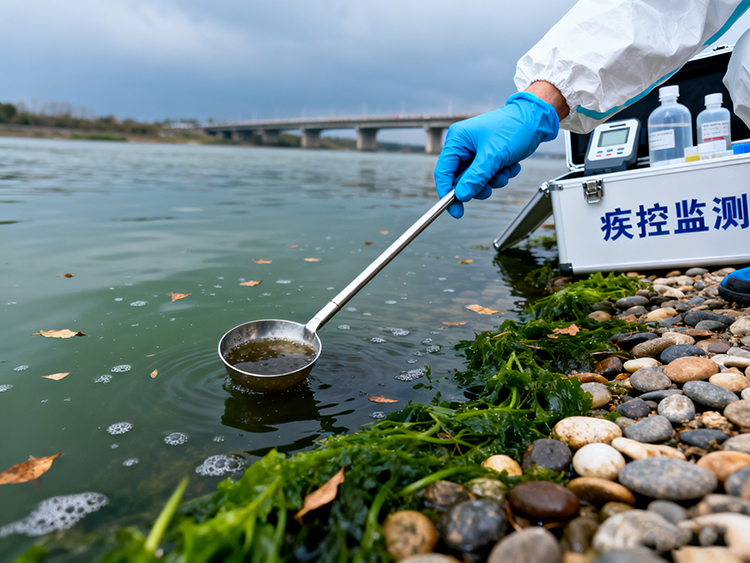
Portable water quality detectors have become the core equipment for field work in disease control. In the face of sudden water pollution incidents (such as chemical leaks and water source pollution), disease control personnel can bring equipment to the scene to quickly detect key parameters such as pH, dissolved oxygen, heavy metals, toxic and harmful substances, and issue preliminary test results in a timely manner. This provides immediate support for determining the scope of pollution, developing emergency water supply plans, guiding the public to avoid risks, and avoiding public health crises caused by the expansion of pollution.
Special Monitoring and Public Health Research
The water quality detector provides technical support for the scientific research and special investigations of the Center for Disease Control and Prevention. For example, in the rural drinking water safety consolidation and improvement project, comprehensive testing of water quality in remote areas is carried out to evaluate the implementation effect of the project; In the study of the relationship between environment and health, long-term monitoring of changes in pollutants in water bodies is used to analyze the correlation between water quality and endemic and chronic diseases, providing data support for the development of public health intervention strategies; At the same time, for special scenarios such as food processing water and domestic water in public places, water quality standards will be tested to eliminate the indirect impact of water quality on public health.
Regulatory enforcement and standard implementation
The detection data of water quality detectors is an important basis for the CDC to fulfill its regulatory functions. By conducting spot checks on the water quality of polluting units and water supply enterprises, using accurate data to urge relevant units to fulfill their environmental and health responsibilities, promoting the implementation of water quality safety standards, and forming a closed-loop management of "monitoring warning disposal supervision", we safeguard the water quality safety in the field of public health.
Purchasing water quality analysis instruments, professional consultation is key! Harvey Sen is deeply involved in the field of water quality testing. We not only provide you with purchasing solutions for analytical instruments that are suitable for various scenarios such as pharmaceutical water, industrial wastewater, drinking water, and environmental monitoring, but also provide comprehensive support from demand assessment, instrument selection, to after-sales technical support. We help you accurately match high cost-effective equipment, making water quality testing more efficient and data more reliable. Welcome to contact us.