-
E-mail
2201580348@qq.com
-
Phone
13388604010
-
Address
No. 29 Shanghe Road, Shangwenshan Community, Yuhang Street, Yuhang District, Hangzhou City
Hangzhou Zhongwang Technology Co., Ltd
What industries are suitable for using a fully automatic motion viscosity measurement system?
Date: 2025-08-21Read: 0
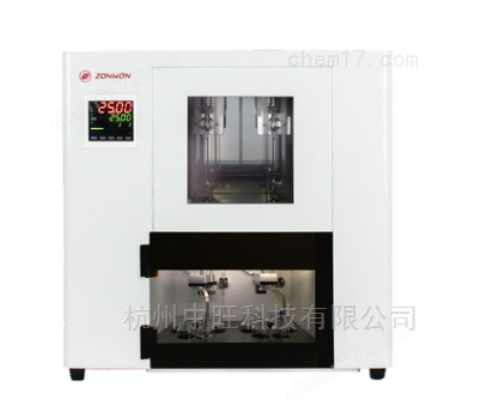
The fully automatic motion viscosity measurement system is widely used in multiple industries due to its efficient and accurate measurement capabilities. The following are its main application areas:
1. Petrochemical industry
Lubricating oil and fuel oil: Measuring the kinematic viscosity of lubricating oil and fuel oil is an important quality control link in the petrochemical industry. Accurate measurement of kinematic viscosity can ensure the flowability and lubrication performance of these products at different temperatures, thereby ensuring the normal operation of mechanical equipment.
Crude oil and heavy oil: During the extraction, transportation, and processing of crude oil and heavy oil, measuring the kinematic viscosity helps optimize the process flow and improve production efficiency.
2. Chemical industry
Polymer materials: such as polyester PET, nylon PVC、 In the quality control and research and development of polymer materials such as polycarbonate PC, the kinematic viscosity measurement system can be used to test the viscosity of polymer solutions, helping to evaluate the flowability and processing performance of materials.
Polymer synthesis: In the process of polymer synthesis, such as polyester resin polymerization, alkyd resin synthesis, etc., the kinematic viscosity measurement system can monitor viscosity changes in real time, providing data support for process optimization.
3. Pharmaceutical industry
Measurement of the kinematic viscosity of medicinal liquids, including injections, syrups, eye drops, etc., is crucial for ensuring the stability and biological activity of drugs.
Pharmaceutical raw materials: In the field of polymer materials for pharmaceutical raw materials such as polylactic acid (PLA), cellulose, etc., the kinematic viscosity measurement system can test the kinematic viscosity, dynamic viscosity, and intrinsic viscosity.
4. Electronic industry
Photoresist: Accurate measurement of kinematic viscosity is crucial in ensuring product quality and performance during the photoresist production process.
5. Food and beverage industry
Edible oil: Measuring the kinematic viscosity of edible oil helps evaluate its quality and safety, ensuring that the product meets food safety standards.
Measurement of kinematic viscosity of beverages such as carbonated drinks, fruit juices, tea drinks, etc. can optimize the formulation and taste of products.
6. Textile industry
Cellulose and fiber esters: In the production process of materials such as cellulose and fiber esters, kinematic viscosity measurement systems can be used for quality control and process optimization.
7. Pulp and paper industry
Pulp viscosity: Measuring the kinematic viscosity of pulp is of great significance for optimizing papermaking processes and improving product quality.
8. Ink and Coatings Industry
Ink and Paint: The kinematic viscosity measurement system can be used to evaluate the flowability and application performance of ink and paint, ensuring the stability of the product during storage and use.
9. Aerospace industry
Aviation lubricants and fuels: In the aerospace field, measuring the kinematic viscosity is crucial to ensure the fluidity of aviation lubricants and fuels under low temperature conditions, thereby ensuring flight safety.
10. Quality inspection and scientific research fields
Laboratory research: In scientific research and quality testing laboratories, kinematic viscosity measurement systems are tools for material research and quality control, providing accurate viscosity data.
In summary, the fully automatic motion viscosity measurement system has become a measurement tool in multiple industries due to its high degree of automation, high precision, and multifunctionality, providing strong support for product quality control, process optimization, and research and development.