-
E-mail
1096874063@qq.com
-
Phone
15157227040
-
Address
Kaiyuan Art Park, Dayingwan Street, Liangzhu Street, Yuhang District, Hangzhou City
Hangzhou Skala Filtration Technology Co., Ltd
Guide to Choosing and Avoiding Pitfalls for Liquid Nitrogen Generators: Professional Manufacturers Teach You to Avoid 8 "Traps"
Date: 2025-09-08Read: 0
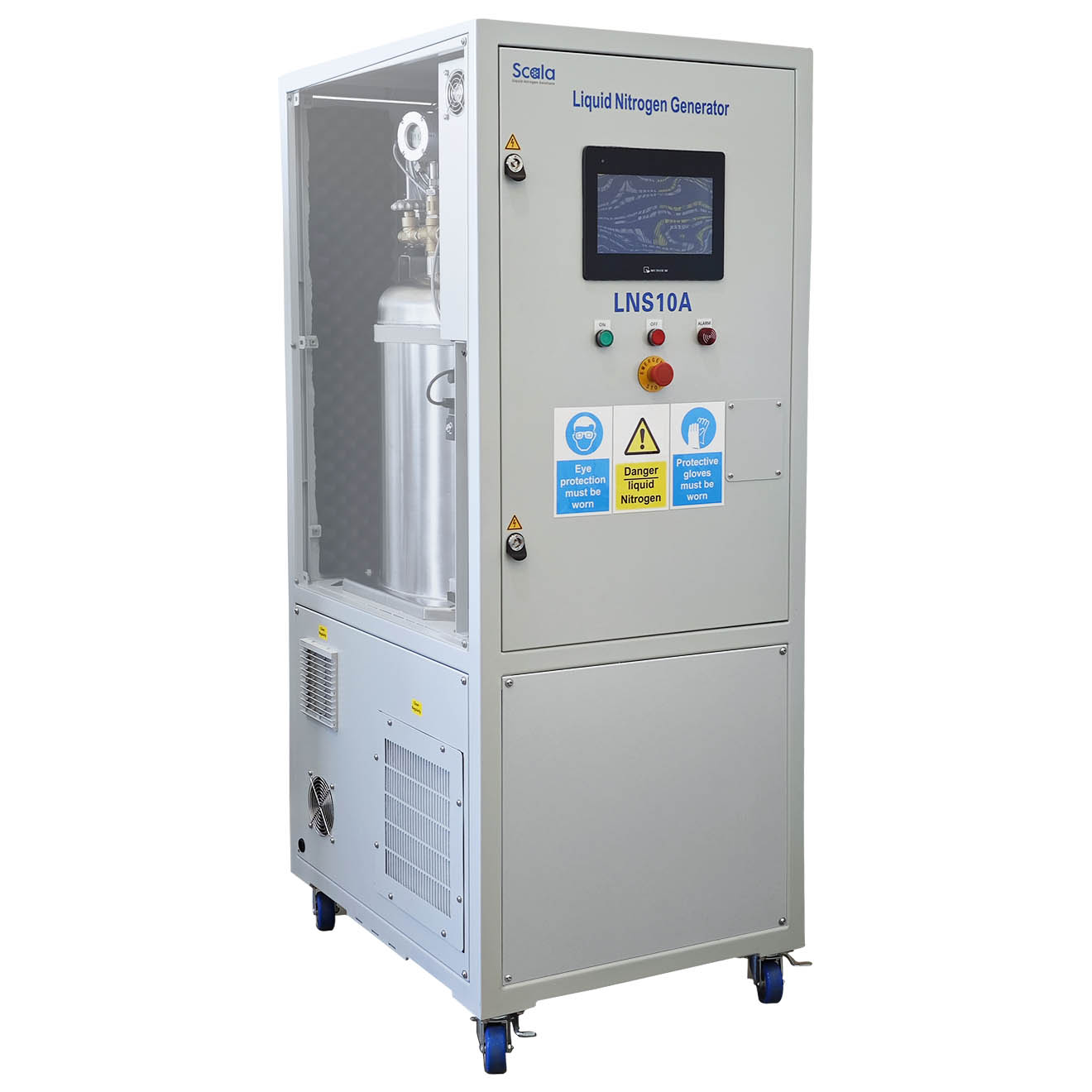
As a laboratory equipment for extracting liquid nitrogen on-site, the liquid nitrogen generator is relatively unfamiliar to most users, making it difficult to judge the parameter performance and applicable scenarios from a professional perspective.Although some devices have a gorgeous appearance, there are hidden problems such as rough workmanship and quality hazards. To this end, professional manufacturers have compiled the following 8 key points for avoiding pitfalls based on the pain points of selecting small-sized equipment, to assist users in making accurate selections.
1 Low temperature refrigeration machine: warranty commitment is the "bottom line"
-Process difficulty: The mature processes for small laboratory liquid nitrogen generators mainly include hybrid pulse tube refrigerators and GM refrigerators. These low-temperature refrigerators that enter commercial production in bulk usually have international certifications, such as EU CE and even US UL certification.
The refrigeration machines of low-cost liquid nitrogen generators in the market have significant hidden dangers, such as the stacked refrigerant compressors made by small factories and filled with non-standard working fluids, which have a short lifespan (several years of damage), high refrigerant leakage rate, difficult maintenance, and lack of reliability certification;
-The core of avoiding pitfalls does not need to worry about specific processes, and the key requirement is to have over tens of thousands of hours of real use cases, and the refrigeration machine (non component) must have CE or UL certification. The manufacturer promises a 3-5 year warranty or free replacement for the low-temperature refrigeration unit to avoid the risk of later maintenance.
2. Refuse "low temperature limit": prioritize equipment that can operate at room temperature of 30 ℃
-Trap feature: Some manufacturers use air-cooled condensers without cooling function instead of chillers to reduce costs, with operating temperatures marked as "0-25 ℃". However, conventional laboratory temperatures are difficult to lower than 25 ℃, and if the environment exceeds the temperature limit, the machine will shut down.
-Key to purchasing: Confirm that the equipment can operate stably in a conventional laboratory environment at 30-32 ℃, avoiding the impact of heat dissipation defects on use.
3. Verify liquid nitrogen production: avoid "14L nominal only 10L actual production"
-Core issue: Some low-priced devices have artificially high production capacity, with a nominal output of 14L/day, but in reality they can only produce 9L, which cannot meet basic demand.
-Suggestion for avoiding pitfalls: Require manufacturers to provide actual production testing reports.
4. Built in liquid nitrogen tank: small volume+fast evaporation="chicken ribs"
-Volume trap: Small liquid nitrogen generators need to run for 2-3 days to store liquid. Some devices pursue integration and have built-in tanks of only 20L or even smaller. After standby, the liquid level may drop, and the actual available amount is only about 10L (the maximum liquid nitrogen stored in the tank is 80% -90%, and it evaporates during standby).
-Volatility risk: A low-quality 20L tank will evaporate in about 3 days.
-Required requirement: Choose a tank with a capacity of 35L or more.
5. Duwa jar loses vacuum=paralysis
Once the Duwa tank of the liquid nitrogen machine loses its vacuum, its cooling performance will fail, and the equipment will be in a paralyzed state. Some Duwa tanks may experience vacuum loss within less than 2 years of use, which can directly lead to a sharp increase in the evaporation loss of liquid nitrogen, a significant drop in liquid production efficiency, and seriously affect the normal operation and operating costs of the equipment.
-Must mention requirement: The manufacturer must promise a 5-year warranty for the liquid nitrogen tank
6. Air compressor: identify the maintenance cycle of "10000 hours+"
-Poor quality issue: Low priced equipment with air compressors has a short lifespan, requiring replacement of parts in just 4000 hours, which increases the cost of consumables.
-Qualification criteria: The maintenance cycle of a good air compressor should be at least 10000 hours, and even up to 15000 hours. When selecting, it is necessary to confirm the manufacturer's commitment to the service life of the air compressor.
7. Nitrogen generator: dual control of process and service life
-Process selection: Priority should be given to pressure swing adsorption (PSA) nitrogen generators with a purity better than 99.5%; The purity of nitrogen produced by membrane is about 98%, which is difficult to meet practical needs. Some manufacturers have written as high as 99.5%, but the purity during operation may only be 95-98%. It is recommended that manufacturers provide purity commitment documents.
-Life requirement: Some nitrogen generators have a lifespan of only 3-4 years, and manufacturers are required to promise a lifespan of at least 8 years for the nitrogen generator (especially the membrane components).
8. Be wary of noise parameters being falsely labeled or exceeding standards
-Reasonable range: The operating noise of laboratory equipment should be below 63 decibels (conventional nitrogen generator noise is about 60 decibels), and the manufacturer should label 60-63 decibels as a reasonable range.
-Key points for avoiding pitfalls: If 68 decibels are marked, careful evaluation should be conducted to determine if they are suitable for laboratory conditions (only workshop scenarios or acceptable); Be cautious when labeling 55 decibels, as this value is close to the limit of low noise for nitrogen generators and there is a high probability of false labeling. Require the manufacturer to provide a testing report.
Professional manufacturers remind that when choosing a liquid nitrogen generator, one must break out of the "low price trap" and focus on core performance (output, stability) and long-term costs (quality assurance, maintenance). Only by clearly committing to various parameters can one select equipment that is "worth buying and stable to use".