-
E-mail
qikun@hzqikun.com
-
Phone
13858055033
-
Address
No. 2 Houxi Road, Fengchuan Street, Tonglu, Hangzhou City, Zhejiang Province
Hangzhou Qikun Technology Co., Ltd
Guidelines for Troubleshooting and Handling Common Malfunctions of Domestic Total Organic Carbon Analyzer
Date: 2025-08-22Read: 0
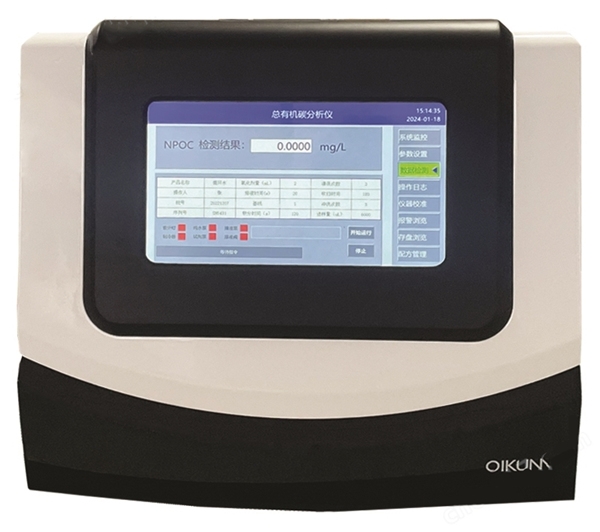
The domestically produced total organic carbon analyzer is a core equipment for water quality monitoring, pharmaceuticals, semiconductors, and other fields, used to quantify the organic content in liquids. Domestic instruments occupy the mid to low end market with their cost-effectiveness advantage, but due to technological accumulation and manufacturing process limitations, users often encounter the following typical faults during use. This article combines practical application scenarios to systematically sort out fault phenomena, causes, and solutions.
1、 Baseline drift and noise anomalies
Phenomenon: Continuous fluctuations or random spikes in the baseline during the detection process result in poor data reproducibility.
Cause:
1. The carrier gas (high-purity oxygen or air) has insufficient purity and contains organic or particulate matter;
2. Aging of combustion/catalytic tubes leads to a decrease in oxidation efficiency;
3. The detector (NDIR or conductivity cell) is damp or contaminated.
handle:
1. Replace the carrier gas cylinder and install a gas purification device;
2. Regularly clean the combustion tube (once a month) and replace the catalytic tube every 2 years;
3. Soak the conductivity cell in 0.1mol/L hydrochloric acid and rinse with pure water. The NDIR detector needs to be dried and dehumidified.
2、 Low measurement value or no response
Phenomenon: The test value of the standard solution is more than 50% lower than the actual concentration, or there is no signal output at all.
Cause:
1. Injection system blockage (such as injector, six way valve or injection pipeline);
2. Insufficient oxidation reaction (insufficient combustion temperature or catalyst deactivation);
3. Error in detector gain setting or circuit malfunction.
handle:
Soak the injection system in a 5% nitric acid solution for 2 hours and clean it with ultrasound for 10 minutes;
2. Check the temperature sensor of the combustion furnace and calibrate it to 680-1000 ℃ (non dispersive infrared method);
3. Re calibrate the detector range and replace the signal amplifier board if necessary.
3、 System leakage and abnormal pressure
Phenomenon: The air path pressure remains below the set value, or the pressure gauge pointer fluctuates violently.
Cause:
1. Loose air circuit joints or aging O-rings;
2. Fatigue fracture of peristaltic pump tube;
3. Poor discharge of waste liquid leads to an increase in back pressure.
handle:
1. Use soap solution to check all air connection points and tighten the leaking parts;
2. Replace the peristaltic pump tube every 3 months and adjust the pump speed to 20-40rpm;
3. Clean the waste liquid bottle and drainage pipeline to ensure that the liquid level sensor is working properly.
4、 Software and communication malfunction
Phenomenon: The instrument cannot connect to the upper computer or the data storage is abnormal.
Cause:
1. Poor oxidation contact of communication interface (RS232/USB);
2. Compatibility issues with the operating system (such as missing Win10 drivers);
3. Memory card damage or file system error.
handle:
1. Wipe the metal contacts of the interface with an alcohol swab and replace the data cable;
2. Install the latest driver program provided by the manufacturer;
3. Format the storage card (FAT32 format) and restore it to factory settings.
Maintenance suggestion: It is recommended to establish a three-level maintenance system of 'day week month', including daily inspection of gas source pressure, weekly cleaning of the sampling system, and monthly calibration of detectors. Domestic total organic carbon analyzer users should prioritize choosing original consumables to avoid malfunctions caused by compatibility issues. By standardizing operations and preventive maintenance, equipment stability and service life can be significantly improved.