-
E-mail
qikun@hzqikun.com
-
Phone
13858055033
-
Address
No. 2 Houxi Road, Fengchuan Street, Tonglu, Hangzhou City, Zhejiang Province
Hangzhou Qikun Technology Co., Ltd
Control and Implementation of Detection Limit for Domestic Total Organic Carbon Analyzer
Date: 2025-09-23Read: 0
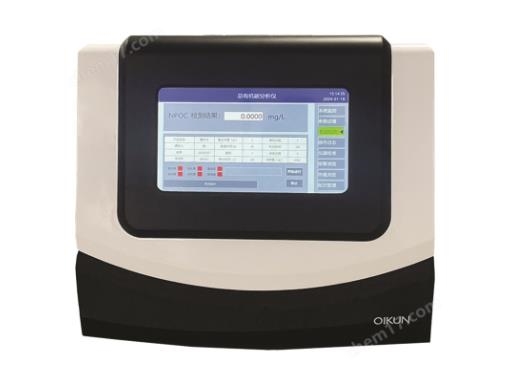
Domestic total organic carbon analyzer is a key equipment in the fields of water quality analysis, pharmaceuticals, semiconductors, etc. Its detection limit is the core indicator for measuring the sensitivity and performance of the instrument.Domestic instruments continuously pursue lower detection limits through various technological optimizations and rigorous methods to meet increasingly stringent application requirements.
1. Understand the detection limit
The detection limit refers to the minimum analyte concentration that an instrument can reliably detect. According to Chapter 9101 of the 2020 edition of the Chinese Pharmacopoeia, there are three commonly used methods for determining LOD: visual method, signal-to-noise ratio method, and calculation method based on response value standard deviation and standard curve slope (formula LOD=3.3 δ/S, where δ is the deviation of the response value and S is the slope of the standard curve). The detection limit of domestic total organic carbon analyzers can usually reach 0.001mg/L (1ppb) or even lower.
2. Key technologies for achieving low detection limits
To achieve low detection limits, domestic total organic carbon analyzers mainly control their technology in the following aspects:
① Efficient oxidation technology: The instrument needs to oxidize all organic matter in the sample to carbon dioxide (CO2). Domestic instruments widely adopt high-temperature catalytic combustion oxidation or ultraviolet/persulfate oxidation technologies. The high-temperature combustion method can effectively decompose difficult to oxidize organic compounds, ensuring oxidation efficiency, which is the basis for accurate determination of TOC.
② High sensitivity detector: CO2 produced by oxidation needs to be accurately measured. Domestic instruments often use non dispersive infrared (NDIR) detectors or thin film conductivity detection technology. These detectors have high sensitivity to low concentrations of CO2 and can effectively capture weak signals, reducing background noise.
③ Reducing system background and pollution: The cleanliness of the entire analysis system is crucial. Trace organic compounds in instrument pipelines and reagents may contribute to background values. Therefore, using high-purity reagents, inert material pipelines, and regularly cleaning or replacing catalytic oxidation devices are key to controlling blank values.
④ Advanced automation and algorithms: Modern instruments have built-in automatic dilution, automatic acid addition, and automatic purging functions, reducing manual operation errors. Intelligent algorithms help distinguish between effective signals and noise, and improve the accuracy of low concentration measurements by accurately subtracting inorganic carbon interference through calculations.
3. Scientific methods for verifying low detection limits
Manufacturers and users need to verify the detection limit of the instrument through rigorous experiments:
① Blank experiment: Conduct parallel measurements on multiple blank samples and calculate the standard deviation (δ) of their response values. Calculate the detection limit using the LOD=3.3 δ/S formula. A study has verified through this method that the detection limit of a certain model of instrument can reach 0.029mg/L.
② Low concentration standard recovery: Add a known amount of low concentration TOC standard solution to blank matrix or actual sample to determine its recovery rate. The ideal recovery rate can demonstrate the accuracy of the instrument in low concentration areas.
③ Precision dilution technology: For the validation of pursuing extremely low detection limits, a precision injection pump and ultra-low TOC blank water need to be used for dynamic dilution to accurately generate ppb level standard points for measurement, ensuring the linear response of the instrument at ultra-low concentrations.
4. Actual factors and countermeasures affecting the detection limit
Even if the instrument itself has a low detection limit, many external factors can still affect the actual measurement results:
① Sample contamination: The cleanliness of the collection container, air carbon dioxide, and operator contact may all introduce organic matter. Special inert containers must be used to store samples at low temperatures and analyze them as soon as possible.
② Operational standardization: Regular calibration and maintenance of instruments are crucial to maintaining their optimal condition.
Conclusion
The domestic total organic carbon analyzer can effectively achieve and ensure a lower detection limit by optimizing oxidation and detection technology, strengthening the system's anti pollution ability, introducing automated intelligent control, and combining scientific verification methods. By understanding these principles and operating them in a standardized manner, users can fully utilize the performance of the instrument, ensuring accurate and reliable data in areas such as water quality safety, drug production, and scientific research.