-
E-mail
13567174168@163.com
-
Phone
13567174168
-
Address
Guanyi Village, Guali Town, Xiaoshan District, Hangzhou City, Zhejiang Province
Hangzhou Jingfei Instrument Technology Co., Ltd
Guidelines for Purchasing Core Indicators of Electric Spectrophotometers
Date: 2025-12-15Read: 0
In cutting-edge fields such as materials science, environmental monitoring, and biomedicine, the combination of electrochemistry and spectroscopy has become a core means of analyzing reaction mechanisms and quantitatively analyzing substances.Electric spectrophotometerThe quality of procurement directly determines the reliability of data and research efficiency in combination experiments. Faced with complex experimental requirements, purchasers need to focus on the core performance indicators of the equipment, accurately match the combination scenarios, rather than simply pursuing parameter stacking.
The electrochemical window range is the "basic threshold" for combination experiments, which directly determines the range of substances and reaction conditions that the device can detect. The oxidation-reduction potentials of different research objects vary significantly. For example, metal ion detection often requires a wide range of positive and negative potentials, while biomacromolecule reactions require higher potential accuracy. The electrochemical window of high-quality equipment should cover at least ± 3V and maintain electrode stability even at harsh potentials, avoiding interference signals caused by electrode polarization and ensuring the correspondence between electrochemical data and spectral data.
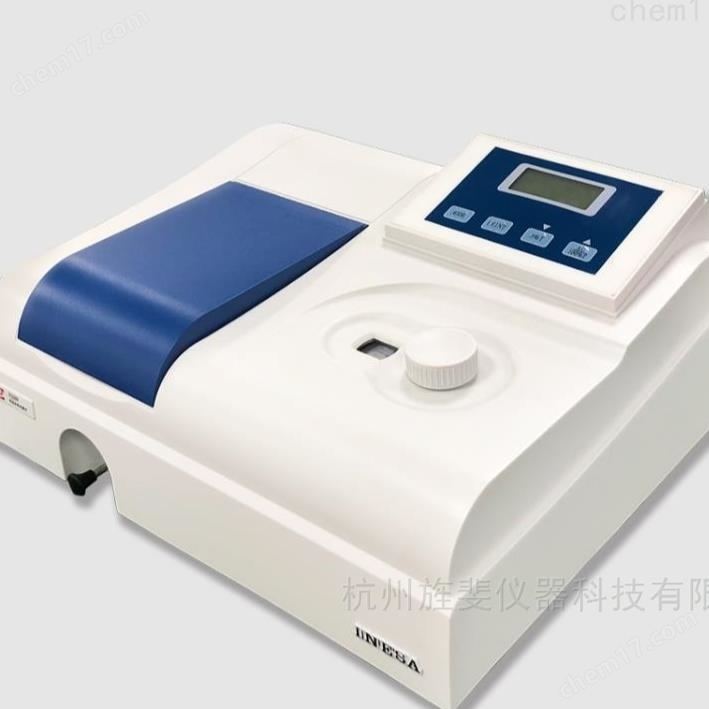
Spectral response bandwidth is a "core parameter" that ensures detection accuracy, especially crucial for the analysis of multi-component mixed systems. In combination experiments, the electrochemical changes of substances are often accompanied by small shifts in characteristic spectral peaks, and narrow bandwidth spectral systems can more accurately capture this change. It is recommended to prioritize devices with a bandwidth of ≤ 2nm, which can effectively distinguish adjacent characteristic peaks and avoid quantitative errors caused by spectral signal overlap. At the same time, attention should be paid to the consistency of the response of the equipment in the full spectrum range of ultraviolet visible near-infrared, to meet the spectral detection needs of different substances.
The accuracy of data synchronization and collection is the "soul" of combined technology, which directly affects the correlation analysis between electrochemical and spectral data. Electrochemical reactions often complete instantaneously, and if there is a time difference between the two data collections, it will lead to distorted analysis of the reaction process. When purchasing, it is necessary to confirm that the synchronous acquisition delay of the equipment is ≤ 1ms, and it supports real-time linkage recording of electrochemical signals and spectral signals. In addition, the data processing system of the equipment should have synchronous fitting function, which can directly output the three-dimensional correlation curve of potential absorbance time to improve the efficiency of data analysis.
In addition to the core indicators mentioned above, it is also necessary to focus on auxiliary performance in conjunction with experimental scenarios. If trace analysis requires attention to the detection limit of the equipment (priority should be given to models with a concentration of ≤ 0.001mg/L), batch experiments should consider the automation level of the sample pool and the stability of the equipment. At the same time, the compatibility of the equipment cannot be ignored, and it is necessary to ensure seamless integration with existing electrochemical workstations and chromatographic equipment to reduce the cost of joint use.
The essence of purchasing electrochemical spectrophotometers is the precise matching of demand and performance. The purchaser needs to be guided by experimental objectives, with electrochemical window, spectral bandwidth, and synchronization accuracy as core evaluation dimensions, while also considering equipment compatibility and stability. Choosing the right equipment that meets the requirements not only ensures the scientific validity of experimental data, but also provides solid technical support for scientific breakthroughs, becoming a reliable partner for collaborative experiments.