-
E-mail
5494545649@qq.com
-
Phone
15058182299
- Address
Hangzhou Green Farming Technology Co., Ltd
What aspects should be considered when choosing a soil multi parameter analyzer?
Date: 2025-10-16Read: 0
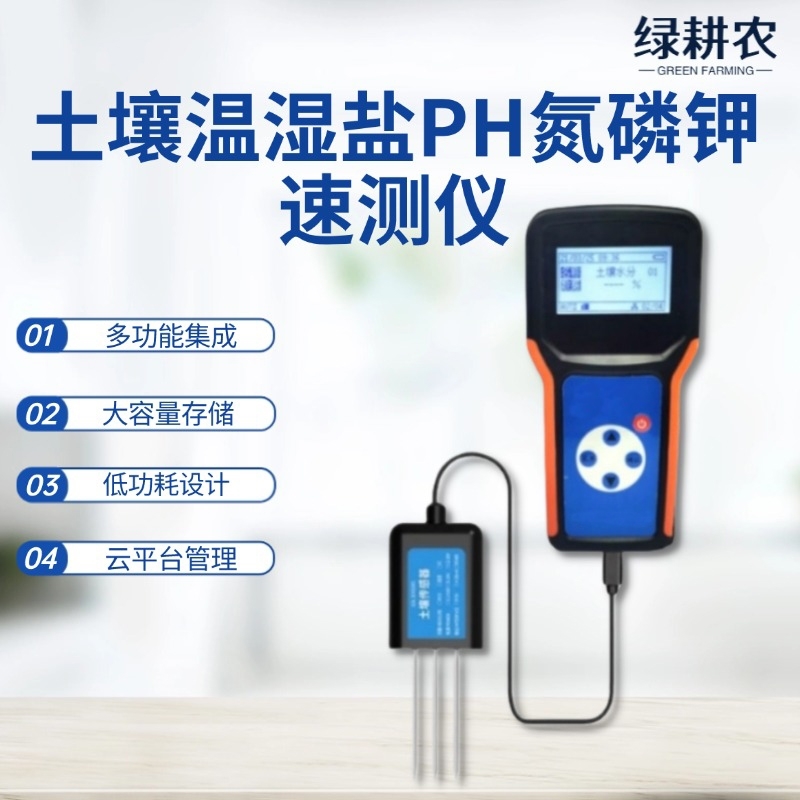
Soil multi parameter measuring instrumentIt can synchronously detect key indicators such as pH, conductivity (EC), moisture content, nitrogen, phosphorus, and potassium, providing data support for precision agriculture and soil remediation. But there are various product models on the market (portable, laboratory type, online monitoring type), and when choosing, a comprehensive evaluation should be conducted from the following core dimensions.
1. Testing parameters and accuracy requirements
Clear core detection objectives: If focusing on crop nutrients (such as nitrogen, phosphorus, potassium), instruments equipped with colorimetric or ion selective electrode modules should be selected (nitrogen detection range 0-200mg/kg, accuracy ± 5%); If the focus is on soil salinization (such as improving saline alkali land), the range of electrical conductivity (EC) should cover 0-20dS/m (accuracy ± 0.1dS/m), and the range of pH should be 0-14 (accuracy ± 0.2pH). Better models can be extended to detect parameters such as organic matter and heavy metals (such as cadmium and lead), but it is necessary to confirm whether the detection method complies with national standards (such as NY/T 1121.2-2006 "Soil Testing Part 2: Determination of Soil pH").
2. Usage scenarios and portability
• Rapid field testing: Portable devices (weighing<1kg, powered by lithium batteries) are preferred, with a waterproof and dustproof rating of IP65 or above (suitable for rainy or muddy fields), and a measurement time of<3 minutes/parameter (such as pH real-time display, EC stable for 1 minute).
• Laboratory precision analysis: Laboratory instruments (such as spectrophotometer combination type) have higher accuracy (nitrogen, phosphorus, and potassium detection accuracy ± 2%), but require a fixed power supply and operating platform, suitable for centralized sample detection.
Long term positioning monitoring: The online monitoring type needs to support wireless transmission (4G/LoRa) and data storage (>100000 records), and can be paired with soil sensors (buried underground for continuous monitoring), but the cost is relatively high (unit price>20000 yuan).
3. Sensor and Calibration Maintenance
The stability of the detection module directly affects the reliability of the results: glass composite electrodes (response time<30 seconds, lifespan>2 years) should be used for pH electrodes, and graphite materials that are prone to scaling should be avoided for EC sensors (titanium alloy platinum coated black electrodes are recommended). The instrument needs to support automatic calibration function (pH using 4.01/7.01/0.01 standard buffer solution, EC using 0.01/1.0/10.0 dS/m standard solution), with a calibration cycle of ≤ 7 days (frequent use requires calibration every 3 days). In addition, the convenience of obtaining consumables such as colorimetric reagents and electrode filling solutions (whether local distributors have them in stock) is also an important consideration.
4. Data management and compatibility
The instrument should be equipped with Bluetooth/Wi Fi function, which can directly export reports in Excel or PDF format (including measurement time, location, parameter values). Some models support synchronization with agricultural apps (such as "Soil Manager") for historical data comparison and trend analysis. If it is necessary to interface with the farm management system (such as drip irrigation automatic control), it is necessary to confirm whether the instrument communication protocol (such as Modbus RTU) is compatible.
selectSoil multi parameter measuring instrumentIt is also necessary to compare brand reputation (check third-party testing reports) and after-sales service (whether on-site training is provided, sensor warranty period>1 year) to avoid "buying without using" due to parameter mismatch or maintenance difficulties. Only by meeting practical needs can the multi parameter measuring instrument become a powerful assistant for soil management.