-
E-mail
ftfdssale@163.com
-
Phone
15397032468
-
Address
3rd Floor, Building 4, No. 1-1 Huayi Road, Jinxing Industrial Park, Yuhang District, Hangzhou City, Zhejiang Province
Hangzhou Furuijie Technology Co., Ltd
Application of vacuum freeze drying technology in hydrogel preparation
Date: 2025-11-21Read: 0
Hydrogel is a kind of extremely hydrophilic three-dimensional network structure gel, which rapidly swells in water and can keep a large volume of water in this swelling state without dissolving.
Hydrogel classification
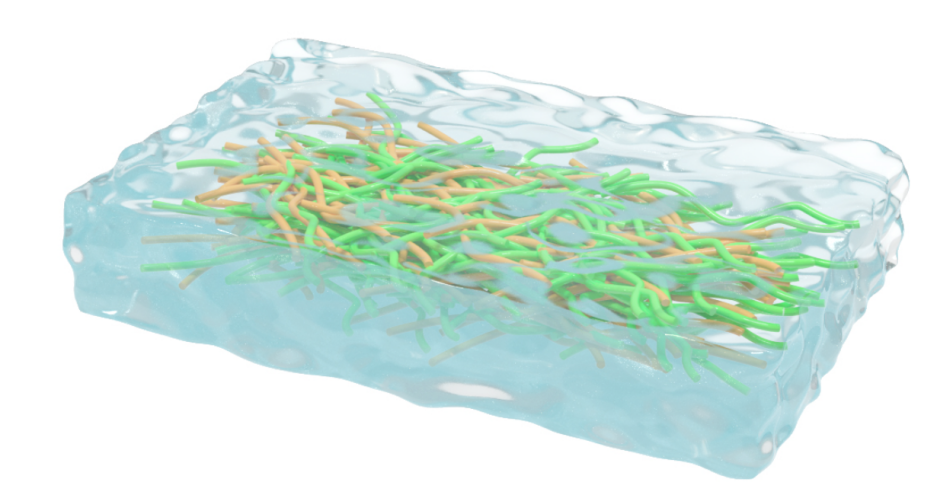
Due to the existence of cross-linking networks, hydrogels can swell and retain a large amount of water, and the amount of water absorption is closely related to the degree of cross-linking. The higher the crosslinking degree, the lower the water absorption. This characteristic is very similar to a soft tissue. The water content in the hydrogel can be as low as a few percent or as high as 99%. The aggregation state of gel is neither solid nor liquid. The behavior of solid is that it can maintain a certain shape and volume under certain conditions, while the behavior of liquid is that solute can diffuse or penetrate from the hydrogel.
All water-soluble or hydrophilic polymers can form hydrogels through certain chemical or physical crosslinking. These polymers can be divided into two categories based on their sources: natural and synthetic. Natural hydrophilic polymers include polysaccharides (starch, cellulose, alginate, hyaluronic acid, chitosan, etc.) and peptides (collagen, poly L-lysine, poly L-glutamine, etc.). The synthesized hydrophilic polymers include alcohols, acrylic acid and its derivatives (polyacrylic acid, poly (methyl methacrylate), polyacrylamide, poly (N-poly (acrylamide), etc.).
01 Physical gel and chemical gel
Hydrogels can be classified into physical gel and chemical gel according to different network bonding of hydrogels. Physical gel is formed by physical forces such as electrostatic force, hydrogen bond, chain winding, etc. This gel is non permanent and can be transformed into solution by heating gel, so it is also called pseudo gel or thermo reversible gel. Many natural polymers are stable gelled at room temperature, such as k2 carrageenan, agar, etc; In synthetic polymers, polyvinyl alcohol (PVA) is a typical example. After freezing and thawing treatment, stable hydrogels can be obtained below 60 ℃. Chemical gel is a three-dimensional network polymer formed by chemical bond cross-linking. It is permanent, also known as true gel.
02 Macro gel and micro gel
According to the size and shape of the hydrogel, there are macro gel and micro gel (microsphere). According to the shape, the macro gel can be divided into column, porous sponge, fiber, membrane, spherical, etc. The microspheres prepared can be divided into micron and nanometer.
03 Traditional and environmentally sensitive hydrogels
According to the response of hydrogels to external stimuli, they can be divided into traditional hydrogels and environmentally sensitive hydrogels. Traditional hydrogels are not sensitive to environmental changes, such as temperature or pH, while environmentally sensitive hydrogels refer to a class of polymer gel that can sense small changes or stimuli in the external environment (such as temperature, pH, light, electricity, pressure, etc.) and produce corresponding changes in physical structure and chemical properties or even mutations. The outstanding feature of such gel is that their swelling behavior has significant changes in the process of responding to the environment. Using this stimulus response characteristic, they can be used as sensors, controlled release switches, etc. This is one of the most interesting topics for researchers since 1985.
04 Synthetic polymer and natural polymer hydrogel
According to different synthetic materials, hydrogels can be divided into synthetic polymer hydrogels and natural polymer hydrogels. Natural polymers are attracting increasing attention from scholars due to their better biocompatibility, sensitivity to the environment, abundant sources, and low cost. However, natural polymer materials have poor stability and are prone to degradation.
Application of hydrogel
As a high water absorption and high water retention material, hydrogels are widely used in many fields, such as drought resistance in arid areas, facial mask, antipyretic patches, analgesic patches, agricultural films in cosmetics, anti condensation agents in buildings, moisture regulators, water blocking agents in petrochemical industry, dehydration of crude oil or refined oil, dust suppressants in mining, preservatives and thickening agents in food, drug carriers in medical treatment, etc. It is worth noting that different application fields should use different polymer raw materials to meet different needs.
The biocompatibility, biodegradability, high water absorption and water retention of hydrogels make them widely used in many fields such as environmental engineering, flexible sensing, electrochemistry, especially in biomedical fields, including tissue engineering, drug delivery systems, wound dressings, biosensors, contact lenses, artificial cells, etc.
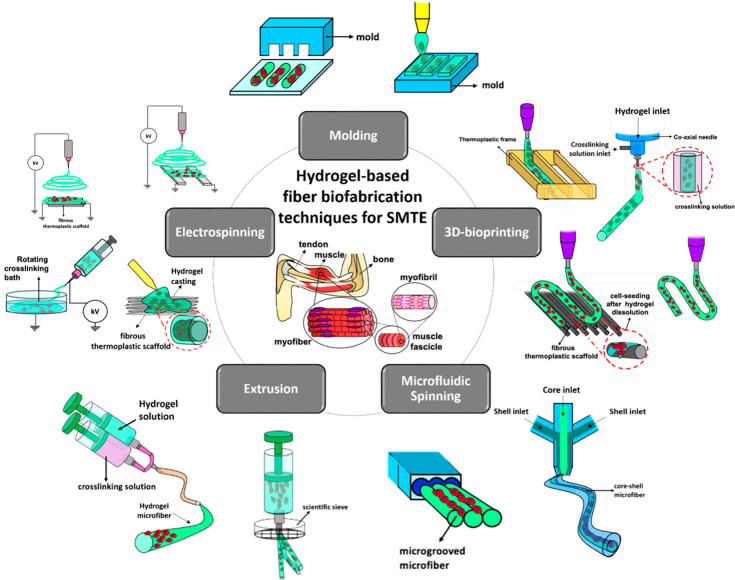
For example, the three-dimensional structure of hydrogel is similar to the extracellular matrix of many tissues. In tissue engineering, specific cells need to be cultured on appropriate scaffolds to form corresponding organs. At this time, hydrogel is an ideal scaffold material.
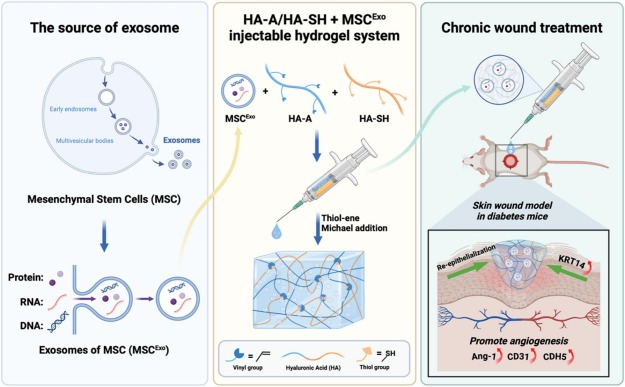
In the drug delivery system, it can be used for drug sustained release and fixed point release. The controllable porous structure of the hydrogel enables it to easily carry a variety of drugs and migrate to specific sites. At the same time, the intelligent hydrogel will produce different swelling responses after being stimulated by pH, enzymes and other environments, thus releasing drugs at different rates.
As a new functional material, hydrogel has the characteristics of high water absorption and retention, good biocompatibility, flexibility, etc. It is endowed with specific properties such as self-healing, environmental response, etc. through the selection of different materials, modification, composite and other means. Therefore, there are numerous studies on hydrogels. At the same time, hydrogels and their derivatives are more and more widely used in various fields, and their research value is not limited to this, which is also the reason for their fire.
Furuijie Freeze Drying Laboratory
Test sample: hydrogel
Experimental objective: Freeze dry all water to form a sponge like structure
Experimental equipment: Mercury series

Experimental process:
1. Hydrogel -80 ℃ pre freezing for 4h or liquid nitrogen quick freezing.
2. Turn on the lyophilizer for precooling, place the pre frozen hydrogel on the partition, and turn on the vacuum.
3. The freeze-drying procedure is: sublimation procedure -40 ℃~25 ℃, vacuum degree 2Pa, time 30h.
After the program is completed, release the pressure and take out the freeze-dried sample for storage or subsequent experiments.
Before pre freezing:
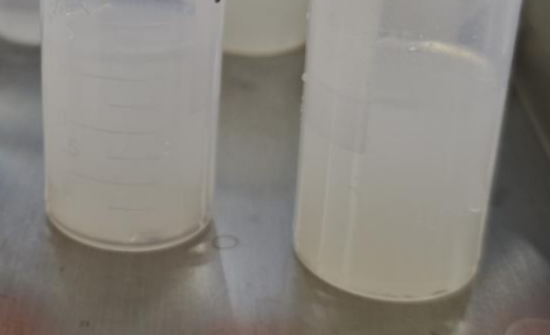
During freeze-drying:
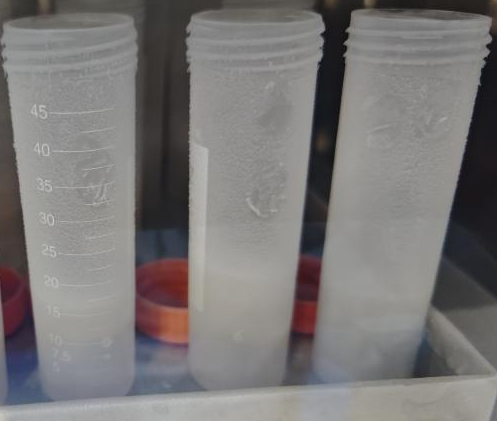
After freeze-drying:

Hydrogel SEM
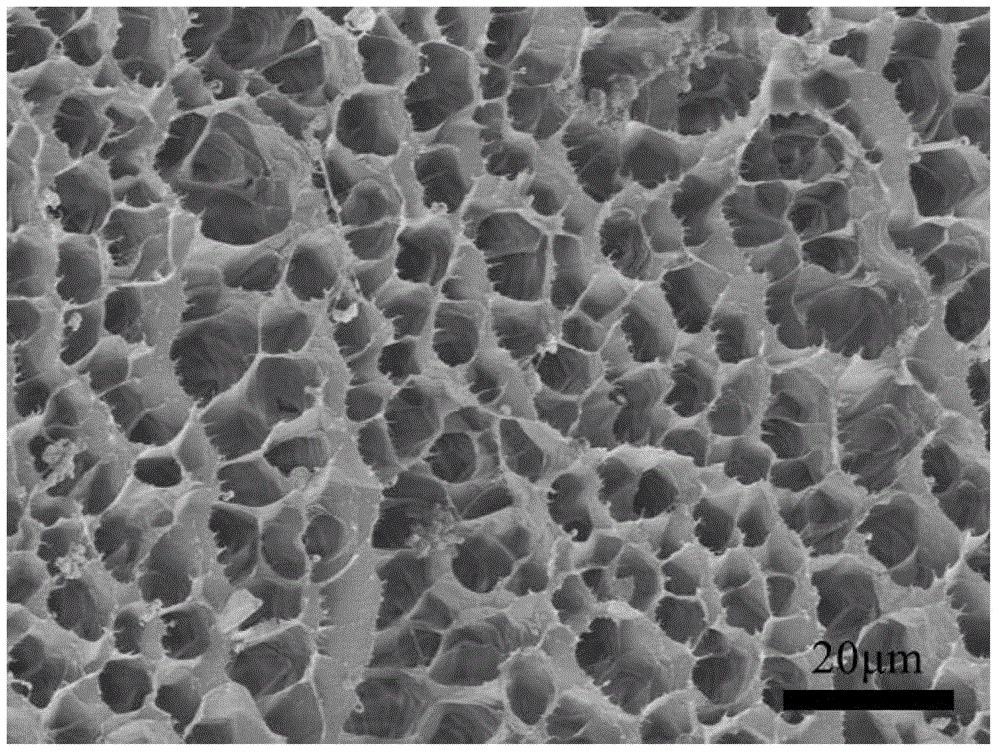
After freeze-drying, it appears sponge like, achieving the desired effect.