-
E-mail
422954@qq.com
-
Phone
18668420066
-
Address
Room 8304-1, Building 2, No. 22 Longquan Road, Cangqian Street, Yuhang District, Hangzhou
Hangzhou Drucker Technology Co., Ltd
How effective is the soil moisture recorder
Date: 2025-06-23Read: 0
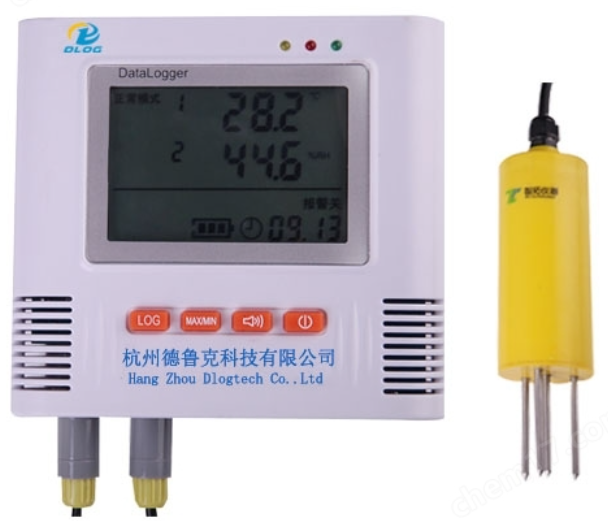
Soil moisture recorder is a specialized device used to monitor soil moisture content, and its effectiveness is significant in different fields and applications. The following analysis will be conducted from the aspects of functionality, advantages, application scenarios, and actual effects:
1、 Core functions and effects of soil moisture recorder:
1. Accurately monitor soil moisture
Principle: Real time measurement of soil volume moisture content or weight moisture content through sensors (such as capacitive, frequency domain reflection FDR, or gypsum block), and some models can simultaneously monitor parameters such as temperature and conductivity.
Effect: High data accuracy (usually with an error of less than ± 2%), able to quickly reflect the dry and wet state of soil, avoiding errors in manual judgment. For example, in agricultural irrigation, it is possible to accurately determine when and how much water should be replenished to avoid over irrigation or drought risks.
2. Long term continuous recording
Function: Built in storage chip or cloud transmission function, can continuously record the dynamic changes of soil moisture (such as hourly/daily/monthly scale).
Effect: Provide long-term data support to help analyze the patterns of soil moisture changes. For example, in scientific research, it can be used to study the effects of rainfall, evaporation, crop water consumption, etc. on soil moisture; In agriculture, irrigation plans can be optimized to reduce water resource waste.
3. Multi scenario applicability
Function: Supports moisture monitoring for different soil types (such as sandy soil, clay) and environments (indoor experiments, field farmland, forests, etc.).
effect:
Agriculture: In field crops, orchards, and greenhouses, precise irrigation is guided to improve crop yield and quality.
Research: Used for ecological research, hydrological model validation, and the impact of climate change on soil.
Engineering: Monitoring of soil moisture in building foundations and roadbeds to prevent settlement or frost heave issues.
Environmental monitoring: Provide data support in scenarios such as drought warning and wetland protection.
2、 Advantages and Value of Soil Moisture Recorder:
1. Improve resource utilization efficiency
Reduce water waste or energy consumption and lower costs through precision irrigation (agriculture) or optimized construction (engineering). For example, after using a moisture recorder in the orchard, water savings can reach 20% to 30%.
2. Preventing risks and disasters
Real time monitoring can provide early warning of soil drought, waterlogging, or freezing risks. For example, in areas with frequent precipitation, timely monitoring of soil moisture exceeding the limit can prevent root hypoxia or the growth of pests and diseases.
3. Data driven decision-making
Provide quantitative indicators to replace traditional empirical judgments. For example, in vegetable greenhouses, drip irrigation systems are automatically triggered based on soil moisture thresholds to ensure stable crop growth conditions.
4. Scientific research and teaching support
To provide high-precision data for research in soil science, ecology, agriculture, and other fields, and to assist in the production of academic achievements; Used in teaching to demonstrate the dynamic changes in soil moisture.