-
E-mail
kanjianxin921@126.com
-
Phone
13512499642
-
Address
28-2-3 Jinlian New Economic Industrial Park, Shuanggang Town, Jinnan District, Tianjin City
Halcarson Testing Technology (Tianjin) Co., Ltd
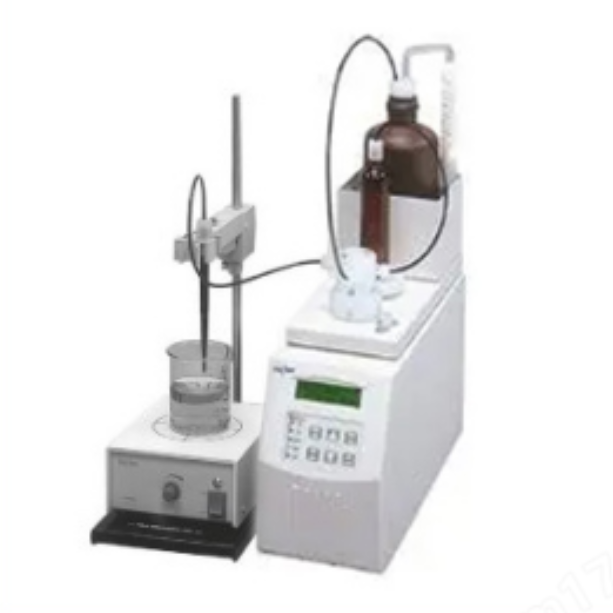
Imported fully automatic titrators usually have multiple titration modes
Date: 2025-10-29Read: 0
In the field of modern chemical analysis, imported fully automatic titrators have become indispensable and important tools in laboratories due to their advanced technology and rich functions. Among them, multiple titration modes are one of its significant features, which can adapt well to different types of sample analysis and experimental requirements.
Diversified titration modes of imported fully automatic titrators:
1. Acid base titration: This is the most common and fundamental titration mode. It is mainly used to determine the content of acidic or alkaline substances in a solution. For example, in the food industry, the total acidity of products such as beverages and dairy products can be determined through acid-base titration; In terms of environmental monitoring, it can be used to detect the acidity and alkalinity of water bodies to evaluate water quality. In this mode, the instrument will automatically determine the endpoint based on changes in the pH value of the solution, ensuring measurement accuracy.
2. Redox titration: suitable for reaction systems involving electron transfer. For example, in the pharmaceutical industry, the active ingredients of certain drugs can be quantitatively analyzed through redox reactions; In chemical production, this mode is often used to determine the content of oxidizing or reducing substances in raw materials or products. By monitoring changes in electrode potential, the instrument can accurately capture the endpoint of redox reactions.
3. Precipitation titration: This mode is used when the sample contains substances that can form insoluble precipitates with the titrant. Typical applications include the determination of chloride ion content in water. During the precipitation titration process, as the titrant is added, a precipitate gradually forms in the solution. The instrument can detect the formation of the precipitate through optical or other sensor technologies to determine the endpoint of the titration.
4. Imported fully automatic titrator complexometric titration: mainly used for quantitative analysis of metal ions. Many metal ions can form stable complexes with specific chelating agents, and by utilizing this property, the concentration of metal ions in the sample can be accurately determined through complexometric titration. For example, in the field of materials science, complexometric titration may be used to analyze the content of various metal elements in alloy materials.
5. Permanent stop titration: This is a titration method based on changes in current. In some special chemical reactions, when the stoichiometric point is reached, the current in the solution undergoes a sudden change, and the instrument determines the titration endpoint by detecting this current change. This model has unique advantages in the analysis of certain organic compounds.
6. Dynamic titration: Real time monitoring of various parameter changes during the reaction process, such as potential, pH value, etc. Suitable for experiments that require precise control of the reaction process, it can help researchers gain a deeper understanding of the reaction kinetics and obtain more information about the reaction mechanism.
7. Equivalent titration: gradually adding reagents in fixed volume increments, commonly used for plotting standard curves or comparative analysis. Through this method, a series of accurate data points can be obtained, providing a basis for establishing reliable quantitative analysis methods.
8. Imported fully automatic titrator sets endpoint titration: automatically stops adding reagents according to the preset endpoint conditions. Suitable for scenarios with known reaction endpoints, it improves the efficiency and reproducibility of the experiment.
9. Constant pH titration: Maintain a specific pH environment for titration to ensure that the reaction proceeds under optimal conditions. For some pH sensitive reactions, it is particularly important to obtain more accurate results.