-
E-mail
jinwen2022@126.com
-
Phone
19542994910
-
Address
Room 301, Baichuanghui, 689 Binhe Road, Suzhou
About Us
Guoguo Instrument Technology (Shanghai) Co., Ltd
Date: 2025-11-21Read: 2
Technical Definition
TSDC (Thermally Stimulated Depolarization Currents) is a high-precision testing device used to study the polarization state changes of dielectric materials under thermal stimulation. The basic principle is based on the short-circuit current (i.e. depolarization current) generated when a material establishes or releases a polarization state during heating. By recording the relationship between current and temperature, a TSDC spectrum is drawn to reveal the micro electrical properties of the material.
Using equipment
Polarization equipment:Fruit instrument probe hot table (EH200 Mini)

Temperature control range: RT~200 ℃
Heating rate: 0.1~50 ℃/min
Temperature stability: ± 0.1 ℃
Voltage resistance: 10kV
Test equipment:Fruit Instrument Thermal Excitation Current Testing System (TSDC-ECH600)
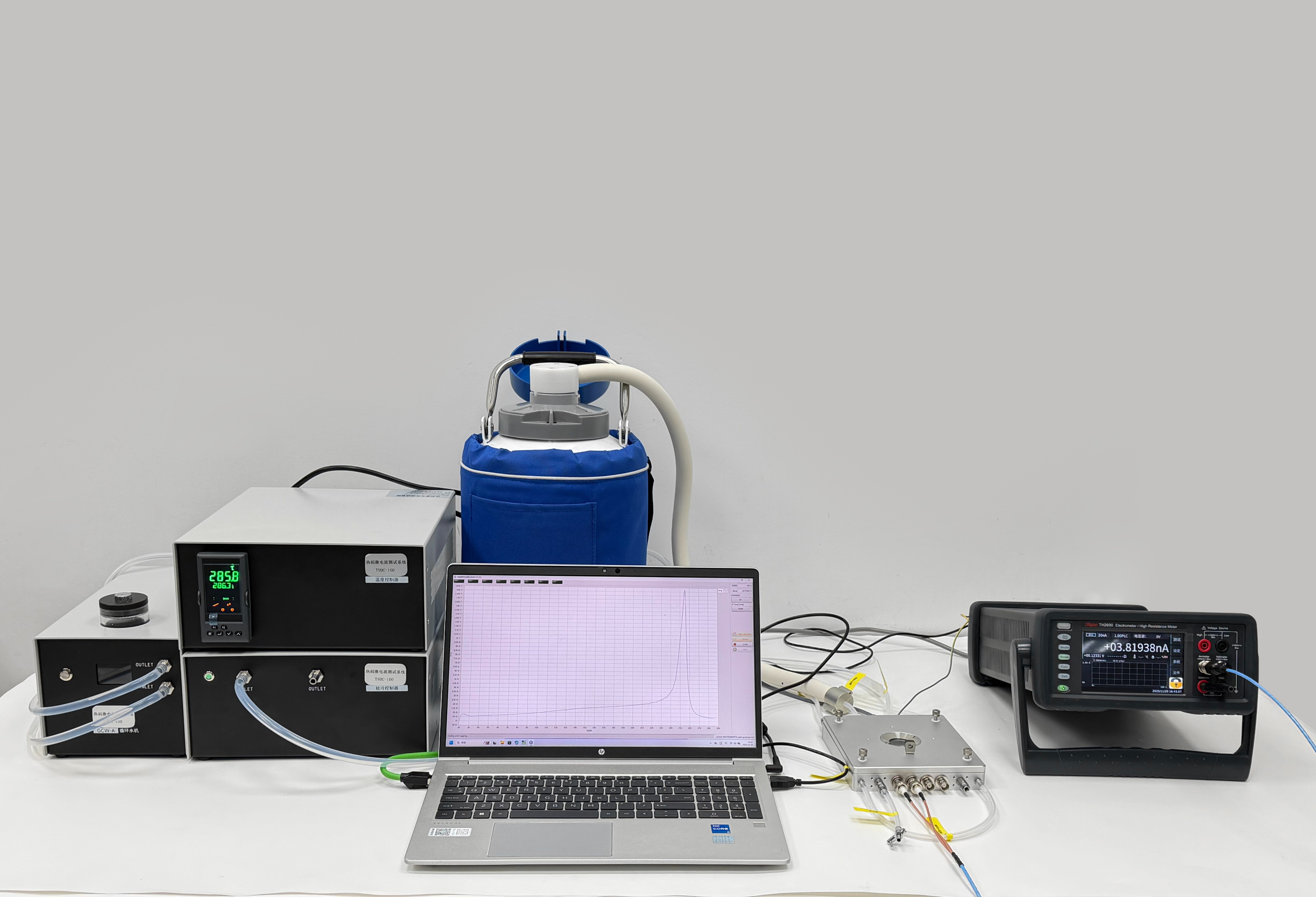
Temperature control range: -190 ℃~600 ℃
Heating and cooling rate: 0.1~30 ℃/min
Temperature stability: ± 0.1 ℃
Leakage current: ≤ 10pA/≤ 30fA (optional)
test software

Test Standard
GB/T 3389-2008 Testing Methods for Properties of Piezoelectric Ceramic Materials - Testing of Performance Parameters;
Qian Wenhu, Study on the Thermal Excitation Depolarization Current Function of Broadband Dielectric Spectrometer [J];
Test Process
Polarization stage:Clamp the sample between two electrodes, heat the oil bath to a specific temperature to excite charge carriers, and apply a DC polarization voltage to fully polarize the sample.
Freezing stage:Quickly cool down to low temperature to freeze the polarized state.
Depolarization stage:Heat up at a constant rate while measuring the depolarization current short circuited by the galvanometer to obtain the TSDC spectrum.
test case
Taking PZT ceramic capacitor as an example, conduct thermal excitation depolarization current testing.
1. The electrostatic meter uses TH2690 from Tonghui;
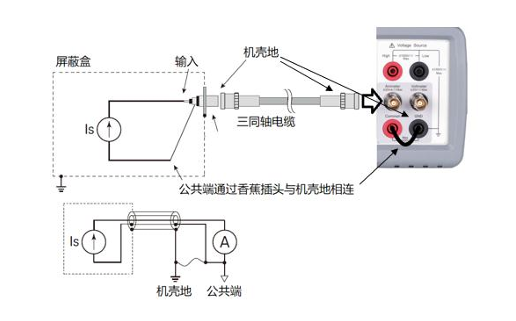
2. Measure the thickness of the sample and place it in the probe hot stage for polarization;

3. Place the sample in the probe hot and cold stage, and use the probe to form a circuit with the electrostatic meter;
4. Set up a testing program segment to collect current;
5. Test results:
