-
E-mail
jhxie9@yanjinyq.com
-
Phone
13808898943
-
Address
Hengfeng Commercial Plaza, Jinshazhou, Baiyun District, Guangzhou City
Guangzhou Yanjin Instrument Equipment Technology Co., Ltd
Avoiding measurement errors: Selection and installation specifications for rotor of Zhongwang IVS400 viscometer
Date: 2025-12-19Read: 3
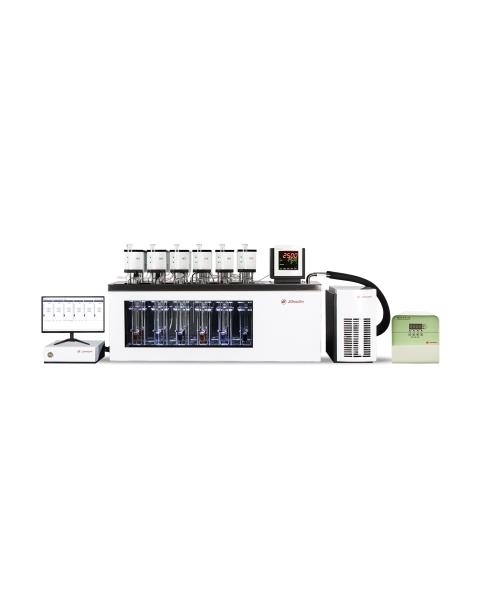
Zhongwang IVS400 ViscometerAs a high-precision intelligent rotational viscometer, it is widely used in industries such as pharmaceuticals, new energy, coatings, and food. The accuracy of its measurement results highly depends on the reasonable selection and standardized installation of the rotor. Improper operation can easily introduce system errors, and even lead to equipment alarms or invalid data. The following are key specifications and guidelines for avoiding pitfalls:
1、 Scientific selection: Matching sample viscosity range
The Zhongwang IVS400 supports multiple rotors (such as LV, RV, HA, HB series and UL ultra-low viscosity adapters), with different rotors corresponding to different ranges. For example:
LV series: applicable to 1 – 10000 mPa · s (such as aqueous solution and diluted lotion);
RV/HA series: covering 100-1000000 mPa · s (such as paint, adhesive, ointment);
UL adapter: designed for ultra-low viscosity fluids (such as solvents and injection water) with a viscosity of<10 mPa · s.
Misconception warning: If a small rotor is used for high viscosity samples (such as using LV-1 to measure slurry), it will result in torque exceeding the limit (>100%) and reading distortion; On the contrary, using a large rotor for low viscosity samples results in insufficient sensitivity and amplified errors.
Correct approach: First conduct a pre test and select the rotor and speed combination that allows the reading to fall within the 10% -90% torque range. You can refer to the built-in "range recommendation" function of the instrument or the selection table provided by the manufacturer.
2、 Standardized installation: Ensure mechanical alignment and stable connection
Cleaning and inspection: Before installation, confirm that the rotor is free of deformation, scratches, or residue, especially the threaded parts, which need to be clean and dry.
Manual tightening: Align the rotor with the main shaft thread and tighten it clockwise by hand until it fully fits (preferably with a slight "click" sound). It is strictly prohibited to use tools such as wrenches to forcibly lock, in order to avoid damaging the precision spindle.
Vertical alignment: After loading the sample container, ensure that the rotor is completely vertical and does not touch the cup wall or bottom. It is recommended to use a 600 mL standard beaker with a positioning bracket, and the liquid level should cover the rotor identification line (usually ≥ 70 mm).
Leg protection installation (if applicable): Some rotors (such as ULA) need to be used with leg protection to prevent eddy current interference, and must be assembled in the order specified in the manual.
3、 Other precautions
After replacing the rotor, it is necessary to select the corresponding model again in the software, otherwise the calculation parameters will be incorrect;
After testing high volatility or corrosive samples, immediately disassemble and clean all rotors to avoid corrosion affecting dynamic balance;
Regularly check the wear of the rotor and replace any deformed rotor in a timely manner.
The rotor is the "sensor" for viscosity measurement, and its selection and installation directly determine the reliability of the data. Strictly following the operating specifications of Zhongwang IVS400 not only avoids common errors, but also fully utilizes the high-precision advantage of this equipment in complex fluid characterization, providing solid data support for research and quality control.