-
E-mail
hsh@jujingyiqi.com
-
Phone
13192300728
-
Address
Room 430-432, Building G3, Najin Technology Industrial Park, No. 39 Ruihe Road, Huangpu District, Guangzhou City
Guangzhou Jujing Instrument Co., Ltd
The working principle and application fields of DMA35 densitometer
Date: 2025-10-13Read: 0
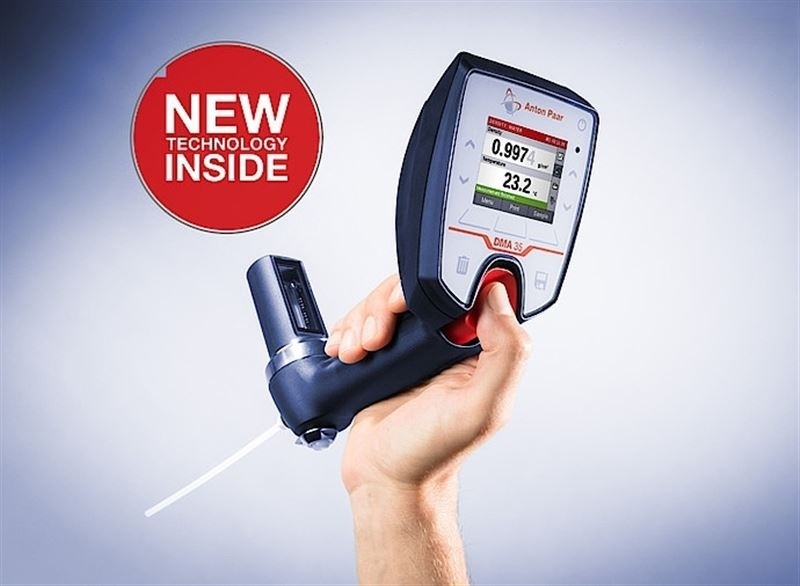
DMA35 densitometer is a commonly used high-precision density measurement instrument, widely used for density testing of liquids, solids, and gases. It relies on the principle of oscillating tubes and can quickly and accurately measure the density of substances, and is widely used in industries such as chemistry, food, medicine, and petroleum.
1、 Working principle
DMA35 density meterThe core working principle of is based on the "oscillator principle", which measures the density of a substance through an oscillator tube (usually made of glass or other corrosion-resistant materials).
1. Principle of oscillating tube
Working through an oscillating tube with a specific geometric shape. The oscillation tube is filled with the liquid or solid sample to be tested. When the tube vibrates at a certain frequency, the frequency of vibration is closely related to the characteristics of the sample such as mass, volume, density, etc. Specifically, when the mass or volume of the tube changes, the oscillation frequency will also change. Based on these changes, the oscillation frequency is converted into the density value of the substance through high-precision sensors and computer algorithms.
2. Calculate density
Density calculation is based on the mass vibration frequency relationship. By analyzing the vibration characteristics of the oscillating tube, the density of liquid or solid samples can be determined. It adopts a direct measurement method, which has advantages in accuracy and efficiency compared to traditional water displacement or buoyancy methods.
2、 Application Fields
The DMA35 densitometer is widely used in multiple industries due to its high precision and fast response, mainly including the following aspects:
1. Chemical industry
In the chemical industry, it is commonly used for monitoring and controlling chemical reactions. During the reaction process, the density of reactants and products will change as the reaction progresses. By monitoring these changes in real-time, it can assist in quality control during the production process, ensuring the quality and stability of the product. For example, it can play an important role in acid-base reactions, solubility testing, and solvent recovery processes.
2. Food and Beverage Industry
In the food and beverage industry, density is an important indicator for evaluating product quality. It can also be used to measure the density of various liquid products, such as alcohol content, sugar concentration, oil content, etc. These density data are crucial for product formulation optimization, quality testing, and production control. For example, accurate measurement of alcohol concentration is of great significance for brewing and beverage production, as it can provide high-precision measurement results.
3. Oil and gas industry
In the petrochemical and natural gas industries, it is widely used for density measurement of crude oil, refined oil, natural gas, etc. The density of crude oil in an oilfield is closely related to its quality and water content, and changes in density can reflect the production status of the oilfield and changes in the composition of the oil. It can also work in harsh environments and provide accurate density data for quality control in exploration, transportation, and storage processes in the oil and gas industry.
The DMA35 densitometer has become a key measurement tool in various industries due to its high precision, strong stability, and wide range of applications. With the continuous advancement of technology, its application in density measurement will further expand and become an important equipment in modern industry and scientific research.