-
E-mail
customer@jetbiofil.com
-
Phone
15812423656
-
Address
No.1 Doutang Road, Yonghe Avenue, Yonghe Development Zone, Huangpu District, Guangzhou
Guangzhou Jiete Biological Filtration Co., Ltd
Cultivation chamber for adherent cells: analysis of the core working principle of bottle transfer culture
Date: 2025-12-16Read: 2
In vaccine production, monoclonal antibody preparation, and basic cell biology research,spinner bottleAs a classic carrier for adherent cell culture, it still holds an important position in the field of biopharmaceuticals due to its advantages of simple structure, controllable cost, and easy scalability. Its core working principle revolves around the collaborative mechanism of "dynamic adhesion nutrient exchange gas balance". By simulating the microenvironment of cell growth in vivo, it provides sufficient attachment space and stable growth conditions for adherent cells (such as Vero cells and CHO cells), achieving efficient cell proliferation and functional maintenance.
The dynamic adhesion mechanism is the core of rotary culture, providing cells with a uniform attachment surface through continuous rotation. The growth of adherent cells depends on their adhesion to solid surfaces. In traditional static culture, cells can only adhere to the bottom of the container, resulting in extremely low space utilization. The rotating bottle is driven by a motor to achieve a slow rotation of 3-10 revolutions per hour, and the culture medium inside the bottle forms a dynamic liquid film with the rotation of the bottle. When the rotating bottle rotates to a certain angle, some of the bottle walls detach from the liquid surface and are exposed to the air, and the adherent cells attach and spread in this area; As the bottle continues to rotate, the attached cells periodically come into contact with the culture medium, obtaining nutrients while avoiding hypoxia caused by prolonged soaking. This dynamic cycle allows cells to be evenly distributed on the entire cylindrical surface of the inner wall of the rotating bottle, increasing space utilization by 5-8 times compared to static culture and significantly increasing cell yield per unit volume.
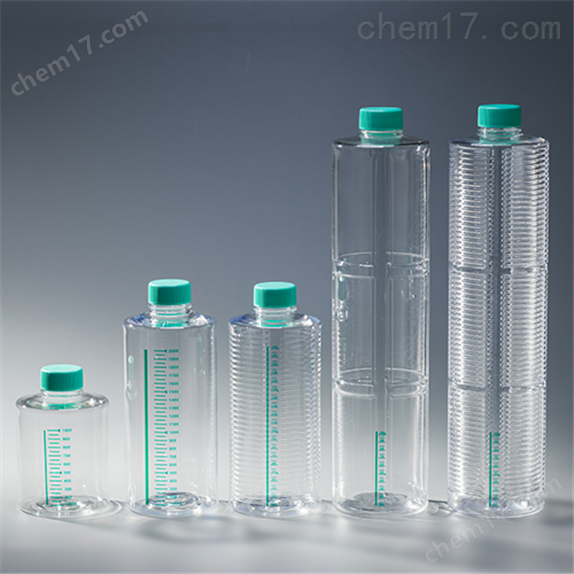
The efficient nutrient exchange system is the material basis for continuous cell proliferation, and the structural design of the transfer bottle ensures the full diffusion of nutrients and metabolic waste. The transfer bottle usually adopts a cylindrical structure with a volume ranging from 100mL to 2000mL, and there are sealed inoculation and sampling ports on the side of the bottle body. During the rotation process, the culture medium forms a regular vortex flow inside the bottle. This flow pattern not only avoids mechanical damage to cells caused by vigorous stirring, but also accelerates the diffusion of nutrients such as glucose and amino acids in the liquid, keeping the difference in nutrient concentration in different areas of the bottle within 5%. At the same time, waste products such as lactic acid and carbon dioxide produced by metabolism are also carried away in a timely manner with the flow of the culture medium, preventing toxic inhibition of cells caused by excessive local concentration and maintaining a stable growth microenvironment for cells.
The gas-liquid equilibrium regulation mechanism provides guarantees for cell respiration and metabolism, achieving gas homeostasis in the culture environment. The aerobic respiration of adherent cells requires a continuous supply of oxygen, which is met by the method of "liquid film exposure gas exchange" in rotary flask culture: when the rotary flask rotates to detach the wall of the adherent cells from the liquid surface, the cells directly come into contact with the air inside the incubator, rapidly completing oxygen uptake; When the culture medium comes into contact with air, it achieves oxygen dissolution and carbon dioxide release, maintaining a stable pH value in the appropriate range of 7.2-7.4. For high oxygen consuming cells (such as Vero cells used in vaccine production), the oxygen supply efficiency can be further improved by increasing the rotation speed of the bottle (controlled within 10 revolutions per hour) or introducing mixed gas into the incubator to ensure the metabolic needs of the cells.
The optimization of the material and structure of the transfer bottle further enhances the cultivation effect. Traditional transfer bottles often use high borosilicate glass material, which has good transparency and is easy to observe the growth status of cells through a microscope, but it is heavy and prone to damage; Modern transfer bottles widely use medical grade polycarbonate (PC) material, which is lightweight, drop resistant, and has excellent biocompatibility, avoiding adverse reactions between cells and materials. Some of the transfer bottles are also treated with hydrophilic coating on the inner wall to reduce cell adhesion resistance and make cell spreading more uniform, especially suitable for stem cell culture with weak adhesion ability.
In large-scale production, the bottle transfer system is composed of multiple layers of supports to form a cultivation system, which is combined with automatic liquid replenishment and sampling devices to achieve automated operation. For example, in the production of influenza vaccines, a culture system consisting of thousands of rotating bottles can achieve large-scale expansion of Vero cells. By precisely controlling the rotation speed, culture temperature, and nutrient supply of the rotating bottles, the cell density can be ensured to be above 1 × 10 ⁶ cells/cm ², providing sufficient host cells for subsequent virus inoculation. The combination of scalability and ease of operation makes bottle culture still irreplaceable in the field of biopharmaceuticals.
The working principle of rotary culture is essentially "simulating the dynamic optimization of the internal microenvironment", from improving the spatial utilization of dynamic adhesion, to enhancing the efficiency of nutrient exchange, to precise regulation of gas-liquid equilibrium, each mechanism is designed around the growth characteristics of adherent cells. Despite the continuous development of new cultivation equipment such as bioreactors, rotary flasks are still widely used in vaccine production, basic research, and other scenarios due to their advantages of low cost, easy operation, and high reliability. A deep understanding of its working principle is of great guiding significance for optimizing cultivation processes, improving cell yield and quality, and providing solid support for the efficient development of the biopharmaceutical industry.