-
E-mail
qeservice@enli.com.tw
-
Phone
18512186724
-
Address
Room 409, Building A, No. 169 Shengxia Road, Pudong New Area, Shanghai
About Us
Guangyan Technology Co., Ltd
Date: 2025-09-10Read: 1
Research background and challenges
In recent years, perovskite solar cells(PSCs)Mid self-assembled monolayer(SAMs)The application research shows that its mechanism of action differs significantly from the traditional interface dipole design principle, especially inn-i-pUsed as an electron selective molecular layer in the structure(ESMLs)At that time. This deviation from traditional theories has prompted researchers to re-examineSAMsThe actual mechanism of action is mainly reflected in the following three aspects:
Theoretical contradictions in design principles:p-i-nExtraction of holes in the structure and self-assembly of monolayers(HSSAMs)Using aniline based units with electron donating properties can effectively improve transparent conductive oxides(TCO)This contradicts the traditional theory that electron withdrawing groups should increase their work function.
The importance of surface doping mechanismExperimental evidence shows that,SAMsThe main function may not be limited to the interface dipole effect, but rather through the formation of electron rich or electron deficient regions on the surface, similar to 'surface doping'(surface doping)Mechanism to promote the extraction of specific charge carriers. This explains whyn-i-pIn the structure, electron deficient typeSAMs(ESSAMs)Can effectively serve as an electronic selection layer.
Process and structural uniformity issues:PSCsThe commonly used spin coating method in preparation is difficult to ensureSAMsUniform arrangement, research has foundHSSAMsIn practical applications, uneven surface coverage is often observed, and even multi-layer structures are formed instead of ideal monolayers, resulting in randomized dipole orientation and further deviation from traditional methodsSAMsConcept.
Research team and key research achievements
This study was conducted byGao Peng, Fujian Institute of Material Structure, Chinese Academy of Sciences(Peng Gao)教授Leader, the paper was published inJournal of the American Chemical Society (JACS).
The research team adoptsCollaborative electron deficient surface engineering(Synergistic Electron-Deficient Surface Engineering)Method: Systematically analyzed electron deficient materials of different strengths, aiming to solve the problem of perovskite solar cells(PSCs)Mid self-assembled monolayer(SAMs)The problem of deviating from the traditional interface dipole design principles in terms of mechanism of action. They specifically studied itDual functional bipyridine based electron selective molecular layer(ESMLs), and by incorporating carboxylic acid groups(Bpy-COOH)replace withStrong electron withdrawing cyanoacrylate moiety(Bpy-CAA) To regulate the electron absorption intensity of molecules, in order to enhance adsorption, electron extraction, and passivation effects. The study revealedThe electronic properties of molecules are more decisive for efficient electron extraction than dipole orientation.
Main achievements:
1. Develop efficientBpy-CAABasic single structurePSCThe device has achieved 23.98%Power conversion efficiency(PCE).
2. 1 cm2 large-scalen-i-p PSCdevicePCEreach, achieve, attain 21.63%Currently, organic materials are being used in reportsESMLsOne of the high efficiencies.
3. Translate into EnglishBpy-CAAasSnO2/When the interface layer of perovskite contacts, the single junctionPSC PCEreach, achieve, attain 26%.
4. Applied to four terminal perovskite/Silicon series solar cells(4T-P/STSCs)At that time, it achieved remarkable results 30.83% PCE, listed as reported4T-P/STSCsHigh efficiency category(Fig. 7TheTable 1)


Experimental steps and process

Fig. 4a
Material preparation and component preparation
material synthesis
Adopting commercially availableBpy-COOHmaterial
Through a one-step processKnoevenagelCondensation reaction synthesisBpy-CAA
Preparation process of solar cells
Substrate processing:FTOThe substrate is cleaned by ultrasonic waves(Cleaning agent, deionized water, acetone, ethanol)And plasma treatment
electron transport layer: Spin coating dilutionSnO2Colloidal solution and annealing to form approximately35nmThickness layer
Electron selective molecular layerSpin coating different concentrationsBpy-COOHorBpy-CAASolution and heat treatment
Calcium titanium ore layer: Spin coating specific bandgap(1.57eVor1.53eV)Perovskite precursor solution, with the addition of an anti solvent during the process(Chlorobenzene or ethyl acetate)Promote crystallization and subsequent heat treatment
hole transport layer: Spin coatingSpiro-OMeTADsolution
electrode preparation:
Single junction battery: Heat evaporated silver plating(Ag)Make the top electrode
Translucent battery and four terminal series top battery: sequentially depositedAu/MoO3Buffer layerINFORMATIONTransparent electrodeAgGrid, finally addMgF2Anti reflective coating
Silicon heterojunction bottom cell(Used for four terminal series structure)
Silicon wafer etching forms pyramid texture and standard cleaning
passPECVDDeposition of multi-layer silicon thin films as passivation and doping layers
sputteringITOAnd annealed, finally evaporatedAgelectrode
stability assessment
storage stabilityUnpackaged components placed in ambient air(30%Relative humidity, room temperature)Monitor performance under day night cycle
Operational stabilityMaximum power point tracking under constant solar illumination(MPP tracking)
structural stabilityPerovskite thin films age in ambient air and are regularly testedXRDMeasure and track changes in crystal structure

Fig. 1c
Characterization methods and results
Quasi Fermi level splitting(QFLS) /Implicit open circuit voltage(iVOC)
QFLSMeasured the electrons in the device-The maximum degree of energy separation achieved by hole pairs under illumination,QFLSIt is based on the photoluminescence quantum yield(PLQY)The measurement results are calculated and can be regarded as the theoretical maximum open circuit voltage(iVOC)It directly reflects the magnitude of non radiative recombination losses. The research results show that,Bpy-CAACan effectively minimize interface non radiative recombination losses.

imageS36bCompared the half stack components on different substratesQFLSValue. Compared to pure perovskite thin films1.226 eV,Bpy-COOH/The perovskite sampleQFLSSignificantly reduced to1.201 eVButBpy-CAA/The perovskite sample is displayed as1.216 eVThis indicates thatBpy-CAAHelps to improve energy level alignment and passivate surface defects of perovskite, thereby minimizing non radiative recombination losses at the interface.

Guangyan Technology has launched a new productQFLS-MaperPredict material limits!
Enlitech QFLS-Maper,1/5The equipment price is sufficient for useMappingFunctional outputQFLS imageVisualizing the overall quasi Fermi level distribution, the quality of the material is clearly visible!
Follow us for more latest news!
Power conversion efficiency(PCE)and current density-voltage(J-V)curve
J-VCurve provides power conversion efficiency(PCE)Open circuit voltage(Voc)Short circuit current density(Jsc)And fill factor(FF)Waiting for key parameters. The research team usesEnlitech SS-XSolar simulator, simulationAM 1.5G (100 mW/cm2)Measurement under sunlight conditions.
1. Top semi transparent perovskite solar cell(ST-PSC):in useBpy-CAAprocessedSnO2Under the interface, it has been implemented 20.60%ofPCE,Vocfor1.209 V,Jscfor20.85 mA/cm2,FFfor81.73%.
2. Bottom silicon heterojunction(SHJ)Solar cell:Passing through the topST-PSCAfter filtering, it still contributed 10.23%ofPCE.
3. overall4T-P/STSCs:The total efficiency of the top and bottom batteries reaches 30.83%.
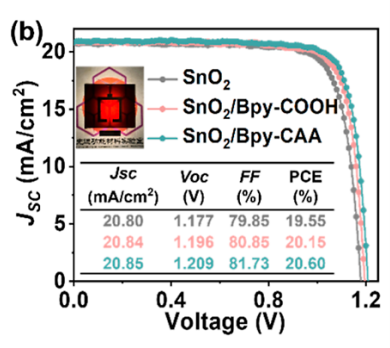
image7b: shows whether to use or not to useBpy-COOHandBpy-CAAprocessedSnO2ofST-PSCsofJ-VCurve. This diagram visually illustratesBpy-CAASignificant improvement in component performance after processing.

image7c: DisplayedST-PSCsInFTOUnder lateral illuminationJ-VCurves, as well as passing throughST-PSCsThe filtered silicon solar cellJ-VCurve. Present the performance of each sub cell in the series battery and ultimately summarize it30.83%The overallPCE.
table 1: Detailed list of whether it has been done or notESMLsprocessedSnO2The Best Performance Broadband GapST-PSCsAnd stack style4T-P/STSCsPhotovoltaic parameters

External quantum efficiency(EQE)
EQEThe efficiency of solar cells in converting incident photons into electron currents at different wavelengths was measured, and the integrated value should be consistent withJ-VMeasured by the curveJscThe values match. The research team usesEnlitech QE-RQuantum efficiency measurement system,And the light intensity of each wavelength is calibrated using standard monocrystalline silicon reference solar cells.

researchEQEThe results confirmedST-PSCandSHJThe effective utilization and integration of solar spectra by sub cellsJscValue andJ-VThe measurement results are consistent.

imageS40b: DisplayedST-PSCTop battery and throughST-PSCThe filtered silicon bottom batteryEQESpectrum. The top battery mainly absorbs short wavelength light, while the bottom battery effectively utilizes the transmitted long wavelength light, which explains its high series efficiency. Its pointsJscThe values are respectively20.59 mA/cm2(top)and18.47 mA/cm2(bottom)
Time resolved photoluminescence(TRPL)
TRPLUsed for measuring photo generated charge carriers (electrons)-The shortened lifetime of hole pairs and charge carriers usually indicates more efficient charge extraction or faster recombination.
Bpy-CAAThe processed perovskite film has a shorter carrier lifetime, indicating its stronger electron extraction ability.
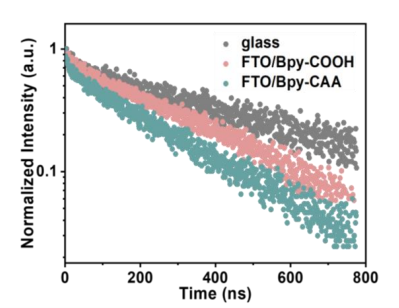
imageS35: It shows sedimentation on glassFTO/Bpy-COOHandFTO/Bpy-CAAThe perovskite thin film on the substrateTRPLAttenuation curve. This trend proves thatBpy-CAAEffectively enhanced electronic extraction and transport capabilities.
Transient reflectance spectroscopy(TR Spectroscopy)
TRSpectroscopy is used for researchESMLs/The carrier dynamics of perovskite interfaces, especially at detection depths (approximately)20 nm)The carrier lifetime inside. Results andTRPLConsistent, it proves everythingBpy-CAAExcellent electronic extraction properties.

image5a-cDisplayed deposition on different substrates(FTO/Bpy-COOHandFTO/Bpy-CAA)Perovskite thin films on different detection wavelengths and pumping-Two dimensional pseudo color map of reflectance changes under detection delay time. indicateBpy-CAAHas superior electronic extraction properties.
Mott-Schottky(Mott-Schottky)image
Used to study the driving force of photo generated charge carriers and the built-in potential of devices(WBI)Research has found that,Bpy-CAAdeviceVbiA higher value indicates improved band alignment, which is beneficial for the separation of photogenerated carriers.

image5dIndicating that band alignment has been improved, which helps to suppress non radiative recombination and enhanceVoc.
Thermal admittance spectroscopy(TAS)Density of trap states(tDOS)
TASUsed to characterize the density of shallow and deep defects. The results show thatBpy-CAAThe device is in a shallow energy level (approximately0.4 eV)The locationtDOSSignificantly reduced, attributed toBpy-CAAThe effective passivation effect of Lewis base passivation unit.
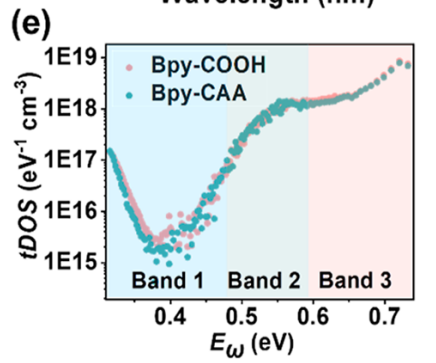
image5eShowcased the devicetDOSEvolution.Bpy-CAAThe device is located at a shallow energy leveltDOSSignificantly reduced, indicating effective suppression of defects such as iodide vacancies
Electrochemical impedance spectroscopy(EIS)
EISfor evaluationPSCsThe charge transfer characteristics in, especially the charge recombination resistance(Rrec)Research has found that,Bpy-CAAdeviceRrecThe value is significantly higher, indicatingBpy-CAA/The non radiative recombination loss at the perovskite interface is reduced.
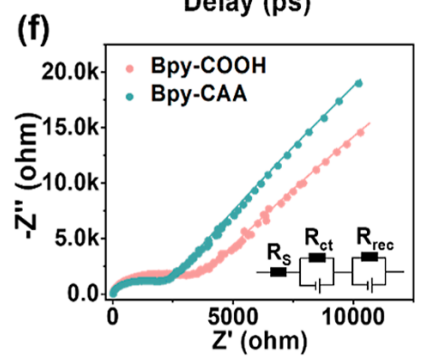
image5fStrongly provingBpy-CAA/Reduction of non radiative recombination losses at the perovskite interface.
work function(Work Function, WF)Adjustment
WFMeasurement revealsESMLsHow to influenceFTOThe work function of the substrate affects the efficiency of electron extraction. Research has shown that,Bpy-CAAsignificantly reducedFTOAnd present a more uniform work functionWFDistribution, which is beneficial for electron extraction/Transfer. The key finding is The electronic properties of molecules are more decisive for efficient electron extraction than dipole orientation.
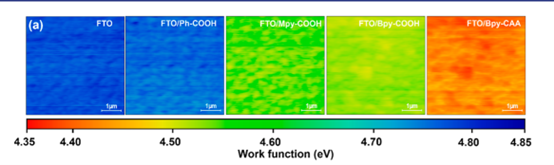
image2a: Displayed nakedFTOProcessed with different materialsFTOThe distribution of work functions. It can be seen thatBpy-CAAprocessedFTOThe work function is shifted downwards and distributed more evenly.
stability assessment(Storage stability and operational stability)
A comprehensive stability study was conducted on the device, including storage stability testing in ambient air and continuous maximum power point tracking(MPP tracking)The results show that,Bpy-CAAThe device exhibits long-term stability and operational stability.

image6d: Displayed unpackagedPSCsStability test results for long-term storage in ambient air.Bpy-CAAThe device is stored in the air 1000 Maintain its initial state even after hoursPCEof91.2%ButBpy-COOHThe device only maintains63.4%.
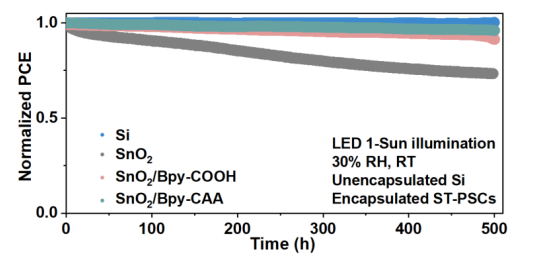
imageS43: Displayed packagingST-PSCsAnd unencapsulatedSiIn the ambient air (approximately)30%Relative humidity, room temperature)MPPThe tracking results.Bpy-CAAThe device is 500 Maintain its initial state even after hoursPCEof95%The above.
XX-ray diffraction(XRD)
XRDUsed to monitor the crystallization evolution and structural stability of perovskite thin films during aging process. The results show thatBpy-CAAEffectively reducing the degradation of perovskite films and maintaining better crystal structure integrity.

image6a,bTracking at room temperature and approximately30%Aging under relative humidityBpy-COOHandBpy-CAACrystallization Evolution of Perovskite Thin FilmsXRDPattern. By contrast,Bpy-CAAAfter exposure to moisture and oxygen in the sample, the crystal strength only slightly decreased, highlighting its effective alleviating effect
Other characterizations
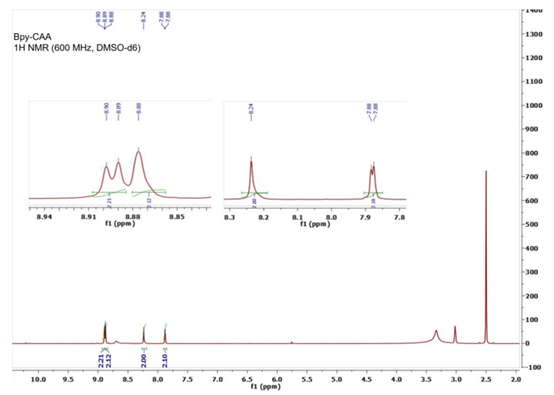
1. Nuclear Magnetic Resonance and Mass Spectrometry Analysis(NMR & MS):Characterization of synthetic compoundsBpy-CAAThe purity and correctness of the structure,1H NMRIn the spectrum8.25 ppmThe nearby characteristic vinyl resonance band is consistent with the literature.(imageS6)
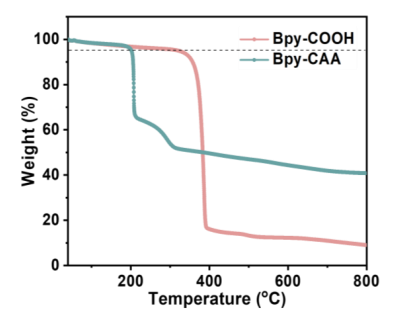
2. Thermogravimetric Analysis(TGA):Evaluate the thermal stability of materials,Bpy-CAAandBpy-COOHDecomposition temperatures are approximately200°Cand320°C, much higher thanPSCsTypical operating temperature85°C.(imageS8)
3. ultraviolet-Visible Light Transmission(UV-Vis):analyzeESMLsOptical properties, two typesESMLsThe absorption in the visible light region is negligible and has an impact onFTOThe optical transmittance of the substrate has no significant effect.(imageS11)

4. Contact angle measurement(Contact Angle):evaluateESMLsThe wettability between the processed substrate and the perovskite precursor solution,Bpy-CAADisplay higher contact angle26.2°Helps to form larger grains.(image2d,e)

5. atomic force microscope(AFM):Analyze the surface roughness of thin films andESMLsThickness, after processingFTOofRMSA decrease in roughness indicates an improvement in interface contact.(imageS13)

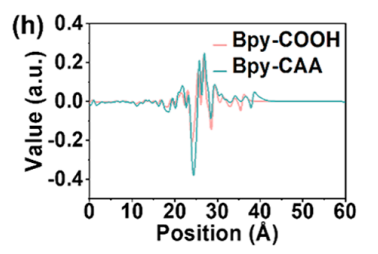
6. Density Functional Theory(DFT):Simulate molecular electron electrostatic potential and dipole moment, calculate and displayBpy-CAAHas a larger dipole moment and significantly enhanced adsorption strength.(image2h)
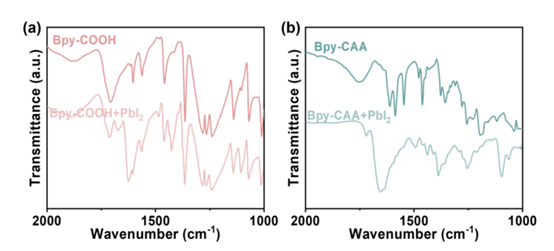
7. Fourier transform infrared spectroscopy(FTIR):exploreESMLsInteracting with perovskite,Bpy-CAAChineseC=OandC=NConfirmation of stretching frequency offsetPb2+With pyridineNAtomic coordination interactions.(imageS20)
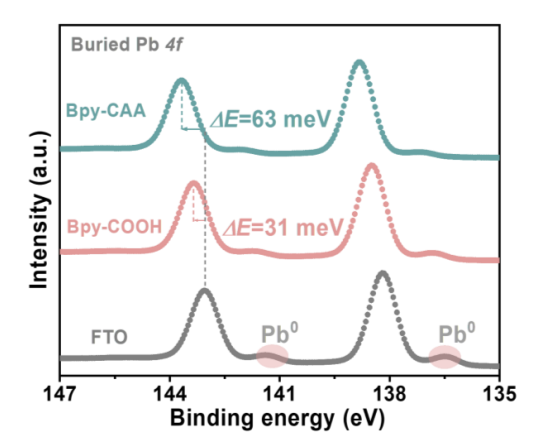
8. XX-ray Photoelectron Spectroscopy(XPS):Research on Perovskites andESMLsElectronic interaction,Pb 4fPeak to high binding energy shift indicatesPbElevated oxidation state andBpy-CAAThe offset is more pronounced.(imageS21)
9. scanning electron microscope(SEM):Observing the morphological characteristics of perovskite thin films,FTO/Bpy-CAAThe thin film displays uniformity and complete coverage, with larger grains and a smooth surface.(image3c,d)

Conclusion
The research team focuses on developing novel bifunctional electron selective molecular layers(ESMLs)To enhance perovskite solar cells(PSCs)Efficiency and stability
Core research findings and material design
•Breaking through traditional cognitionResearch has found that regulating transparent conductive oxides(TCO)When it comes to work function,The strong and weak effects of electron deficient surface modification far outweigh the traditional interface dipole direction.
•new-typeESMLs Bpy-CAADevelopment of: By combining bifunctional pyridine groupsESMLs(Bpy-COOH)Replace the carboxylic acid group in withCyanoacrylate groups with stronger electron withdrawing ability(Bpy-CAA)Successfully improved its performance.
•Dual function feature:Bpy-CAASimultaneously possessing carboxylic acid groups and chelating Lewis base nitrogen atoms, it can firmly anchor toTCOThe substrate effectively passivates perovskite defects.
Bpy-CAAKey advantages and mechanisms:
•Enhancement of work function regulation:Bpy-CAAFluorine doped tin oxide(FTO)The work function is derived from4.74 eVFurther downward movement4.48 eV, and the distribution of work function is more uniform (surface variation is0.05 eV)This proves the dominant role of electron deficient surface phenomena.
•Excellent adsorption and film quality:Bpy-CAAtoFTOThe adsorption strength on the surface is significantly enhanced (the adsorption energy value is more negative, reaching...)-5.22 eVto-7.60 eV)[1, 13, S18]And reduceFTOsurface roughness[14, S19], promoting the deposition of high-quality perovskite thin films andgrain growth(Contact angle)26.2°).
•Efficient defect passivation and charge transfer:Bpy-CAAThrough andPbI2The strong coordination effect effectively passivates interface defects (such as iodide vacancies), reduces deep defects and metal lead content. Electrical and spectroscopic analysis confirmed that,Bpy-CAASignificantly improved electron extraction and transmission efficiency, suppressed non radiative recombination losses, and improved band alignment (with higher built-in potential, achieving...)1.088 V).
Breakthrough in performance of perovskite solar cells:
•Single settlementPSCefficiency:Bpy-CAAThe device has been implementedGundam23.98%Power conversion efficiency(PCE)BeyondBpy-COOHDevice(23.20%). This is organicESMLsapplied ton-i-p PSCsOne of the high efficiency reported in the report.
•Performance of large-area devices: In1 cm2Large area devicesIn the middle,Bpy-CAAThe device still maintains its integrity21.63%ofPCEYes, it is1 cm2n-i-p PSCsUsing organic materialsESMLsThe reported high efficiency.
•andSnO2compositeESLIntegration of: WillBpy-CAAIntegrate as an interface layer intoSnO2/In perovskite contact, single junctionPSCofPCEreach, achieve, attain26%.
•Four terminal perovskite/Silicon series solar cells(4T-P/STSCs)This strategy is further applied to4T-P/STSCs, achieved30.83%The efficiency, ranked among the reports so far4T-P/STSCsAmong high efficiency.
Improved device stability:
• Bpy-CAAThe device exhibits long-term stability in ambient air (relative humidity around)30%)Storage in the middle1000After hours, it still maintains its initial statePCEof91.2%Far superior toBpy-COOHdevice63.4%This is attributed toBpy-CAAStronger adsorption energy at the interface with perovskite in the presence of water and oxygen[30, S38]It effectively reduces the decomposition of perovskite crystal structure.
Reference from Journal of the American Chemical Society-DOI: 10.1021/jacs.5c07357
This article is rewritten by Enlitech for scientific research and academic sharing. If there is any infringement, please inform us by email