-
E-mail
qeservice@enli.com.tw
-
Phone
18512186724
-
Address
Room 409, Building A, No. 169 Shengxia Road, Pudong New Area, Shanghai
About Us
Guangyan Technology Co., Ltd
Date: 2025-07-16Read: 2
Research difficulties and challenges

Wide bandgap(WBG)Nickel oxide as a hole transport layer in the sub battery(NiOx)Self assembling monolayers(SAMs)The interface contact problem between them severely limits the efficiency and stability of the device.
The existing technology faces the following main challenges:
•NiOxCorrosion issue:Traditionally widely usedSAMsFor example, containing phosphoric acid(PA)As an anchoring groupSAMs (PA-SAMs), itsStrong acidityEasy to corrode and have chemical reactivityNiOxLayer, it will damageNiOxThe integrity and functionality of the layers weaken the stability of the device.
•SAMMolecular Aggregation and Interface Issues: traditionSAMsMolecules inNiOxSurface is prone to occurrenceAggregation phenomenonUneven film formation can lead toInterface loss,Affects carrier transport efficiencyAnd cause significantopen-circuit voltage(VOC)Loss.
Research Team and Achievements
This groundbreaking study on high-efficiency all perovskite stacked solar cells was conducted byGe Ziyi and Liu Chang, Ningbo Institute of Materials Technology and Engineering, Chinese Academy of SciencesTeam leader, published in top international scientific journalsNature Communications.
The research team has successfully developed a less acidic solutionBoric acid functionalizationSAMNot onlyEffectively suppressed theNiOxCorrosion ofIt can also form a more uniform and stronger bonding interface layer, significantly improving the efficiency of all perovskite stacked solar cells and greatly enhancing the long-term operational stability of the device.

imageS6The original problem solved (corrosion)
The core achievements of the research include:
•solveNiOxCorrosion issue:successful developmentSelf-assembled monolayers with weak acidity(SAMs)Significantly reduce the impact on nickel oxide(NiOx)Corrosion of the hole transport layer enhances interface stability.
•improveSAMFilm quality:new-typeSAMExhibiting stronger interface adhesion and more uniform film-forming characteristics, effectively overcoming traditional challengesSAMThe problem of easy aggregation and uneven coverage of molecules,Reduce interface loss.
•Optimize the quality of perovskite thin films:The improved interface promotes more uniform growth of perovskite crystals, reduces defects, and effectively suppresses phase separation caused by light exposure, improving film quality and stability.
•Significantly improve device efficiency:Single junction wide bandgap(WBG)The efficiency of the sub battery is determined by18.9%upgrade to20.1%Full perovskite stacked solar cell(TSCs)More efficient28.5%.
•Significantly enhance operational stability:The research results have significantly improved the stability of the device, and the all perovskite stacked cell can withstand continuous light irradiation 500 Can maintain initial efficiency even after hours90%.
Experimental steps and process
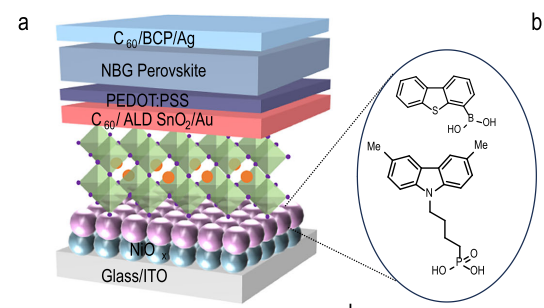
Preparation of Interface Materials and Thin FilmsResearch team prepares various self-assembled monolayers(SAMs)Materials and inITOSequentially deposit on conductive glassNiOxLayer andSAMs, formingThis / NiOx / SamsThin film structure. Simultaneously preparing traditionalSAMmaterial(asMe - 4PACzAs a control group. After preparing some samples, they were spin coated and cleaned with ethanol to remove residual molecules.
Manufacturing single junction wide bandgap solar cells: Prepared byITO/NiOx/SAMThin film as hole transport layer, spin coating deposition of wide bandgap perovskite thin film, followed by sequential deposition of electron transport layer(C60TheALD SnO2)Complete the fabrication of a single junction wide bandgap battery using silver electrodes.
Production of fully perovskite stacked solar cellsIntegrating wide bandgap sub cells with narrow bandgap perovskite sub cells to construct a double ended fully perovskite stacked solar cell. The complete structure is:ITO/NiOx/SAM/Wide bandgap perovskite/C60/SnO2/Au/PEDOT:PSS/Narrow bandgap perovskite/C60/BCP/Ag.
Evaluate battery efficiencyUnder standard testing conditions(1 sun, 100 mW/cm2)Next, measure the current of single junction and stacked batteries-Voltage characteristics, evaluation of key parameters such as photoelectric conversion efficiency, open circuit voltage, short-circuit current density, and fill factor. Synchronize steady-state power output tracking and external quantum efficiency measurement.
Conduct stability testingPerform maximum power point continuous light tracking test on the packaged stacked battery, continuously500Hours are used to evaluate long-term operational stability. Additionally, proceed85℃High temperature light aging test to verify the thermal stability performance of the battery.
Characterization Techniques and Results
Quasi Fermi level splitting(QFLS)
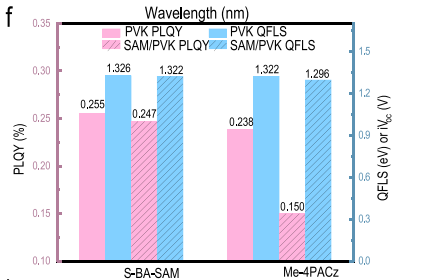
Measure the maximum theoretical open circuit voltage of a material under illumination(iVOC)The indicator directly reflects the degree of non radiative composite loss. Research has found that compared to pure perovskite thin filmsQFLSCompared to traditional contactMe - 4PACzInterface perovskiteQFLSSignificantly reduced to1.296 eV, indicatingSerious interface complexityUsing a new typeS-BA-SAMAfter processing,QFLSOnly from1.326 eVSlightly reduced to1.322 eV, approaching the pure film value, such asimage5fDirect proofS-BA-SAMsignificantly reducedNiOxNon radiative recombination losses at the perovskite interface.

Guangyan Technology has launched a new productQFLS-MaperPredict material performance limits!
Enlitech QFLS-MaperIn an economically affordable manner1/5investment cost, can be achievedMappingfunctionAnd generateQFLSimageVisually present the full distribution of quasi Fermi levels, and immediately demonstrate the quality of the material!
Follow us and master first-hand technical information!
current-voltage(J-V)Characteristics and steady-state power output(SPO)test
Measure the photoelectric conversion performance of solar cells under standard illumination and evaluate the stability of the device. Conduct standardsJ-VTesting requires the use of materials that comply withAM1.5GSpectral standard solar simulator.EnlitechofSS-XThe series of solar simulators have been cited in multiple literature, providing highly accurate and stable illumination.
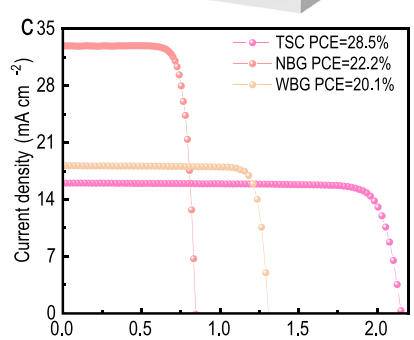
image6cShowcased the sub cells and final stacked cellsJ-VCurve. Through the new modelS-BA-SAMAfter optimization, wide bandgap(WBG)Subbattery efficiency from the control group18.9%upgrade to20.1%The final assembled fully perovskite stacked battery achieved the highest performance 28.5% Efficiency.
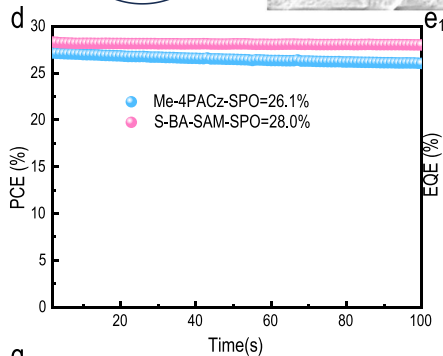
image6dThe steady-state power output curve of the device shows that it operates continuously1 sunLight tracking 500 After hours, the initial efficiency can still be maintained90%It demonstrates excellent long-term stability.
external quantum efficiency(EQE)
The research team utilizedEnlitechofREPSThe measuring instrument has been testedEQEMeasurement, measuring the efficiency of the device in generating current under different wavelengths of light, used to analyze the device's response to different spectra and calculate the theoretical short-circuit current density(JSC), withJ-VThe test results are mutually verified.
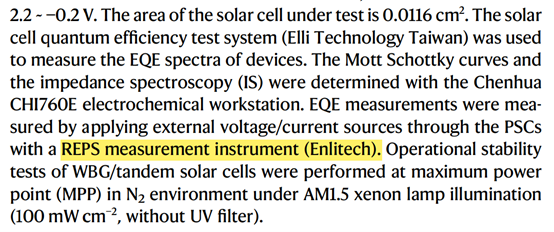
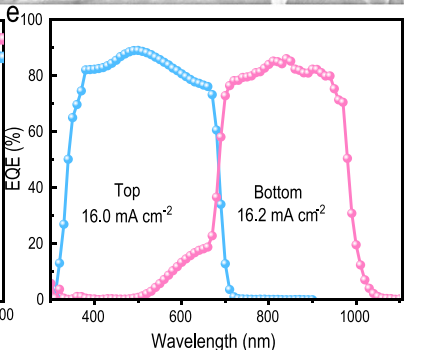
image6ePresenting the full perovskite stack batteryEQEThe spectral lines show the wide bandgap sub cells in the short wavelength region (approximately)300-750 nm)And narrow energy gap(NBG)The sub battery operates in the long wavelength region (approximately)650-900 nm)Effective quantum efficiency. fromEQEThe sub battery obtained by integral calculationJSCvalue(16.0and16.2 mA cm-2)andJ-VThe test results match well, confirming the accuracy of the performance data.
Photoluminescence quantum efficiency(PLQY)
The efficiency of material or film radiative recombination is negatively correlated with non radiative recombination losses.
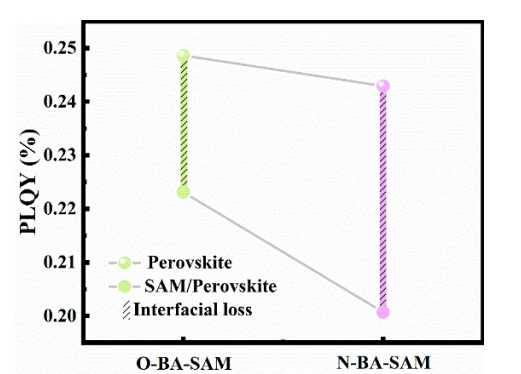
imageS54:NiOx/Me-4PACz/The perovskite samplePLQYSignificantly lower than pure perovskite thin films, confirming once againSerious interface complexityButNiOx/S-BA-SAM/Perovskite samples exhibit higher levels ofPLQY (0.247%), withQFLSThe results are consistent,Prove the new typeSAMEffectively suppressed interface recombination.
atomic force microscope(KPFM)
Measure surface potential difference(CPD)Analyze the energy level arrangement, uniformity, and defect distribution of material work functions and interfaces.
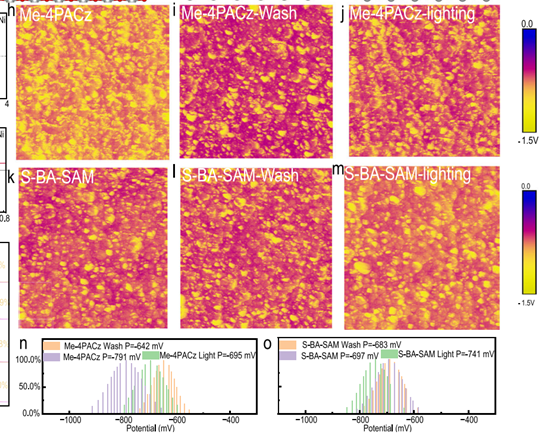
image1h-o:NiOx/SAMsurfaceKPFMImaging andCPDThe distribution map shows that,S-BA-SAMprocessedNiOxsurfaceCPDNarrower distribution indicatesSAMThe layers are more uniform.
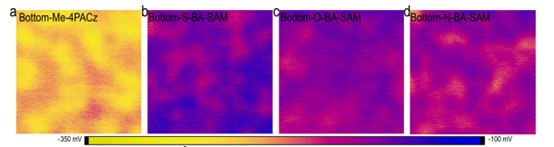

image4a-e:Perovskite embedded interfaceKPFMThe analysis also indicates thatS-BA-SAMProcessing interfaceCPDdistributionFWHMNarrower and less potential change after light aging indicate a more uniform and stable interface.
Xphotoelectron spectroscopy(XPS)
Analyze the composition and chemical states of surface elements of materials, especially for research purposesSAMandNiOxThe interaction between them andNiOxChemical changes.
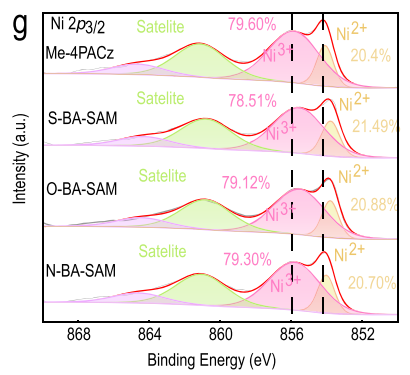
image1g:Ni 2p3/2 XPSThe spectral lines show that,S-BA-SAMprocessedNiOxcompared toMe - 4PACzThe peak position of the processed material is shifted towards lower binding energy, indicating thatS-BA-SAMandNiOxThere is stronger charge transfer and interaction between them.
Grazing angle incidenceXX-ray diffraction(GIXRD) /wide-angleXRay scattering(GIWAXS)
Analyze the crystal structure, grain orientation, and stress of the thin film.

image3i-k:GIWAXSThe spectrum shows that the control group film exhibits diffraction peak splitting caused by lattice distortion, whileS-BA-SAMThe thin film does not exhibit this phenomenon, indicating that the stress is relatively low,S-BA-SAMBeneficial for the formation of better perovskite thin films(100)Orientation is conducive to carrier transport.
Inductively Coupled Plasma Emission Spectroscopy(ICP-OES)
Measure the content of metal elements in a solution for evaluationSAMtoNiOxThe degree of corrosion of the film.
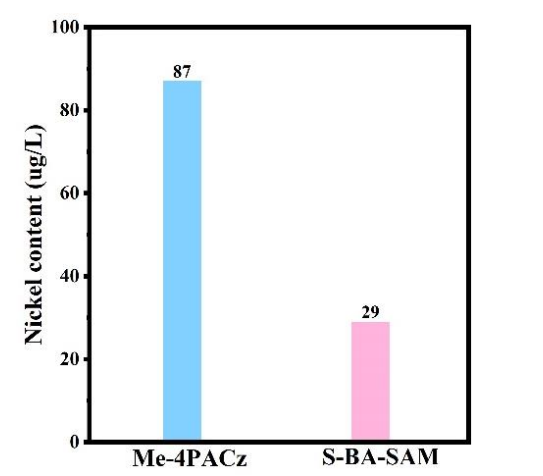
imageS6: WillThis / NiOxThe film is soaked in different solutionsSAMAfter solution, useS-BA-SAMNickel content released from thin films soaked in solution(29 ug/L)Far lower than usageMe - 4PACzThin film of solution(87 ug/L)This directly confirms the new modelS-BA-SAMSignificantly reduced the impact onNiOxThe corrosive effect of layers.
density functional theory(DFT)Molecular Dynamics(MD)simulation
in-depth understandingSAMMolecules andNiOxThe adsorption mechanism, binding energy, charge distribution, energy levels, andSAMMolecular behavior during the formation process.

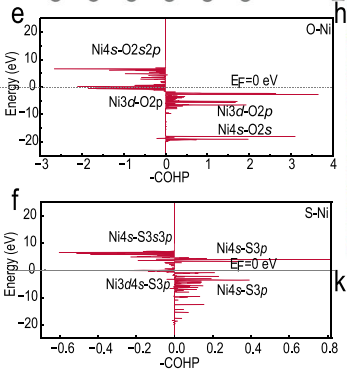
image1a-f:DFTCalculated resultsSAMMolecules inNiOxAdsorption configuration, differential charge density, and electron localization function of surfaces (including oxygen-containing vacancy surfaces)(ELF)The picture. The calculation results indicate thatS-BAandNiOxThere is a stronger binding energy between them, especially between the benzothiophene head group andNiThere are additional interactions between them. imageS1644ofMDThe simulation demonstratedSAMThe distribution of molecules on the surface is uniformUniformity theoretically supports a new type ofSAMThe assumption that helps to form a uniform thin film.
Other characterizations
•scanning electron microscope(SEM): Observe the surface of the thin film and the cross-sectional morphology of the device, evaluate the grain size, shape, defects, and morphological changes after aging.(Image)6b, picture3e-h)


•Photoluminescence distribution(PL Mapping): Provide thin filmPLThe spatial distribution of intensity visually displays the uniformity and defect areas of the film.(As shown in the picture)S50)
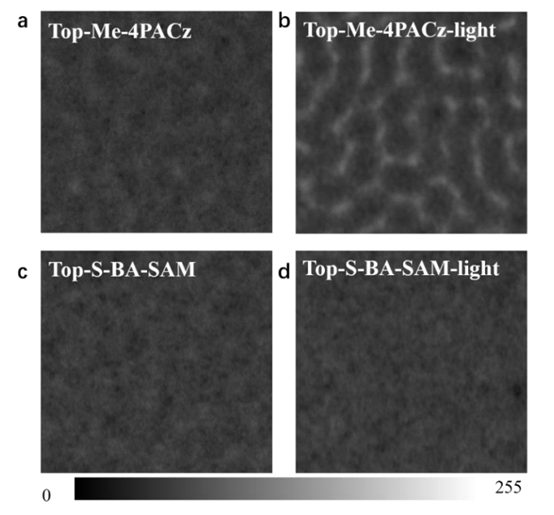
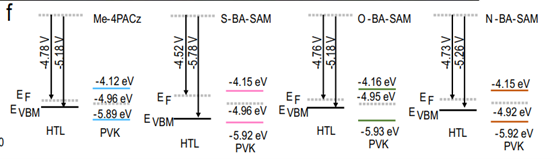
•Time resolved photoluminescence(TRPL): Measure the lifetime of photo generated charge carriers, reflecting the recombination rate of the bulk phase or interface.S-BA-SAMThe carrier lifetime of the processed thin film is longer.(Image)5j)
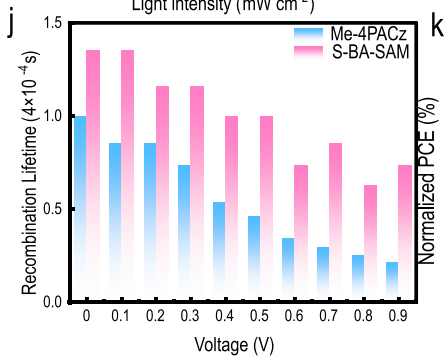
•Ultraviolet photoelectron spectroscopy(UPS): Determining the work function and energy level positions of materials can help construct energy level diagrams and understand charge transfer.(Image)4f)
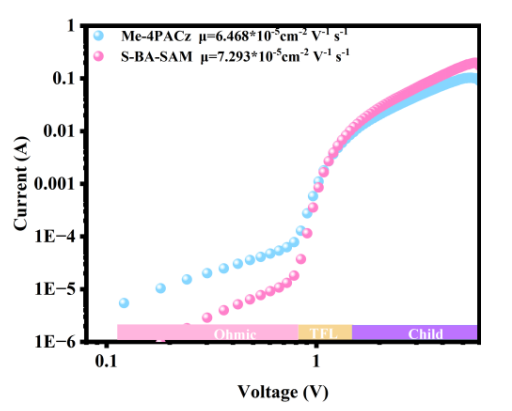
•Space charge limited current(SCLC)Analysis: Evaluate the carrier mobility and density of the hole transport layer,S-BA-SAMThe hole density decreases after processing.(Image)S39)
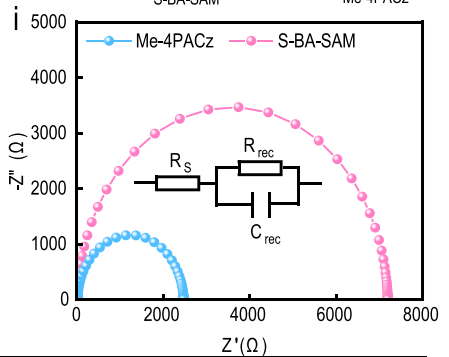
•Electrochemical impedance spectroscopy(EIS): Analyze the charge transfer and composite impedance inside the device.S-BA-SAMThe device exhibits higher composite impedance.(Image)5i)
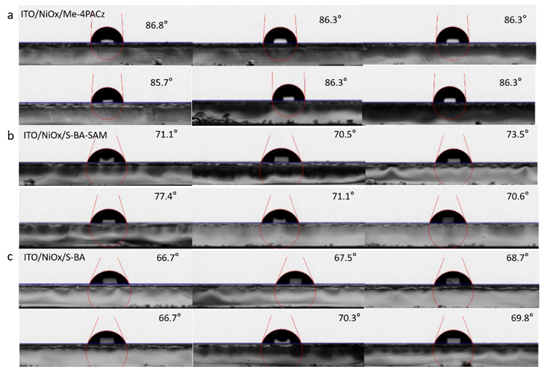
•Contact angle measurement: Evaluate the performance of perovskite precursor solutionSAMSurface wettability affects the nucleation and growth of thin films.(Image)S34)
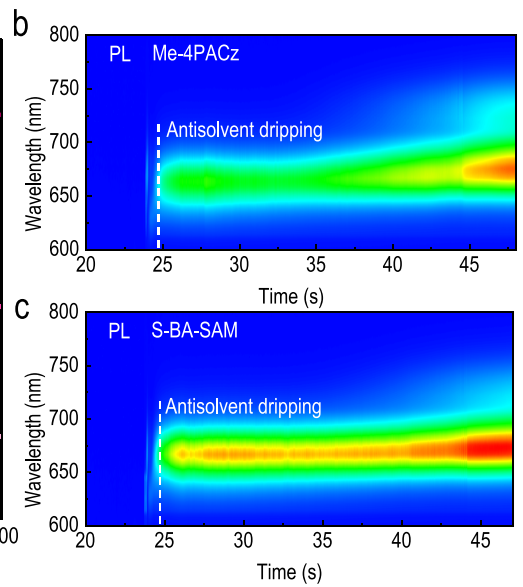
•in situ(In-situ) UV-VisAbsorption spectra andPLSpectrum: Monitoring the nucleation and crystallization kinetics of perovskite thin films during spin coating process(Image)2b, c).
•Flight time secondary ion mass spectrometry(TOF-SIMS): Analyze the depth distribution of each element in the device structure to study the migration of elements during light aging process.(Image)S33)

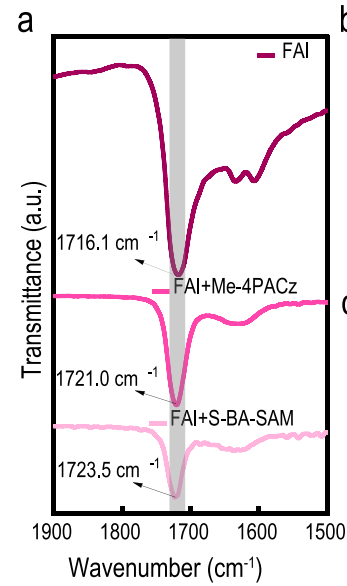
•Fourier transform infrared spectroscopy(FTIR): analyzeSAMMolecules and Perovskite PrecursorsFAIInteractions between molecules(As shown in the picture)2a).
Conclusion
The research team has developed aA novel weakly acidic boronic acid functionalized self-assembled monolayer(S-BA-SAM)Used for modifying wide bandgap sub cells in fully perovskite stacked solar cellsNiOxTunnel transport layer interface.
The main research results are as follows:
Improved interface stability:S-BA-SAMandNiOxForm a stable bond, effectivelyinhibitNiOxcorrosion, with better performance than traditional phosphate groupsSAMsAnd promote inNiOxsuperficialUniform film formationImprove interface form and coverage.
Film quality optimization:Interface modification significantly optimizes the crystallization process of perovskite thin films, promotingUniform distribution of halidesandInhibit photophotographic separationSignificantly improve the quality and photostability of the film.
Improvement of carrier transport:The optimized interface characteristics accelerate carrier transport,Reduce non radiative composite lossesEffectively prolong the carrier lifetime.
Significant improvement in efficiency:Adopting a wide bandgap single junction cell with optimized interface layer, the photoelectric conversion efficiency is improved18.9%upgrade to20.1%The integrated two end stacked solar cell sets a new record28.5% PCEExcellent record.
Long term stability:Thanks to the wide bandgap quantumbattery'simprove, stacked layerDevice Displayoperational stability, in1 sunMaximum power point tracking500After an hour,Maintain initial efficiency90%above.
Reference from Nature Communications_SOI: 10.1038/s41467-025-59515-6
This article is rewritten by Enlitech for scientific research and academic sharing. If there is any infringement, please inform us by email