-
E-mail
515546856@163.com
-
Phone
18800567577
-
Address
Guangsheng Technology Co., Ltd., No. 158 Chaoyang Road, Chaoyang Village, Donggang Town, Xishan District
Guangsheng Technology Wuxi Co., Ltd
Analysis of the Installation Specification Requirements for Clean Gas Hazardous Chemical Safety Cabinets
Date: 2025-11-24Read: 2
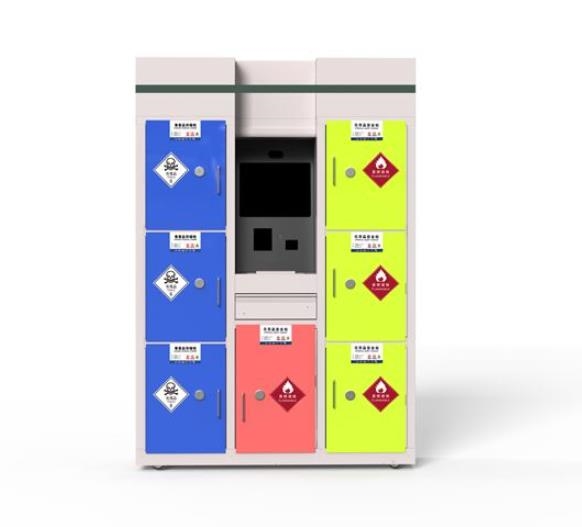
As the core equipment for ensuring the safety of chemical storage in laboratories and industrial scenarios, the installation specifications of the clean gas hazardous chemical safety cabinet directly affect equipment performance, personnel safety, and environmental compliance.This article systematically outlines the installation specifications and requirements from four dimensions: site selection and positioning, cabinet installation, gas purification system configuration, and safety protection.
1、 Site selection and positioning: away from risk sources, ensuring a well ventilated environment
The clean gas hazardous chemical safety cabinet should be placed in a dry, well ventilated non personnel intensive area, avoiding close proximity to high temperature sources, moisture sources, and areas with direct sunlight. According to international standards, the straight distance between the cabinet and open flames or heat sources should be ≥ 15 meters, and the distance between the cabinet and electrical facilities should be ≥ 5 meters; If it is a combustible gas storage cabinet, the distance between it and an oxidizing gas storage cabinet should be ≥ 20 meters. In addition, the bottom of the cabinet should be flat and stable. If there are cracks or tilts on the ground, the water level should be ensured by adjusting the footrest or installing shock-absorbing rubber pads to avoid sealing failure caused by equipment shaking.
2、 Cabinet installation: structurally stable, leak proof design
The cabinet should adopt a double-layer structure, with non combustible materials filled between the inner and outer layers, and the inner steel plate thickness should be ≥ 1.2mm, with a tensile strength of ≥ 345MPa. The cabinet door should be equipped with a door closer and a high-temperature fuse device, which will automatically close when the temperature exceeds 100 ℃ to prevent the spread of fire. The bottom should be equipped with a leak proof storage groove with a depth of ≥ 51mm, and the material should be compatible with the stored chemicals. Ventilation holes with flame retardant function should be installed on both sides of the cabinet to ensure air circulation and prevent flame spread.
3、 Air purification system configuration: precise filtration, intelligent monitoring
The core of a clean gas hazardous chemical safety cabinet lies in its built-in air purification system. When installing, filter material combinations should be selected based on the characteristics of the stored chemicals. For example, when storing organic solvents, coconut shell activated carbon with well-developed micropores is used to adsorb small molecule gases; When storing acidic gases, use impregnated activated carbon loaded with sodium carbonate or sodium hydroxide for neutralization. HEPA filters need to use fiberglass filter paper to ensure stable performance when humidity changes. The system needs to be equipped with a multi parameter sensor array to monitor VOCs concentration, temperature, humidity and other parameters in real time. When exceeding the standard, it will automatically activate the enhanced purification mode and link with the sound and light alarm.
4、 Safety protection: anti-static grounding, clear labeling
The cabinet needs to be effectively grounded through an electrostatic grounding device to dissipate accumulated static electricity, with a grounding resistance value of less than 100 Ω. Warning signs such as "flammable and explosive" and "pay attention to ventilation" should be posted on cabinet doors, ventilation openings, etc., and the names of chemicals, maximum storage capacity, and emergency measures should be marked. Explosion proof lighting should be used inside the cabinet to avoid accidents caused by electrical sparks. In addition, emergency fire-fighting equipment and personal protective equipment need to be equipped to ensure the safety of operators.