-
E-mail
sales@duban.cn
-
Phone
18027672167,18027679886,18027672165,18027672231
-
Address
Room 601, Building 1, Yi'an Science and Technology Innovation Park, No. 23 Gangkou Road, Guicheng Street, Nanhai District, Foshan City, Guangdong Province
Guangdong Duban Technology Co., Ltd
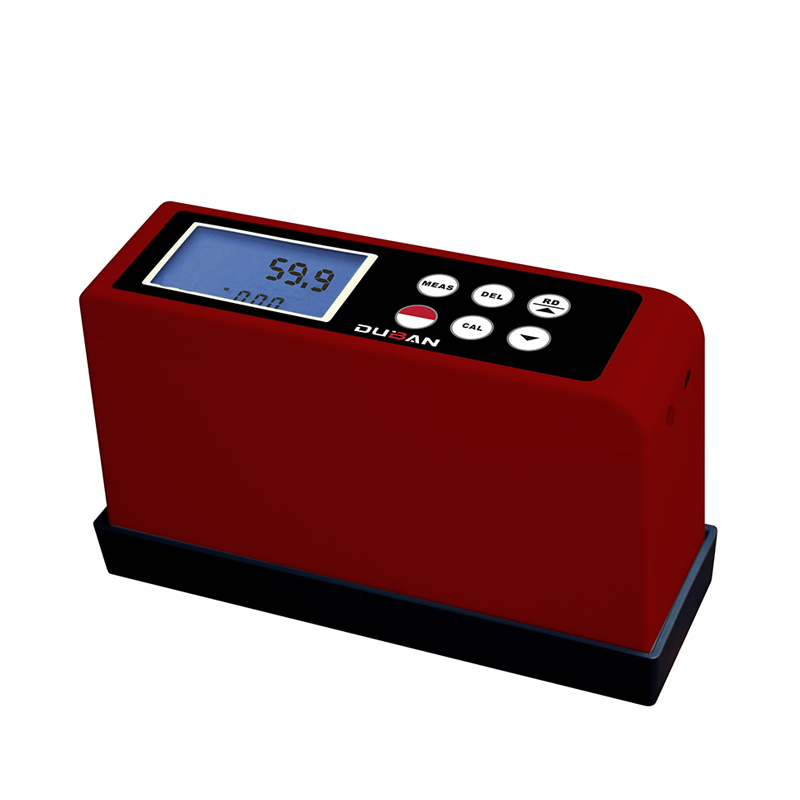
Whiteness meter: the "white ruler" used in industrial production
Date: 2025-12-13Read: 0
Whiteness is one of the core indicators for measuring the appearance quality of many products. From daily paper and flour to coatings and plastics in industrial production, the surface whiteness not only affects aesthetics, but also directly relates to product grade, performance, and market value. As a precision optical instrument, the whiteness meter is a professional tool that transforms subjective "white" into objective and comparable data, becoming the "white ruler" in modern quality control systems.
1、 Principle and Core: The Wisdom of Quantifying Reflected Light
The core working principle of the whiteness meter is based onDiffuse reflectance measurement methodThe standard light source built into the instrument (simulating specific daylight conditions) illuminates the surface of the sample at a fixed angle, and the sample diffusely reflects the light. A detector located at a specific receiving angle (usually sensitive to blue light bands such as 457nm) captures this reflected light signal and compares it with a known reflectivityStandard whiteboardCompare the reflected signals. By using a built-in microprocessor to calculate according to internationally recognized mathematical formulas (such as CIE whiteness formula, blue light whiteness formula, etc.), the final whiteness value is directly displayed. In short, it measures the ability of a sample to "reflect light" under specific conditions and quantifies it as a numerical value.
2、 Key features: Accurate and reliable assurance
A qualified whiteness meter must possess the following key characteristics to ensure data:
High precision and repeatabilityMultiple measurements of the same stable sample must be highly consistent, and the displayed values should be close to the true values. This usually follows the requirements of national metrological verification regulations (such as JJG 512-2002).
Standard complianceExcellent design enables it to be compatible with numerous national and international standards. For example, the instrument complies withGB/T 7974 (Paper), ISO 2470 (General), GB/T 2913 (Plastics), GB 1840 (Starch)Wait, ensure that data from different industries and laboratories can be compared and recognized with each other.
Stability and ease of useThe instrument reading should remain stable over time, and the operation process should be simple and intuitive, usually including functions such as automatic calibration, data storage, and output.
3、 Widely used: quality inspection checkpoints that run through multiple industries
The application field of whiteness meter is very wide, covering almost all industries that require material color:
Paper making and packagingEvaluating the whiteness and color tone of paper and cardboard is the key to distinguishing the grades of news paper, printing paper, and high-end copperplate paper.
Building Materials and Chemical IndustryMeasure the whiteness of coatings, titanium dioxide, ceramic glazes, and white cement to control the consistency of product batches.
Plastic and Chemical FiberEvaluating the whiteness of raw materials and finished products is particularly important for materials such as PVC and nylon.
Food and AdditivesDetect the processing accuracy and purity of flour, starch, salt, and sugar.
Textile and WashingMeasure the whiteness of bleached fabrics and evaluate the effectiveness of laundry detergent and whitening agents.
Conclusion
The whiteness meter, with its scientific principles, reliable performance, and wide applications, transforms abstract "white" into precise numerical language. It is not only a "judge" for laboratories and quality inspection departments, but also a powerful assistant for production enterprises to control processes and improve quality. In today's pursuit of high-quality manufacturing, understanding and making good use of this "white ruler" is of great significance for the sustainable development of related industries.