-
E-mail
info@felles.cn
- Phone
-
Address
Building 2, No. 38 Debao Road, Waigaoqiao, Shanghai Free Trade Zone, China
Fuguang Precision Instrument (China) Co., Ltd
The "spectral eye" of flame temperature in combustion spectrum thermometer
Date: 2025-11-24Read: 0
Accurately understanding the temperature distribution in the combustion zone is crucial for optimizing energy efficiency, controlling pollutant emissions, and ensuring safe equipment operation in high-temperature industrial scenarios such as metallurgical smelting, thermal power generation, aerospace propulsion, and chemical combustion. Traditional contact temperature measurement methods (such as thermocouples) are highly susceptible to damage in flame environments with abnormally high temperatures, strong corrosion, or high-speed flow, whereas non-contact optical temperature measurement techniques are more susceptible to damage,The combustion spectrum thermometer, with its unique principle of "inferring temperature through flame emission characteristics", has become the "spectral eye" for measuring high-temperature flames, providing precise and reliable technical support for high-temperature process control.
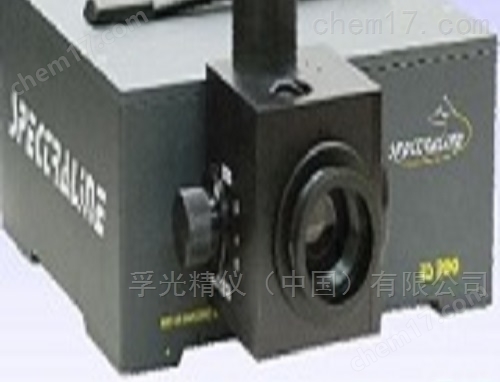
1、 Function: From single point measurement to multidimensional temperature field analysis
The core function of a combustion spectrum thermometer is to use the light radiation emitted by the flame itself (containing rich temperature information) for non-contact temperature measurement. The basic principle is based on Planck's blackbody radiation law and Wien's displacement law - substances at different temperatures emit light of specific wavelengths, and the spectral radiation intensity of high-temperature objects is exponentially related to temperature. By capturing the spectral radiation signal of the flame within a specific wavelength range and combining it with mathematical model calculations, the true temperature of the flame can be inferred. Compared with traditional temperature measurement methods, its advantages are significant: firstly, it can adapt to abnormal environments and work stably in high temperatures ranging from 1000 ℃ to 3000 ℃, highly corrosive gases, or high-speed airflow; The second is real-time dynamic monitoring, with a response time of up to milliseconds, capable of capturing transient temperature changes in flames; Thirdly, it has high spatial resolution and can measure the fine temperature distribution in local high-temperature areas through fiber optic probes or optical imaging systems.
2、 Purpose: Covering key scenarios in multiple fields
In industrial production, the application value of combustion spectrum thermometer runs through the entire process:
1. Metallurgical industry: used for flame temperature monitoring in blast furnaces, converters, or electric arc furnaces, helping to adjust air volume and fuel ratio, optimize iron ore reduction efficiency, and reduce coke consumption;
2. Thermal power generation: Real time measurement of flame temperature in coal-fired boilers or gas turbine combustion chambers, control of combustion center temperature to avoid excessive generation of nitrogen oxides, and prevent local overheating and damage to furnace walls;
3. Aerospace: Detecting the flame temperature distribution of rocket engines and aviation engine combustion chambers, verifying the fuel atomization effect and combustion stability, and providing data support for propulsion system design;
4. Chemical industry: Monitor the combustion temperature of chemical reaction furnaces to ensure the complete decomposition of hazardous waste and reduce the emission of harmful substances such as dioxins;
5. Scientific research experiments: used in basic combustion research to verify flame dynamics models and analyze the combustion characteristics of different fuels.
3、 Technological Extension: From Single Wavelength to Multi Spectral Intelligent Analysis
Modern combustion spectrum thermometers have developed towards intelligent and multi parameter detection. By integrating multi wavelength spectral sensors and combining them with machine learning algorithms, not only can temperature be measured, but also the concentration of components in flames can be synchronously analyzed; Some devices are equipped with fiber optic arrays or high-speed cameras, which can achieve two-dimensional temperature field imaging and visually display the temperature distribution cloud map of flames. In addition, the portable design allows it to penetrate into narrow spaces, while the high-temperature resistant fiber optic probe solves the problem of traditional optical lenses being easily contaminated.
From the blazing flames of steel furnaces to the blue flames of rocket engines, combustion spectrometers use spectra as a medium to convert invisible temperatures into precise data. It is the "temperature probe" of high-temperature industry, and also the "technical sentinel" of energy conservation, emission reduction, and safety production, playing an irreplaceable role in promoting efficient energy utilization and green manufacturing processes.