-
E-mail
1718261188@qq.com
- Phone
-
Address
190 Guangzhong West Road, Shanghai
From the Instrument Marketing Center website
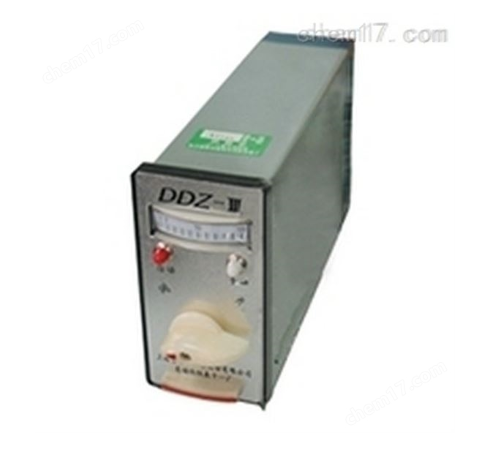
Installation and commissioning process of electric servo operator: operation specifications from mechanical alignment to parameter setting
Date: 2025-11-17Read: 35
Electric servo manipulator is an automation device used for precise control of mechanical motion, widely used in industrial automation, robotics technology, aerospace and other fields. The installation and debugging process must strictly follow the operating specifications to ensure the performance and reliability of the equipment. The following is a complete installation and debugging guide from mechanical alignment to parameter setting.
1、 Preparation work before installation
Equipment inspection
Before installation, carefully inspect the appearance of the electric servo operator to confirm that there are no damaged, deformed, or loose components.
Check if the model and specifications of the equipment meet the design requirements to ensure compatibility with the drive motor and control system.
Verify the electrical and mechanical interfaces of the equipment to ensure compatibility with the installation environment.
Tool Preparation
Prepare necessary tools such as wrenches, screwdrivers, torque wrenches, multimeters, oscilloscopes, etc.
Prepare cleaning tools such as non-woven fabric, alcohol, etc. for cleaning installation surfaces and equipment interfaces.
Environment Preparation
Ensure that the temperature, humidity, and cleanliness of the installation environment meet the requirements of the equipment.
Check whether the mechanical structure of the installation location is firm and able to withstand the weight and torque of the equipment during operation.
2、 Mechanical installation
Equipment fixation
Install the electric servo operator onto the designated mechanical structure and secure it with appropriate bolts and washers.
Ensure that the equipment is installed horizontally, use a level to calibrate the installation position, and avoid operational errors caused by tilting.
Mechanical alignment
Preliminary alignment: Use visual inspection or simple measuring tools to align the output shaft of the servo operator with the input shaft of the driven device, ensuring that they are on the same axis.
Accurate alignment: Use laser alignment tools or precision measuring equipment for precise alignment. Adjust the installation position of the equipment to ensure that the radial and axial deviations of the two axes are within the allowable range (usually less than 0.1 mm).
Fixed connection: After confirming alignment, use a coupling to connect the output shaft of the servo operator to the driven device. When installing the coupling, be careful not to overtighten the bolts to avoid damaging the coupling.
Installation Check
Check if the installation of the coupling is secure and ensure there is no looseness.
Manually rotate the output shaft and check for any jamming or abnormal noise to ensure smooth mechanical transmission.
3、 Electrical connection
Power connection
Connect appropriate power cords according to the electrical requirements of the equipment. Ensure that the power supply voltage, frequency, and number of phases meet the equipment specifications.
Use appropriate power filters and protective devices to prevent power interference and overload.
Control signal connection
Connect the control signal lines of the servo operator, including position feedback signals, speed feedback signals, and control command signals.
Ensure that the shielding layer of the signal line is well grounded to reduce electromagnetic interference.
Grounding treatment
Ensure that the grounding terminals of the equipment casing and electrical system are reliably grounded, ensuring that the grounding resistance is less than the specified value (usually less than 4 Ω).
The grounding wire should use copper wire with sufficient cross-sectional area to avoid electrical faults caused by poor grounding.
Electrical inspection
Use a multimeter to check if the power voltage and signal wire connections are correct.
Check if the grounding connection is secure and ensure that the grounding resistance meets the requirements.
4、 Pre debugging inspection
Visual inspection
Check the appearance of the equipment again to confirm that there are no damaged or loose components.
Check if all connection parts are secure, including mechanical and electrical connections.
Electrical inspection
Use a multimeter to check if the power supply voltage is stable and if the signal line is short circuited or open circuited.
Check if the grounding connection is good and ensure that the grounding resistance meets the requirements.
Mechanical inspection
Manually rotate the output shaft and check for any jamming or abnormal noise.
Confirm if the installation of the coupling is secure and not loose.
5、 Debugging process
Initialization settings
Turn on the device power and enter the initialization settings menu of the servo operator.
According to the equipment manual, set basic parameters such as motor model, rated voltage, rated current, etc.
Zero calibration
Place the output shaft of the servo operator at the mechanical zero position and perform zero calibration through the control interface of the operator.
Ensure that the position of the output shaft is consistent with the mechanical zero position after zero calibration.
Gain adjustment
Adjust the gain parameters of the position loop, velocity loop, and current loop to ensure the response speed and stability of the system.
By gradually adjusting the gain parameters and observing the dynamic response of the system, overshoot or oscillation can be avoided.
load testing
After the device is connected to the load, perform a load test to check the operation of the device under actual working conditions.
Adjust parameters to adapt to changes in load and ensure the stability and accuracy of the equipment under load.
Functional Testing
Test the various functions of the equipment, such as forward and reverse rotation, speed control, position control, etc.
Check if the limit protection, overload protection, and other functions of the equipment are functioning properly.
Run test
Conduct long-term continuous operation testing, observe the operating status of the equipment, and ensure that there are no abnormalities.
Check if the temperature, current, and voltage of the equipment are within the normal range.
6、 Maintenance and upkeep
regular inspection
Regularly check the mechanical and electrical connections of the equipment to ensure they are not loose or damaged.
Check the operating status of the equipment, including parameters such as temperature, current, and voltage.
Cleaning and maintenance
Regularly clean the dust and dirt on the surface of the equipment to prevent affecting heat dissipation and performance.
Clean the electrical interface to prevent poor contact.
parameter check
Regularly check the parameter settings of the equipment to ensure that they have not been mistakenly modified.
Adjust parameters in a timely manner based on the operation of the equipment to optimize performance.
Fault handling
Promptly handle equipment malfunctions, record fault symptoms and handling methods.
Regularly maintain and upkeep equipment to extend its service life.
7、 Summary
The installation and debugging of electric servo operators is a systematic task that requires strict adherence to operating standards. From mechanical alignment to parameter setting, every step is crucial. By reasonable installation, precise alignment, correct connection, and meticulous debugging, the performance and reliability of the equipment can be ensured to meet the needs of industrial automation. At the same time, regular maintenance is also the key to ensuring the long-term stable operation of the equipment.