-
E-mail
1718261188@qq.com
- Phone
-
Address
190 Guangzhong West Road, Shanghai
From the Instrument Marketing Center website
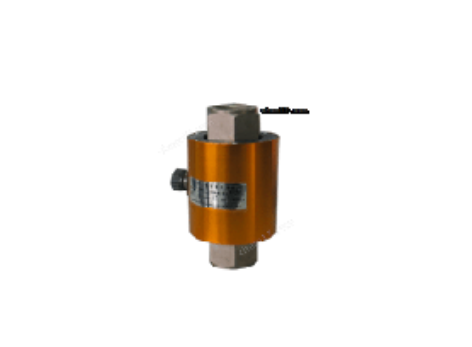
Weighing sensor: integrated temperature compensation function, ensuring accurate and stable weighing data under complex working conditions
Date: 2025-12-18Read: 49
In modern industrial production, accurate weighing is a key link to ensure product quality, improve production efficiency, and ensure safety. However, complex industrial environments often have an impact on the accuracy of weighing equipment, especially under conditions with significant temperature changes. In order to address this challenge, weighing sensor technology continues to advance, and weighing sensors with integrated temperature compensation functions have emerged as a reliable choice to ensure accurate and stable weighing data under complex working conditions.
The influence of temperature on weight sensors
In industrial environments, temperature changes are one of the important factors affecting the accuracy of weighing sensors. Weighing sensors are usually made of metal materials, and their elastic modulus and resistance values change with temperature. For example, when the temperature increases, the elastic modulus of the material may decrease, causing a change in the output signal of the sensor, thereby affecting the accuracy of the weighing results. In addition, temperature changes may also cause thermal expansion inside the sensor, further affecting its performance.
In some specific industrial scenarios, such as chemical, pharmaceutical, food processing, and logistics warehousing, equipment often needs to operate under terminal temperature conditions. For example, in chemical production, the weighing of certain reaction vessels needs to be carried out in a high-temperature environment, while in cold chain logistics, weighing equipment needs to be kept stable in a low-temperature environment. These complex operating conditions place high demands on the temperature adaptability of weighing sensors.
The Importance of Temperature Compensation Technology
In order to overcome the influence of temperature changes on weighing accuracy, modern weighing sensors adopt advanced temperature compensation technology. The core of temperature compensation function lies in real-time monitoring of environmental temperature through built-in temperature sensors, and automatically adjusting the output signal of the weighing sensor according to temperature changes. This compensation mechanism can ensure the high stability and accuracy of weighing data under different temperature conditions.
There are various ways to implement temperature compensation technology, including the use of temperature compensation resistor networks, digital signal processing algorithms, and intelligent sensor technology. These technologies can accurately measure temperature changes and perform real-time calibration on the output of the weighing sensor through complex algorithms. For example, some weighing sensors use microprocessors and memory to store calibration data at different temperatures. When the temperature changes, the microprocessor will automatically call the corresponding calibration parameters to compensate for the output signal.
Advantages of integrated temperature compensation function
The weighing sensor with integrated temperature compensation function has demonstrated significant advantages in complex working conditions. Firstly, it can significantly improve weighing accuracy. Under the temperature conditions at the Ji end, weighing sensors without temperature compensation may produce significant errors, while sensors with integrated temperature compensation function can control the errors within a very small range. For example, in high-temperature environments, the error of ordinary sensors may reach several percentage points, while the error of temperature compensated sensors can be controlled within one thousandth.
Secondly, this type of sensor improves the reliability of the system. Due to its ability to automatically adapt to environmental changes, temperature compensation technology reduces equipment failures and maintenance needs caused by temperature fluctuations. In some industrial scenarios of continuous production, such as dynamic weighing on automated production lines, high reliability is crucial to ensure the continuity and stability of the production process.
In addition, the weighing sensor with integrated temperature compensation function also improves the intelligence level of the system. Through built-in microprocessors and communication interfaces, these sensors can be seamlessly integrated with upper computer systems or automation control systems. They can not only transmit real-time weighing data, but also temperature information and device status information, providing strong support for industrial Internet of Things (IoT) and intelligent manufacturing.
Practical application and case studies
The weighing sensor with integrated temperature compensation function has been widely used in multiple industries. In the chemical industry, precise weighing of reaction vessels is crucial for controlling chemical reactions. Due to the high temperature inside the reaction vessel, ordinary weighing sensors are difficult to meet the accuracy requirements, while sensors with integrated temperature compensation function can ensure the accuracy of weighing data, thereby ensuring the safety and efficiency of chemical reactions.
In the food processing industry, the weighing of raw materials on the baking production line needs to be carried out in a high-temperature environment. The weighing sensor with integrated temperature compensation function can ensure the accurate proportioning of raw materials, thereby ensuring the consistency of product quality. In cold chain logistics, high-precision weighing equipment is also required for weighing goods in low-temperature environments. This type of sensor can maintain stable performance under low temperature conditions, ensuring accurate recording of cargo weight.
summary
The weighing sensor with integrated temperature compensation function is an important advancement in modern industrial weighing technology. It effectively overcomes the influence of temperature changes on weighing accuracy through temperature compensation technology. This type of sensor not only improves the accuracy and stability of weighing data, but also enhances the reliability and intelligence level of the system. In various industries such as chemical engineering, food processing, and cold chain logistics, weighing sensors with integrated temperature compensation functions have been widely used and have made important contributions to ensuring the efficiency and safety of industrial production.