-
E-mail
18665151763@163.com
-
Phone
18665151763,15876945089
-
Address
Wentang Zaosan Industrial Zone, Dongcheng Street, Dongguan City, Guangdong Province
Dongguan Yuantai Xin Testing Equipment Co., Ltd
What are the common applications of large-scale salt spray corrosion testing machines?
Date: 2025-08-24Read: 2
Salt spray corrosion is a corrosion phenomenon caused by a chemical reaction between a salt containing solution (such as seawater or artificial saltwater) and a metal surface. Salt spray in the marine environment is a major source of corrosion, and its corrosive effect on metal materials, especially steel and aluminum alloys, is particularly significant. By simulating salt spray environments under different conditions, it is possible to predict and evaluate the corrosion resistance and service life of materials.
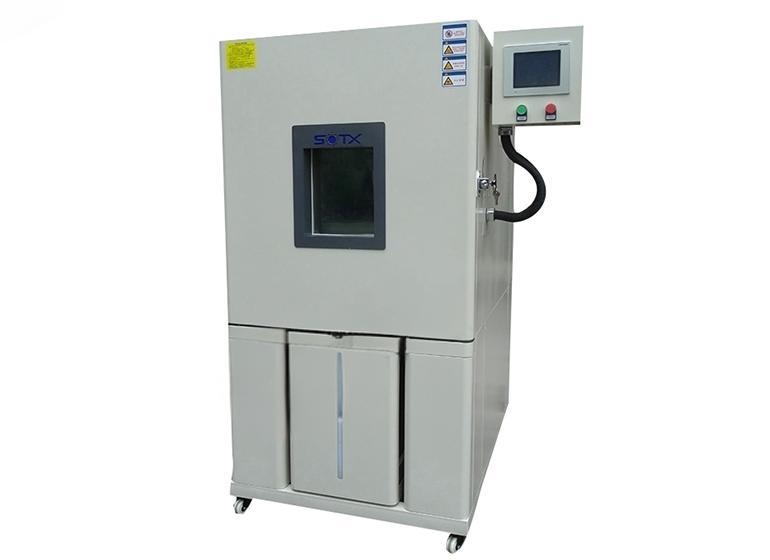
Large scale salt spray corrosion testing machineThe basic principle is:
1. Salt mist generation: in the testing machine, firstly, under the heating condition, fine salt mist particles are generated by means of air flow and humidification device through saline solution (generally sodium chloride solution), and these salt mist particles are evenly sprayed to the surface of the sample to be tested through the spray system.
2. Temperature and humidity control: Temperature and humidity are key factors affecting the corrosion process. The testing machine is equipped with a precise temperature and humidity control system, which can simulate salt spray environments under different temperature and humidity conditions.
3. Corrosion acceleration: In a salt spray environment, metal surfaces come into contact with saltwater solutions, resulting in oxidation reactions. The acceleration process of this reaction is simulated by a salt spray corrosion testing machine, and the test time is set according to the characteristics and requirements of the product.
4. Corrosion process monitoring: During the testing process, the testing machine helps researchers analyze the corrosion resistance of materials by regularly detecting changes in the corrosion layer. The degree of corrosion is usually evaluated by the surface changes, weight loss, and generation of corrosion products of the sample.
Application areas of large-scale salt spray corrosion testing machine:
1. Automotive industry: Automotive components, especially chassis, body and other parts, are often exposed to saltwater environments. In the design and production process, automobile manufacturers will use salt spray corrosion testing machines to test the corrosion resistance of materials, coatings, and components, thereby improving the service life and durability of automobiles.
2. Aerospace: Aircraft bodies, engines, and other components are often used in high humidity and high salt spray environments. Therefore, the aerospace industry needs to use salt spray corrosion testing machines to test and verify the corrosion resistance of various materials and coatings, ensuring the safety and reliability of aircraft.
3. Electronic devices: For some electronic products, especially those used outdoors, corrosion resistance is crucial. Widely used for corrosion testing of electronic device casings, connectors, and other components.
4. Metallurgical industry: The corrosion resistance of metal materials directly affects their service life. Salt spray corrosion testing machines are commonly used for material screening and quality control in the metallurgical industry.
5. Home appliance industry: Used for corrosion resistance testing of home appliance casings and accessories, especially for appliances used in humid environments such as air conditioners, refrigerators, etc.