-
E-mail
362292602@qq.com
-
Phone
13724587140
-
Address
No. 35 Jinyuan New Road, Shilongkeng, Liaobu Town, Dongguan
Dongguan Kezheng Instrument Co., Ltd
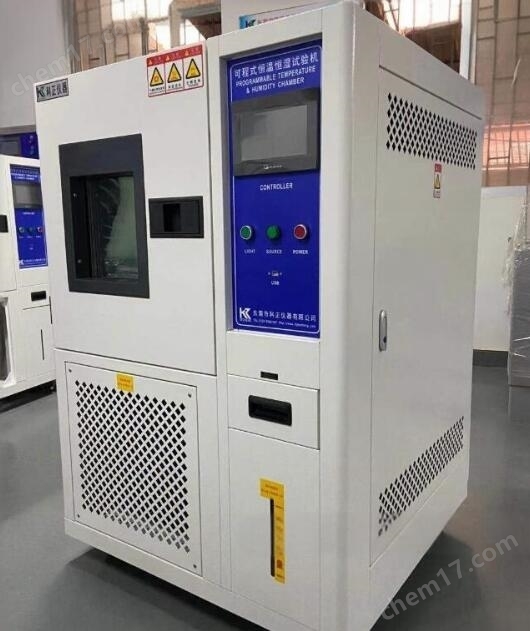
The rapid temperature change test chamber has good operability and maintainability
Date: 2025-11-24Read: 0
The rapid temperature change test chamber, as an environmental simulation testing equipment, has good operability and maintainability as one of its core advantages, which directly affects the equipment's efficiency, testing accuracy, and long-term operating costs. The following analysis will be conducted from three dimensions: design principles, operational convenience, and maintenance friendliness:
1、 Design principle of rapid temperature change test chamber: modularity and intelligence lay the foundation
1. Modular structure
Adopting independently controlled heating, cooling, and circulation system modules, each module is connected through standardized interfaces for quick disassembly, assembly, and upgrading. For example, the refrigeration system can replace the compressor or condenser separately without the need for overall shutdown maintenance.
The integrated design of the electrical control module reduces the complexity of the circuit, lowers the failure rate, and supports remote monitoring and fault diagnosis.
2. Intelligent control system
Equipped with high-precision PID controller or PLC system, supporting multi-stage program programming (such as temperature slope, cycle times, dwell time, etc.), users can set complex testing processes with one click through touch screen or upper computer software.
Built in self diagnostic function, can monitor sensor status, refrigerant pressure, fan speed and other parameters in real time, automatically alarm and prompt the fault location when abnormal, shorten maintenance time.
2、 Convenient operation of rapid temperature change test chamber: Humanized design improves efficiency
1. Intuitive user interface
Adopting a large-sized color touch screen and icon based menu design, the operation logic conforms to industrial equipment conventions (such as the "Settings Run Monitoring Record" hierarchical interface), making it easy for beginners to get started quickly.
Support multi language switching and adapt to global usage scenarios.
2. Flexible testing mode
Provide a standard testing program library, where users can directly call or modify parameters to reduce duplicate settings.
Support switching between manual and automatic modes to meet emergency debugging or long-term unmanned testing needs.
3. Data management and traceability
Built in large capacity memory, capable of recording temperature curves, alarm logs, and other data, supporting USB or Ethernet export for easy analysis of test results.
Some high-end models are equipped with cloud synchronization function, enabling multi device data sharing and remote collaboration.
3、 Maintenance friendliness of rapid temperature change test chamber: reducing full lifecycle costs
1. Easy to clean design
The inner liner is made of stainless steel material, with a smooth surface and no dead corners. It is equipped with a detachable sample holder for easy cleaning of residues or corrosive media.
The observation window adopts double-layer insulated glass, and the outer layer can be opened for easy observation of the internal sample status.
2. Maintainability of key components
The refrigeration system uses environmentally friendly refrigerants (such as R404A), and core components such as compressors and expansion valves are standard models that are easy to purchase in the market, reducing spare parts costs.
The vulnerable parts such as fans and heating pipes are connected using quick plug connections, which can be replaced without the need for professional tools.
3. Preventive maintenance tips
The system automatically reminds to replace the filter screen, lubricate components, or check the refrigerant pressure based on the running time, extending the service life of the equipment.
Provide maintenance video tutorials or online technical support to reduce users' reliance on professional engineers.
4、 Typical application scenarios and value manifestation of rapid temperature change test chamber
1. Electronics industry: Testing the material expansion/contraction and solder joint reliability of mobile phones and circuit boards under rapid temperature changes from -40 ℃ to+150 ℃.
2. Automotive industry: Simulate the sealing and thermal management performance of engine compartments and battery packs under extreme temperature cycling.
3. Aerospace: Verify the temperature shock resistance of spacecraft electronic components in the space environment.