-
E-mail
15013620917@163.com
-
Phone
15013620917
-
Address
No. 9 Minfu Road, Liaobu Town, Dongguan City, Guangdong Province
Dongguan Jike Automation Technology Co., Ltd
Stainless steel gas-liquid buffer tank has high strength and good compressive strength
Date: 2025-11-16Read: 41
Stainless steel gas-liquid buffer tank is a device used for storing and regulating gas and liquid mixtures, widely used in industries such as chemical, petroleum, natural gas, food, and pharmaceuticals. Its main function is to serve as a device for gas-liquid separation, storage, and flow regulation, ensuring stable system operation and preventing damage to equipment caused by rapid changes in gas and liquid.
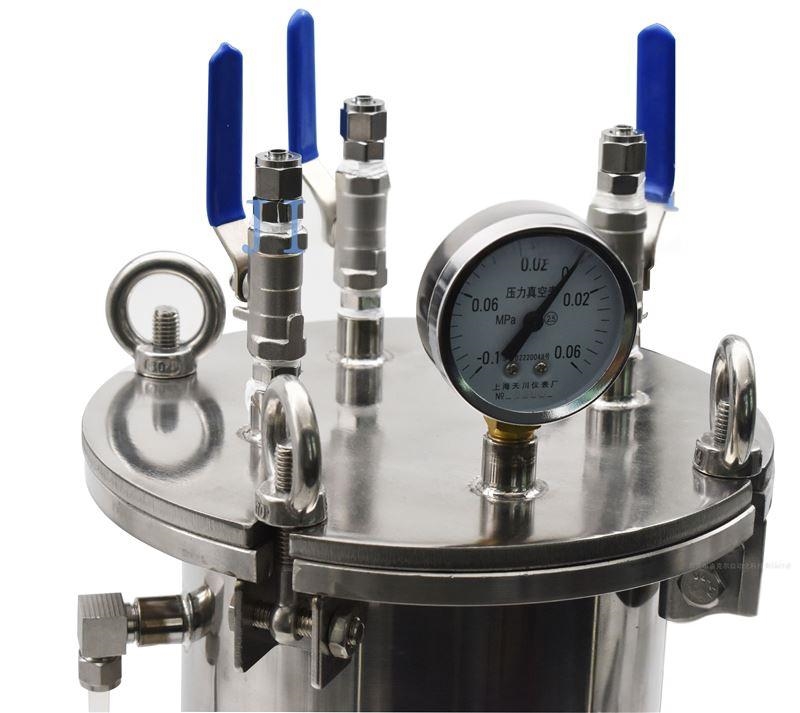
Stainless steel gas-liquid buffer tankThe main characteristics are:
1. Strong corrosion resistance
Stainless steel materials have excellent corrosion resistance, especially in acidic and alkaline environments, and can maintain stable physical properties for a long time. Stainless steel gas-liquid buffer tanks provide an ideal solution for the storage of corrosive substances such as chemical media and oil and gas.
2. High strength and compressive strength
Has high strength and good compressive strength, can withstand pressure changes of internal gases and liquids, and prevent equipment failure caused by excessive pressure.
3. High temperature resistance performance
Stainless steel can maintain good mechanical properties in high temperature environments, making it suitable for gas-liquid separation and storage under high temperature conditions, meeting the strict temperature requirements of industries such as chemical and petroleum.
4. Long lifespan and low maintenance costs
Due to the special properties of its material, compared to tanks made of other materials, it has a longer service life and lower maintenance costs. Its corrosion resistance, high temperature resistance, and high strength make equipment maintenance and replacement cycles longer.
5. Compact structure and easy installation
The design is usually compact, saving space while being easy to install and operate. Its standardized design can be customized according to actual needs to meet different industrial requirements.
Design requirements for stainless steel gas-liquid buffer tank:
1. Material selection
Stainless steel is chosen as the main material, usually using food grade stainless steel such as 304 or 316, which can ensure the corrosion resistance and oxidation resistance of the tank body and extend the service life of the equipment.
2. Structural design
The structural design should consider factors such as the efficiency of gas-liquid separation, the pressure bearing capacity of the tank, and liquid level control. The tank body needs to be designed in a circular or elliptical shape to increase storage capacity and pressure resistance.
3. Security
The design of gas-liquid buffer tanks needs to consider safety factors, including setting up safety relief valves, preventing overpressure and overcurrent, designing liquid level alarm systems, etc., to ensure that the equipment can operate safely and stably in any situation.
4. Maintenance and Cleaning
Due to long-term storage of gas-liquid mixtures, sediment or other impurities may accumulate inside the buffer tank. Therefore, the design needs to consider the requirements for easy cleaning and maintenance. For example, the interior of the tank can be designed with a structure that is easy to disassemble and clean to ensure its hygiene and long-term stability.