-
E-mail
1142790045@qq.com
-
Phone
13861112485
-
Address
No. 98 Yangang Road, Jincheng Town Industrial Park, Jintan City
Changzhou Xiangtian Experimental Instrument Factory
Common problem diagnosis: Causes and solutions for slow or uneven cooling of vertical low-temperature constant temperature water tanks
Date: 2025-12-19Read: 47
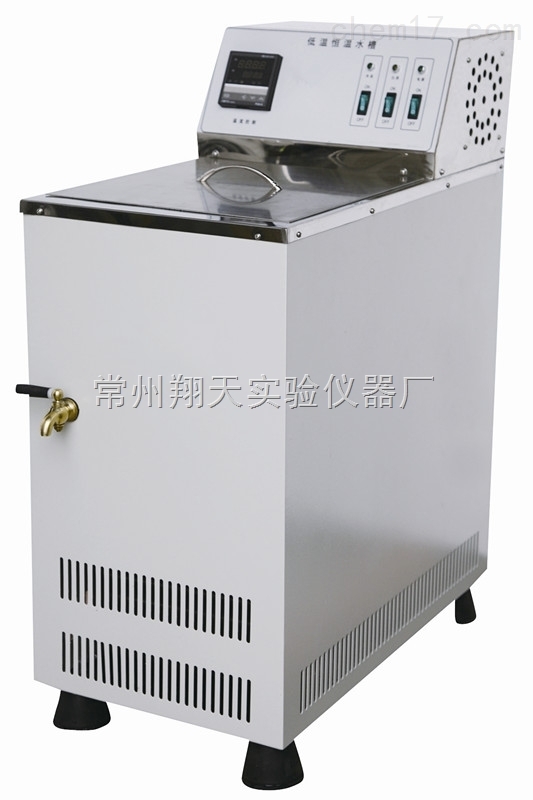
Vertical low-temperature constant temperature water bathPlays a critical role in material testing, pharmaceutical stability testing, chemical reaction cooling, and other scenarios, but there may be issues with slow cooling rates or uneven temperature inside the tank during use, which can affect experimental progress and accuracy of results. Systematic diagnosis and targeted solutions are key to ensuring efficient operation of equipment.
1、 Common causes and investigation of slow cooling
Excessive load on the refrigeration system
Cause: Placing too many or too large samples at once, resulting in a heat capacity exceeding the cooling power; Low heat dissipation efficiency due to high ambient temperature or poor ventilation.
Solution: Place the samples in batches to ensure that the single heat load is within the rated range of the equipment; Improve ventilation around the equipment, remove dust from the condenser fins, and ensure smooth airflow for heat dissipation.
Insufficient or leaking refrigerant
Cause: Long term use leads to refrigerant loss or slight leakage in pipelines, resulting in a decrease in refrigeration efficiency.
Solution: Contact the manufacturer or professional maintenance personnel to check the system pressure, supplement or repair the leakage points, and do not disassemble the machine for operation.
Performance degradation of compressor or circulating pump
Cause: Compressor aging, failure of starting capacitor, or wear of circulating pump impeller, resulting in a decrease in heat exchange efficiency.
Solution: Regular maintenance and timely replacement of aging components; Check if the operating current and flow rate of the pump are normal.
Excessive temperature difference between temperature setting and environment
Cause: If set directly from room temperature to a very low temperature, the compressor will operate at high load for a long time, appearing to cool down slowly.
Solution: The segmented cooling method can be used, such as first lowering to 10 ℃, stabilizing it, and then continuing to lower it to reduce system impact.
2、 Common causes and investigation of uneven temperature
Poor circulation of liquid in the tank
Cause: Malfunction of the circulation pump, blockage of the diversion channel, or low liquid level, resulting in insufficient mixing of cold and hot water.
Solution: Check the operation status of the pump and clean up foreign objects; Keep the liquid level above the lower circulating liquid level line.
Improper placement of samples
Cause: Large volume or high heat capacity samples block water flow, forming local cold or hot zones.
Solution: Reasonably arrange the sample positions, avoid centralized stacking, and if necessary, add diversion baffles to promote flow.
Temperature sensor position deviation
Cause: The sensor is placed in an area with slow flow rate, and the measured value cannot represent the overall temperature.
Solution: Confirm that the sensor is installed on the main circulation channel and adjust its position or add multi-point temperature calibration if necessary.
Natural convection limitation of vertical structure
Cause: The vertical tank has a large aspect ratio, and relying solely on pump circulation may form laminar flow at certain heights, resulting in temperature differences.
Solution: Optimize the flow and head configuration of the pump, or add auxiliary diversion structures in the tank design.
3、 Diagnostic Process Suggestions
On site inspection can be carried out in the order of "from outside to inside, from easy to difficult": check the environmental temperature and ventilation → confirm the load and liquid level → listen to the working sound of the compressor and pump → check the alarm information on the control panel → if necessary, use an infrared thermometer to scan the temperature distribution at different points in the tank and uneven positioning areas.
4、 Summary
Vertical low-temperature constant temperature water bathSlow or uneven cooling is often caused by factors such as refrigeration load, system performance, cycle status, and sensor layout. Through scientific diagnosis and targeted maintenance and operation optimization, not only can the equipment's rapid and uniform cooling ability be restored, but its service life can also be extended, ensuring the stability and repeatability of experimental data.