-
E-mail
755724420@qq.com
-
Phone
13813507557
-
Address
No. 229 Jincheng South Road, Jintan District, Changzhou City, Jiangsu Province
Changzhou Kanghua Instrument Manufacturing Factory
Application of Air Microbial Sampler in Environmental Monitoring
Date: 2025-12-03Read: 0
With the increasing severity of environmental pollution and public health issues, air quality monitoring has become an important link in ensuring human health and improving quality of life. Microorganisms in the air, such as bacteria, fungi, viruses, etc., have an impact on human health, therefore, the detection of microorganisms in the air is particularly important. The air microbial sampler, as an efficient and convenient monitoring tool, has been widely used in environmental monitoring.
Microbial Air Monitoring SystemsMainly used for monitoring microbial pollution in the air, the following are several important applications of it in environmental monitoring:
1. Monitoring of airborne microorganisms in the field of public health
It plays an important role in air quality monitoring in public places such as hospitals, clinics, and food processing plants. Microbial contamination may lead to the spread of respiratory diseases such as tuberculosis, influenza, pneumonia, etc. Therefore, monitoring pathogenic microorganisms (such as bacteria, viruses, fungi, etc.) in the air can effectively prevent the spread of diseases and ensure public health safety. For example, air microbiological monitoring in hospitals can help detect the microbial sources of hospital infections in a timely manner and take corresponding prevention and control measures.
2. Indoor air quality monitoring
With the increasing emphasis on indoor air quality, it is gradually being applied in microbial monitoring of indoor environments such as homes, offices, and schools. Microorganisms such as mold, dust mites, and bacteria in indoor air not only affect the comfort of residents, but may also cause health problems such as allergies and asthma. Regular sampling and testing can effectively control the concentration of microorganisms in indoor environments and improve indoor air quality.
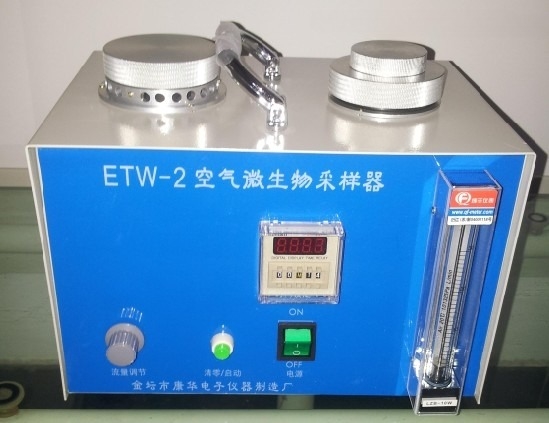
3. Microbial monitoring in industrial environments
In industries such as pharmaceuticals, food processing, and cosmetics production, microbial contamination in the air can lead to product quality issues and even safety hazards. For example, in the production environment of sterile drugs, it is necessary to ensure that the concentration of microorganisms in the air meets a certain standard. Air microbial samplers can help companies monitor microbial pollution in the air in real-time during the production process, ensuring compliance with production standards and quality requirements.
4. Environmental pollution monitoring and ecological protection
The microbial community in the air reflects the ecological environment of the region. By using, the composition of microbial communities in different regions can be analyzed to assess the ecological impact of air pollution. For example, a higher concentration of bacteria and fungi in urban air may indicate more severe air pollution in that area. Through sampling and analysis, scientific basis can be provided for environmental policy formulation, pollution source control, etc.
5. Post disaster environmental monitoring
After natural disasters such as earthquakes, floods, fires, etc., microbial contamination in the air is often severe, especially when in contact with corrupt substances and sewage, increasing the risk of bacterial and viral transmission. It can also quickly assess the hygiene status of the post disaster environment, provide data to support post disaster environmental restoration and public health protection work.
The air microbial sampler plays an important role in environmental monitoring. It can not only help detect the concentration of bacteria, fungi and other microorganisms in the air, but also provide scientific basis for public health, indoor air quality, industrial production, post disaster environmental restoration and other fields. With the advancement of technology, it will continue to develop, and its accuracy and functionality will be further improved, providing stronger guarantees for environmental protection and human health.