-
E-mail
841475174@qq.com
-
Phone
13921008373
-
Address
No. 29 Jinhu Road, Jintan District, Changzhou City, Jiangsu Province
Changzhou Dingxin Experimental Instrument Co., Ltd
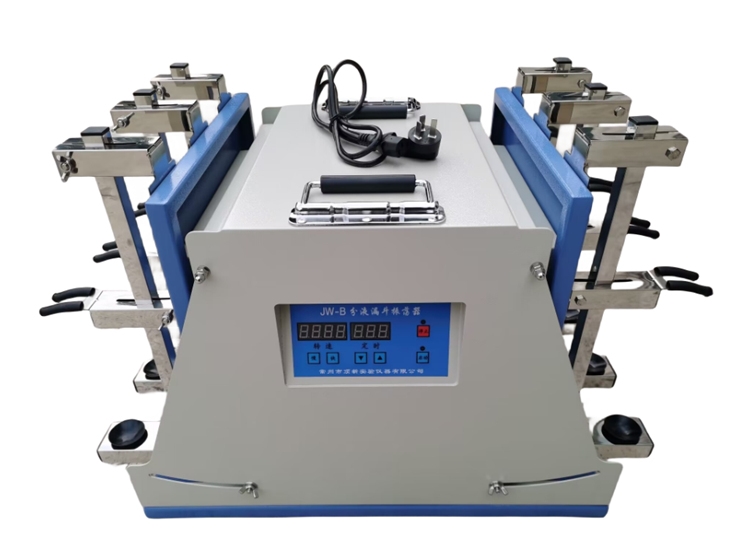
JW-B type separating funnel oscillator fault maintenance: precise troubleshooting and efficient repair guide
Date: 2025-11-12Read: 1
In the fields of chemical experiments, petrochemicals, and environmental monitoring,The JW-B type separatory funnel oscillator is a key equipment for achieving liquid mixing, extraction and separation. It promotes sufficient reaction of reagents in the separating funnel through mechanical oscillation, directly affecting experimental efficiency and data accuracy.However, long-term high-frequency use or improper operation may lead to equipment failure. Mastering the maintenance methods for common faults is an important skill to ensure the stable operation of instruments.

1、 Common types of faults and troubleshooting strategies
The faults of JW-B type separating funnel oscillator mainly focus on three categories: mechanical transmission, electrical control, and abnormal oscillation performance. Maintenance needs to follow the process of "observing phenomena → locating modules → analyzing causes → targeted repair".
1. No oscillation or abnormal oscillation (mechanical transmission failure)
① Phenomenon: After connecting the power supply, the motor does not move, or the oscillation frequency is unstable (fluctuating fast and slow), and the swing amplitude is uneven.
② Troubleshooting steps: First, check the power connection; If the power supply is normal, observe whether the motor is running - if the motor is not running, it may be due to damage to the starting capacitor (use a multimeter to check if the capacitor capacity is lower than 80% of the nominal value) or a broken circuit in the motor winding (measure if the resistance value is infinite); If the motor is running but oscillating abnormally, it is necessary to check the eccentric wheel mechanism: loosening the eccentric wheel can cause the swing amplitude to be misaligned, which can be adjusted by tightening the screws; Wear at the connection between the connecting rod and the fixture can affect transmission efficiency and requires lubrication or replacement of worn parts.
2. Weak oscillation or excessive noise (mechanical loss fault)
① Phenomenon: Insufficient power during oscillation (unable to drive the fully loaded separating funnel), or producing harsh friction or metal collision sounds during operation.
② Reason analysis: This type of malfunction is often related to the wear and tear of mechanical components. For example, lack of oil or damage to bearings can lead to increased transmission resistance; The failure of spring shock absorbers will result in ineffective buffering of oscillating energy, exacerbating mechanical impact; Wear on the clamping surface of the fixture may cause the funnel to slide, affecting oscillation stability. During maintenance, it is necessary to disassemble the equipment, clean and add lubricating oil to the connection between the bearing and the shaft, replace the aging spring or repair the clamping surface of the fixture.
3. Control panel malfunction (electrical control failure)
① Phenomenon: The time adjustment knob has no response, the speed gear cannot be switched, or the display screen has no numerical display.
② Troubleshooting method: First, check if the connection wire between the control panel and the motherboard is loose; If the circuit is normal, it may be a control chip malfunction or a damaged display screen (use a multimeter to check if the display screen power supply voltage is normal). For time relay faults, it can be determined through short-circuit testing - if the device can operate normally after short-circuit, the same model of time relay needs to be replaced.
2、 Maintenance precautions and daily maintenance suggestions
Strict power-off operation is required during maintenance to avoid the risk of electric shock; After disassembling the components, the installation position should be marked to prevent oscillation balance imbalance after resetting. In addition, in daily use, attention should be paid to avoiding overloading, regularly cleaning fixtures and transmission components, and checking the fastening status of fixtures before operation.
The maintenance of the JW-B type separatory funnel oscillator requires a combination of mechanical and electrical knowledge, and a systematic investigation to accurately locate the problem. Mastering these maintenance techniques can not only prolong the service life of equipment, but also ensure the reliability and operational safety of experimental data.