-
E-mail
huogang010@163.com
-
Phone
13911564578
-
Address
Jisheng Villa 19-11, Changping District, Beijing
Beijing Zhongxian Hengye Instrument Co., Ltd
Multi scale and multi module comprehensive application solution for lithium battery industry
Date: 2025-09-10Read: 3
Multi scale and multi module comprehensive application solution for lithium battery industry (optoelectronic combination):
Collaborative empowerment of Zeiss optical microscope, electron microscope, and X-ray microscope
Introduction: The 'Scale Challenge' of Lithium Battery Research and Production
Lithium batteries, as the core carrier of the new energy industry, have improved performance (such as energy density)>300Wh/kg)Safety assurance (such as thermal runaway suppression) and lifespan optimization (such as cycling)>5000Highly dependent on precise understanding of material microstructure, component defects, and aging mechanisms. However, the failure analysis or performance optimization of lithium batteries face typical challenges“multi-scale problem”——From macroscopic battery module packaging defects (millimeter level) to electrode defects/The microstructure of the membrane (at the micrometer level), as well as the interfaces and grain boundaries of the active particles (at the nanometer level), cannot be fully characterized by a single characterization technique.
Zeiss relies on its expertise in optical microscopes (light microscopes), electron microscopes (electron microscopes), andXX-ray microscope(XRM)With the accumulation of technology in the field, we have launched a multi module comprehensive solution for "optoelectronic integration", which utilizes the fast positioning of optical mirrorsXRMThe non-destructive three-dimensional structure analysis, nanoscale high-resolution analysis by electron microscopy, and cross scale collaboration among the three have achieved the discovery of defects”The full process coverage of "mechanism traceability" provides key technical support for the research and development, production, and service evaluation of lithium batteries.

Zeiss Industry Solutions
1、 Light Mirror: The 'First Screening Network' for Macroscopic Defects
In the production process of lithium batteries, macroscopic defects such as electrode burrs, packaging delamination, and foreign object contamination are direct causes of short circuits and thermal runaway, which need to be quickly identified and intercepted in the early stages. Zeiss optical microscope (such asAxio Zoom. V16Digital microscopeAxio ImagerSeries) toHigh resolution (optical plane resolution)0.7μm)Large field of view (maximum field of view diameter)≥23mm)Flexible lighting (bright field)/dark field/Polarized light)As the core advantage, becoming the quality control of the production line“eye”.

Axio Zoom. V16digital microscope
Typical application scenarios:
Defect detection in polarizer manufacturingFor the die-cutting/laser cutting process of positive and negative electrode plates, the light mirror can quickly scan the edge of the electrode plate, and automatically identify the burr size (length/width/angle) through high contrast imaging (such as dark field mode enhancing the reflection difference between the burr and the substrate), with an accuracy of sub micron level. For example, power lithium batteries require the burr length of the electrode piece to be ≤ 50% of the diaphragm thickness (the conventional diaphragm thickness is 12-16 μ m, and the corresponding burr needs to be<6-8 μ m). Light microscopy combined with image analysis software can batch count the burr distribution to avoid manual omission.
Packaging component quality screeningFor aluminum-plastic film packaging of soft pack batteries and winding packaging of cylindrical batteries, light mirrors can detect bubbles and delamination at the edges of the packaging (such as aluminum-plastic film)PPProblems such as delamination between the layer and aluminum foil layer, and wrinkles in the polarizer. By illuminating with polarized light, interfaces of different materials can be clearly distinguished (such as the refractive index difference between aluminum foil and polymer film), assisting in optimizing packaging process parameters (such as heat sealing temperature)/Pressure).
Foreign objects and pollution localizationIn the process of electrode coating or cell assembly, a light mirror can quickly locate foreign objects such as metal particles (such as iron filings) and dust, combined with color imaging to record the location of defects, for subsequent electron microscopy orXRMThe fixed-point analysis provides navigation.
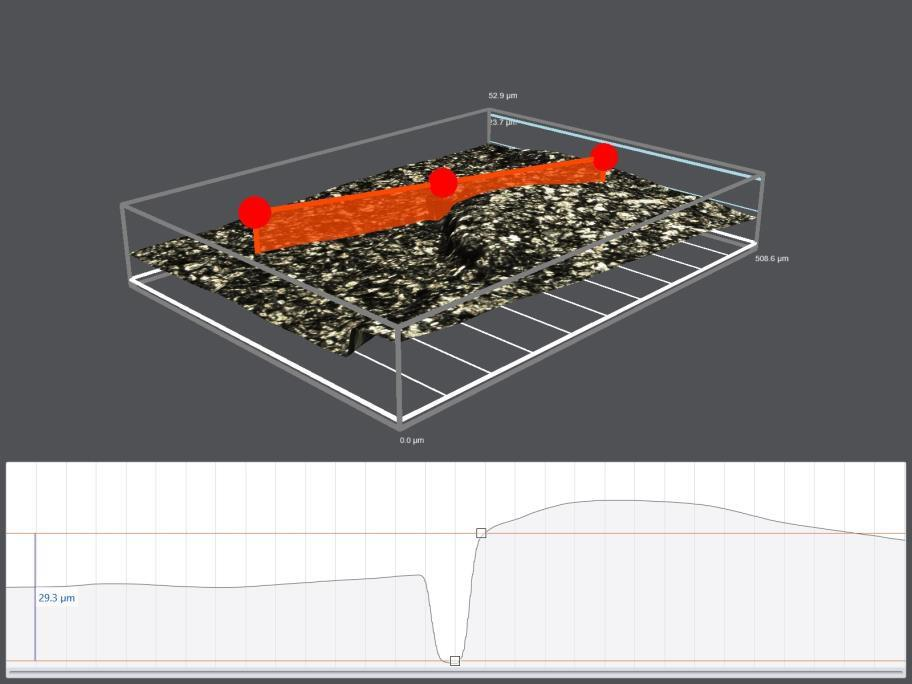
Analysis of abnormal cracking of polarizer
2、 X-ray Microscope (XRM): A "Perspective Eye" for Non Destructive 3D Structures
After locating macroscopic defects, it is necessary to further analyze the microstructure inside the battery, such as electrode porosity, membrane pore distribution, and particle breakage status. However, traditional slicing sampling will destroy the original state and is difficult to reflect the real working conditions. ZeissXRM(such asXradia Versa 520/630Series) toNon destructive, high-resolution (from submicron to)50nm)Multi scale continuous imagingTo become a characteristic for analyzing the internal structure of lithium batteries“Core Tools”.

Xradia 630 Versaseries
Core values and typical applications:
Non destructive testing of packaged batteries3D imaging of finished batteries (including soft packs, cylinders, and square shells) can be performed without disassembly, allowing for direct identification of deep buried internal defects such as microcracks at the turning point of the positive electrode in the wound cell (which may cause lithium ion transport blockage), metal impurities in the separator (such as residual cutting iron chips), and delamination between the electrode and the current collector (affecting electronic conduction). The millimeter level penetration depth (usually 1-10mm) and micrometer level resolution (up to 0.5 μ m) of XRM balance "overall observation" and "detail capture".
electrode/Quantitative structural analysis of diaphragmThrough 3D reconstruction, positive electrode materials (such as...) can be calculatedNCMTernary lithium)porosity distribution(Vertically)/Differences in the direction of parallel polarizer and negative graphite particlesDegree of fragmentation(Crack density at the edge of the particles after cycling), as well as the membrane'sPorosity and tortuosity(Affects lithium ion transport efficiency). For example, studies have shown that the porosity of membranes is lower than30%When the tortuosity is too high, the internal resistance of the battery significantly increases,XRMThese parameters can be directly quantified to guide membrane selection or coating process optimization.
Dynamic tracking of aging mechanismPerform non-destructive testing on the battery before and after cycling3DBy comparing imaging, the surface of the electrode after cycling can be observedcrack propagationThe spatial distribution of factors such as progressive fragmentation of graphite negative electrode edges, pulverization of particles leading to detachment of active materials, and deposition of lithium metal (dendrite growth). Combining in situXRMTechnology (such as Zeiss)Xradia 520 VersaThe stress analysis module can also study the volume changes of electrode materials during charge and discharge processes, such as the expansion rate of silicon negative electrodes>300%Resulting in structural collapse.
3、 Electron microscope: a magnifying glass for nanoscale mechanisms
When parsing is needed“Why do defects occur”or“The essence of interface failure”When entering the nanoscale or even atomic scale, it is necessary to——For example, the grain boundary structure of active particlesSEIThe composition of the film (solid electrolyte interface facial mask) and the deposition morphology of lithium metal. Zeiss electron microscope (such as field emission scanning electron microscope)SEMDouble beam electron microscopeCrossbeamSeries, Transmission Electron MicroscopyTEMCompatibility scheme)Ultra high resolution(≤0.5nm)Multi functional component analysis(EDS/EBSD)Sensitive sample protection technologyTo gain advantages and become a "tool" for studying micro mechanisms.

ZeissSigmaSeries field emission electron microscope
Key technological breakthroughs and applications:
High resolution characterization of particles and interfacesFor positive electrode materials (such as high nickel)NCM811)Or negative electrode materials (such as silicon carbon composite negative electrode), field emissionSEMCan achieve nanoscale morphology imaging (such asNCMThe integrity of the secondary spherical structure of particles and the volume expansion traces of silicon particles, combined withEDSSpectral analysis can detect the uniformity of element distribution (such as the partial segregation of nickel, cobalt, and manganese, which may lead to a decrease in local thermal stability). Double beam electron microscopeCrossbeamThe series can also be accessed throughFIB(Focused ion beam) Accurately cuts specific areas, exposing grain boundaries or interface defects inside the particles (such as the byproduct layer generated by the reaction between the positive electrode and the electrolyte).
Non destructive preparation of sensitive samplesFor lithium metal negative electrodes or samples containing magnetic components (such asLiFePO4Positive electrode), Zeiss electron microscope usedLow voltage imaging(≤5kV)Reduce electron beam damage and combine frozen sample stage (to avoid lithium metal oxidation) or ion beam polishing technology to preserve the original structure of the sample. For example, when studying the growth of lithium dendrites, low voltageSEMThe three-dimensional morphology of dendrites can be clearly observed (such as the density and length of dendritic branches), combined withEDSAnalyze the electrolyte decomposition products on the surface of dendrites (such asLiFTheLi2CO3).
Cross scale correlation of defect root causesWhen:XRMAfter locating deep buried cracks or defect areas inside the battery, electron microscopy can detect themFIBCut and expose the cross-section of the area, usingSEMObserve the direction of cracks (such as whether they propagate along grain boundaries) or the morphology of particle breakage (such as edge cracking of graphite negative electrodes), and then pass throughEDSAnalyze the element segregation around the crack (such as transition metal ions leaching from the positive electrode and depositing on the negative electrode surface, accelerating)SEIThickening of the membrane. This' macro '→microscopic→The gradual deepening of nanotechnology has solved the limitation of traditional methods of "seeing only the trees but not the forest".
4、 Optoelectronic integration: a "full chain solution" for cross scale collaboration
Zeiss' advantage lies in the use of light mirrorsXRMDeep integration of the three major technical modules of electron microscopy, forming a 'defect detection' system→Structural Analysis→The closed-loop process of mechanism traceability:
Typical workflow example:
1. Macro positioningRapid screening of burrs on electrode pieces using an optical microscope on the production line (such as excessive length of burrs on the edge of electrode pieces in a certain batch of batteries), and marking of problematic cells;
2. Non destructive structural analysis:XRMPerform a test on the battery cell3DImaging revealed the presence of a diaphragm puncture (depth approximately) near the burr20μm)And observed microcracks (approximately length) at the turning point of the positive electrode50μm);
3. Exploration of Nanomechanism: ThroughFIBInXRMCut thin slices in the defect area for positioning, usingSEMObserve the electrolyte residues inside the crack (such as carbonate decomposition products), and combine themEDSAnalysis found that nickel ions (from the positive electrode) were enriched at the edge of the crack, confirming that burrs piercing the diaphragm caused local short circuits, leading to degradation of the active material.
In addition, in the research and development process, optoelectronics can also be used forMaterial optimization verification——For example, evaluating the inhibitory effect of a new adhesive on electrode particle agglomeration (observing electrode uniformity under a light microscope)→XRMQuantify porosity→Electron microscopy analysis of particle interface binding state, or study of interface compatibility between solid electrolytes and electrodes(XRMObserve interface pores→Electron microscopy analysis of element diffusion.

Zeiss Optoelectronic Integrated Solution
Conclusion: Multi scale collaborative drive for upgrading the lithium battery industry
The performance breakthrough of lithium batteries has entered the stage of "nanoscale fine control", and the limitations of a single technology are becoming increasingly prominent. Zeiss' multi module solution for optoelectronic coupling utilizes optical mirrors“Wide and fast”TheXRMof“Deep and transparent”Electron microscopy“Refined and Deep”And the seamless connection between the three not only solves the problem of traditional representation“Scale fault”“Information isolation”The pain points have further propelled us forward“Experience trial and error”to“data-driven”The transformation of research and development mode. In the future, as the requirements for safety and energy density in the new energy industry continue to increase, Zeiss' multi-scale comprehensive solutions will become the core technology foundation for lithium battery innovation, helping the global energy transformation to reach new heights.