-
E-mail
huogang010@163.com
-
Phone
13911564578
-
Address
Jisheng Villa 19-11, Changping District, Beijing
Beijing Zhongxian Hengye Instrument Co., Ltd
Durable wire, intelligent bracket: ZEISS EVO scanning electron microscope assists in the development of new medical wire technology
Date: 2025-10-20Read: 2
Ingpuls GmbH, located in Bochum, Germany, initially conducted shape memory alloy (SMA) related business in the demanding automotive industry - only a few companies in the world can establish themselves in this field. Starting from 2022, Ingpuls GmbH will apply its professional technology to the production of ultra-thin nickel titanium alloy wires for brackets. In Germany, over 300000 stents are implanted into patients' bodies each year to support narrow or blocked blood vessels and ensure continuous oxygen supply to the myocardium. To significantly reduce the risk of vascular restenosis, the new stent design adopts a thin-walled, flexible structure and is coated with a drug coating. Ingpuls is advancing a groundbreaking concept, such as producing ultrafine wires with a diameter of only 20 microns.

Nickel titanium alloy: ensureExpansion and constant support force
A technological breakthrough in the field of stent research and development is the use of nickel titanium alloy (Nitinol) material. Nickel titanium alloys are known for their superelasticity and thermally induced shape memory properties, which enable them to expand within blood vessels and apply constant pressure to the vessel walls. In addition, nickel titanium alloy also has high biocompatibility, corrosion resistance, and excellent mechanical durability, making it an ideal medical material. Dr. Andr é Kortmann, co-founder and Managing Director of Ingpuls, stated, "We have a deep foundation of theoretical knowledge and accumulated process technology, as well as a wealth of creative ideas in the research and development of shape memory alloy products." The entire production process, from the melted ingot (i.e. molten alloy product) to the production of wire with a diameter of 75 microns, takes 2 to 4 weeks.
From automobiles to the field of medical technology
Although shape memory alloys are mainly used in the medical field, Ingpuls initially focused its business on the automotive industry. The medical technology field is dominated by large conglomerates with a market value of billions of dollars. As a startup, entering this market directly would be very risky. Therefore, Ingpuls chose to focus first on applications in the automotive field - a niche market that "most manufacturers cautiously enter". Unlike the human body, automobile manufacturing will face challengesendTemperature fluctuations. To avoid uncontrolled activation of shape memory alloys, both the alloy material itself and the production process must be based on these factorsjiendAccurate adjustment of conditions requires profound material knowledge and production technology reserves. In other words, being able to establish a firm foothold in the automotive field is capable of meeting the needs of the medical field. Ingpuls' business expansion is a natural progression. At the request of a certain customer, the company developed a wire for medical devices, without realizing that this wire would be used for stent testing in the future. The test results exceeded expectations: 'In the service life test, the bracket made of our material had the longest duration,' Kortmann said. This result proves that Ingpuls GmbH has the ability to compete in a market dominated by large corporations. Nowadays, the company not only produces wire for stents, but also pipes that can be processed into stents, as well as dental tools based on nickel titanium alloys (such as root canal files).
After dozens of processes, we have created ultra-thin wires
The quality and unique performance of nickel titanium alloy wire largely depend on the precise ratio of nickel and titanium, which determines the shape memory characteristics and superelastic performance of the wire. Kotman emphasized, "The quality of the molten alloy plays about half of the role in the success of the final product
The subsequent process flow is equally important, including alternating deformation treatment and heat treatment steps. Even slight deviations from the specified parameters may affect the functionality of the wire, leading to material embrittlement or altering its shape memory effect. In addition, it is necessary to strictly avoid the mixing of impurities, as impurities can significantly reduce material properties. From melting in a furnace to producing ultra-thin wire, it requires more than 100 processes.
Ingpuls will use scanning electron microscopy
Used for quality assurance, product development, and process optimization
Due to the fact that even small differences in wire diameter can affect the performance of the bracket, the production process requires precisionhighThe corresponding production process is also very complex: from alloy melting to dozens of cold and hot deformation processes, a total of more than 100 processing steps are required. It takes 2 to 4 weeks to process the ingot (molten alloy product) into a wire with a diameter of 75 microns. To ensure the highest quality and process stability, Ingpuls uses a Zeiss EVO scanning electron microscope for regular testing. Kortmann emphasized the crucial role of electron microscopy: "Only with the help of Zeiss EVO can we verify the quality of the wire

Scanning Electron Microscope: Quality Assurance of Nickel Titanium Alloy Wire
With the help of Zeiss EVO scanning electron microscope, the microstructure of nickel titanium alloy can be clearly presented, and the surface quality can be analyzed in detail: even extremely small defects such as microcracks may affect the service life of the material, so high-resolution imaging is crucial. Quality engineer Ali El Toufail said, "By magnifying the surface 1000 to 2000 times, we can even detect the slightest flaws
In addition to observing the microstructure and surface quality, Zeiss EVO can also achieve targeted material analysis. Using an energy dispersive X-ray spectrometer (EDX), impurities in materials can be detected. Electron microscopy also plays an important role in process optimization: by analyzing the effects of heat treatment, deformation, mold and surface treatment on material structure, engineers can make precise adjustments to manufacturing processes.
Kortmann stated that without the Zeiss EVO, "we would be groping in the dark and unable to work quickly and accurately," and the three founders of Ingpuls quickly reached a consensus. Without compromising on device selection, Kortmann firmly stated: 'If we hadn't chosen the Zeiss EVO in the first place, we might have found a solution that could meet 80% of our needs, but the remaining 20% of the shortcomings will definitely trouble us in the future.'. ”

Zeiss EVO: Reliable, Easy to Use, Future oriented
Quality engineer Ali El Toufail also acknowledged the decision to choose the Zeiss EVO, describing the device as“高duanMust be selected. Through the screen, he can observe the distance between the sample and the detector in real time - "This gives me full confidence." In addition, the device's built-in safety settings (which can set the minimum distance to avoid collisions) are also highly recognized by Tufa Yili and his team.
Another major advantage is its intuitive and user-friendly interface. The quality engineer said, "After a brief training from Zeiss, I am now proficient in operating this device." One of the major advantages of this device is its customizable user interface: shortcut function keys can make repetitive operations more efficient. Tufa Yili also mentioned that the interpretation of equipment testing results is very simple.
By magnifying the surface 1000 to 2000 times, we can even observe the slightest flaws, "said quality engineer Ali El Toufail. The quality and unique performance of nickel titanium alloy wire largely depend on the precise ratio of nickel and titanium, which determines the shape memory characteristics and superelastic performance of the wire.
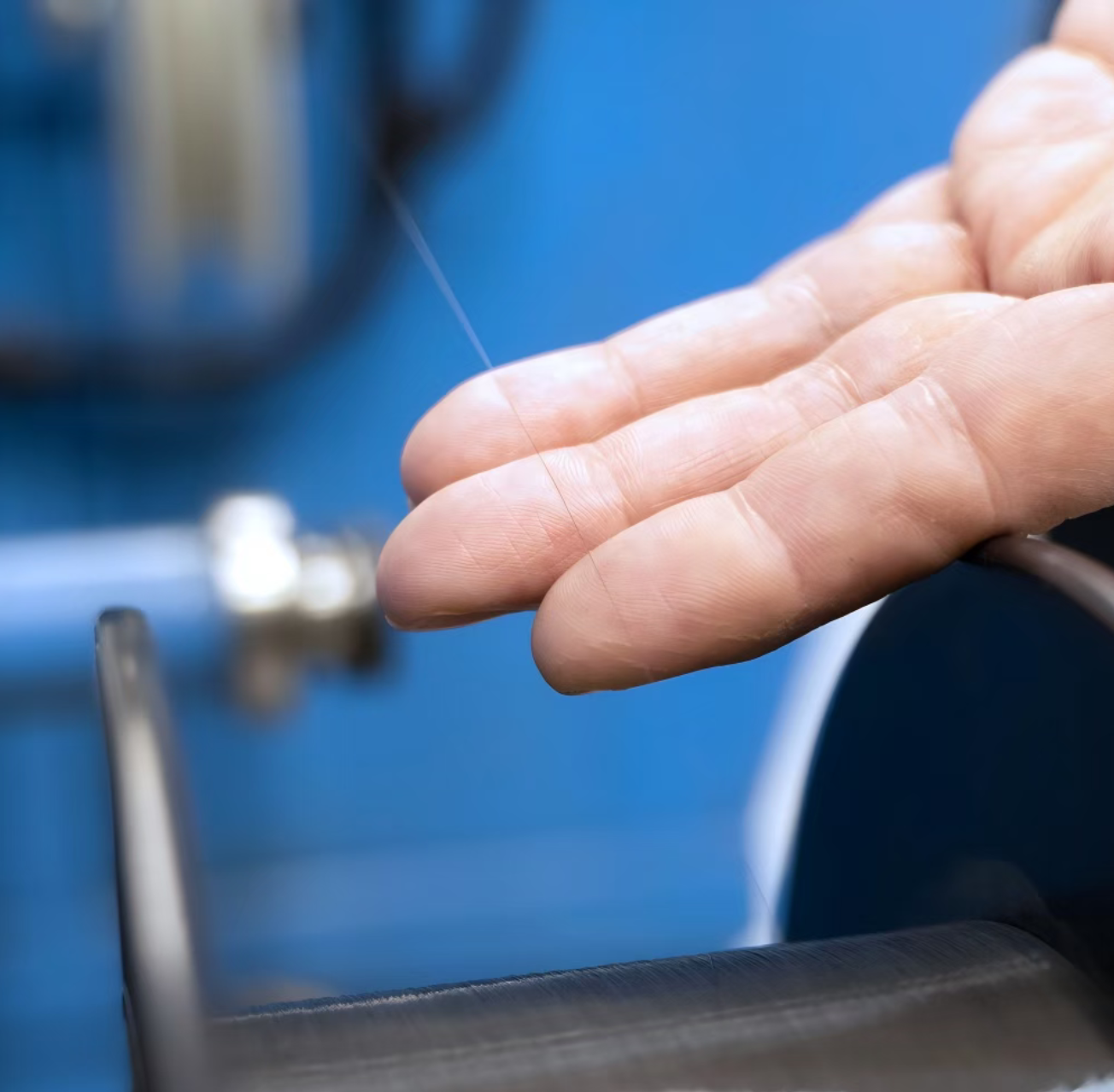

To ensure the highest quality and process reliability, we use Zeiss EVO scanning electron microscopy for regular testing.
Ingpuls uses scanning electron microscopy for quality control, product development, and process optimization. Every week, Tufa Yili and his colleagues analyze material samples extracted from wires with a diameter of 75 microns and a length of over 10000 meters. With the help of this device in fracture surface analysis, we can identify the cause of failure and optimize production processes accordingly
At present, Ingpuls has 75 employees and has formulated a grand development plan, fully committed to developing more innovative solutions for the medical and automotive industries. For Kortmann, choosing the Zeiss EVO is also a future oriented decision: "Zeiss scanning electron microscopes have saved us valuable time and enhanced customer trust in us - and that's priceless
