-
E-mail
wyssee@qq.com
-
Phone
18600834361
-
Address
Chinese Academy of Agricultural Sciences, Haidian District, Beijing
Beijing Zhongnong High tech Soil Fertilizer Testing Equipment Co., Ltd
Complete process analysis of laboratory specific pure water machine from installation to maintenance
Date: 2025-08-18Read: 1
On the clean operating table in the molecular biology laboratory, a laboratory specific pure water machine is outputting ultrapure water with a resistivity of 0.2 μ S/cm. This seemingly ordinary device actually carries the water lifeline for precision scientific research activities such as PCR experiments and HPLC analysis. This article will systematically analyze the full lifecycle management of laboratory specific pure water machines, helping you build a 'gold standard' system for laboratory water use.
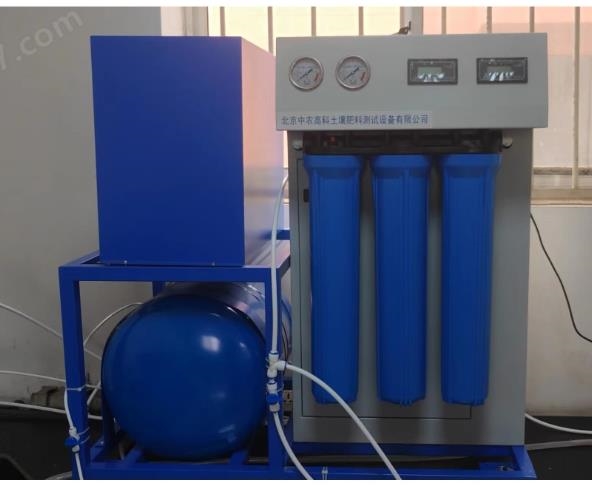
1、 Scientific installation: the cornerstone of building a pure waterway
1. Three principles for site selection:
Stay away from chemical reagent cabinets (≥ 3 meters) and ventilation openings to avoid cross contamination;
Reserve 50cm of operating space for daily maintenance;
Horizontal calibration error ≤ 0.5 ° to prevent uneven water production caused by tilting of the RO membrane.
2. Pipeline connection specifications:
The inlet pipe adopts food grade PE pipe (inner diameter ≥ 8mm), with a total length not exceeding 15 meters;
The drainage pipe needs to be equipped with a U-shaped bend water seal to prevent the backflow of exhaust gas;
Install a 0.22 μ m terminal filter at the pure water output end and maintain a vertical distance of ≤ 2 meters from the point of use.
3. Power on self-test process:
Perform the three-stage program of 'flushing water production circulation' for the first time (total duration ≥ 90 minutes);
Monitor the pressure gauge reading during the preprocessing stage (normal range 0.15-0.3MPa);
Detect TDS value to ensure that the raw water is ≤ 200ppm after pretreatment.
2、 Intelligent operation: precise control of water quality parameters
1. Multi level water quality switching technology:
First grade pure water (resistivity ≥ 5M Ω· cm): suitable for cleaning glassware;
Secondary pure water (resistivity ≥ 10M Ω· cm): used for routine chemical analysis;
Grade III ultrapure water (resistivity ≥ 18.2M Ω· cm): meets the requirements of advanced instruments such as HPLC and ICP-MS.
2. Application of dynamic monitoring system:
Real time display of water production flow rate (L/min), water quality parameters, and consumable life;
Set the alarm threshold for water quality exceeding the standard (such as automatic shutdown when the resistivity is less than 17M Ω· cm);
Connect the LIMS system through RS485 interface to achieve traceability of water usage data.
3. Energy saving operation mode:
Enable timed water production function (such as running during low electricity price periods at night);
Set the cyclic pressure holding mode to maintain the pressure of the water storage tank at 0.05-0.1MPa;
Activate the heating function in winter (maintain the operating temperature of the RO membrane at 20-25 ℃).
3、 Preventive maintenance: extending the life cycle of equipment
1. Management of consumable replacement cycle:
PP filter cartridge: replace every 3 months or after processing 50 tons of water;
RO membrane: Replace every 2 years or when the water production decreases by 20%;
Ultra purification column: Replace according to TOC value (>5ppb) or usage duration (≤ 12 months).
2. Deep disinfection program:
Perform chemical disinfection once every quarter (rinse with 1% hydrogen peroxide for 60 minutes);
Perform monthly hot disinfection (85 ℃ hot water circulation for 30 minutes, suitable for compatible models);
After disinfection, the endotoxin level should be tested (should be less than 0.001EU/mL).
3. Self diagnosis skills for faults:
Decreased water production: Check the inlet pressure and RO membrane fouling situation;
Water quality fluctuations: Verify the integrity of terminal filters and the pollution status of water storage tanks;
Abnormal noise: Check for pump body seals and pipeline vibrations.
From precision installation to intelligent operation and maintenance, the scientific management of laboratory specific pure water machines requires the establishment of a three in one control system of 'water quality equipment personnel'. When every drop of pure water undergoes more than 20 purification processes, these silent producers of the 'Fountain of Life' are providing the most fundamental yet crucial support for scientific breakthroughs.