-
E-mail
13001927190@163.com
-
Phone
13001927190
-
Address
Room 112, Courtyard 71 Chengzhuang Road, Fengtai District, Beijing
Beijing Zhongliwan Biotechnology Co., Ltd
Microgravity 3D Cell Culture System: A Revolutionary Breakthrough in Cardiac Regenerative Medicine
Date: 2025-12-12Read: 1
Have you ever wondered why laboratory grown cells are always difficult to simulate the real human environment? The traditional two-dimensional cultivation technique has been used for decades, but there has always been an insurmountable gap in the reproduction of cell function and structure. This limitation not only restricts the efficiency of new drug development, but also hinders the development of regenerative medicine.

The emergence of microgravity three-dimensional cell culture systems has rewritten the history of cell culture.TDCCS-3D from Beijing Keyu XingyeBy simulating microgravity environment, cells can freely suspend and naturally aggregate in three-dimensional space, forming structures that are very similar to human tissues. The data shows that the yield of cardiac progenitor cells cultured in this system is four times that of traditional 3D culture, with a purity of up to 99%, providing the possibility for cell therapy of heart diseases.

The fatal flaw of traditional two-dimensional cultivation is its inability to simulate the complex microenvironment inside the body. When cells grow in flat culture dishes, the lack of three-dimensional interaction between cells leads to incomplete functional expression. Even with the help of 3D cultivation technologies such as biological scaffolds, there are still problems such as uneven distribution and accumulation of metabolic waste. The microgravity environment has precisely overcome this challenge - by reducing fluid static pressure, cells can form natural 3D spherical aggregates, while reducing mechanical stress contact with container walls, promoting signal transduction and collaborative differentiation between cells.
The breakthrough of this technology is not only reflected in the laboratory environment. The cryopreservation technology developed by Xu's team enables cells to pause metabolic activity at -80 ℃, solving the issue of launch timing in space experiments. The new type of culture medium that does not rely on carbon dioxide overcomes the environmental limitations of space stations, making cell space cultivation a reality. These innovations have extended the boundaries of cell culture from the laboratory to the space domain.
The key advantage of the microgravity 3D cultivation system lies in its' low shear force 'design. In traditional cultivation, the shear force generated by mechanical stirring often damages cells, while TDCCS-3D, through a precisely controlled rotation system, places cells in an environment close to free fall, greatly improving survival rate and physiological activity. The tilted 45 ° rotating device can also simulate different environments from microgravity (10 ⁻ ³ G) to supergravity (2-3G), providing fine tuned control capabilities for studying the effects of gravity on cells.
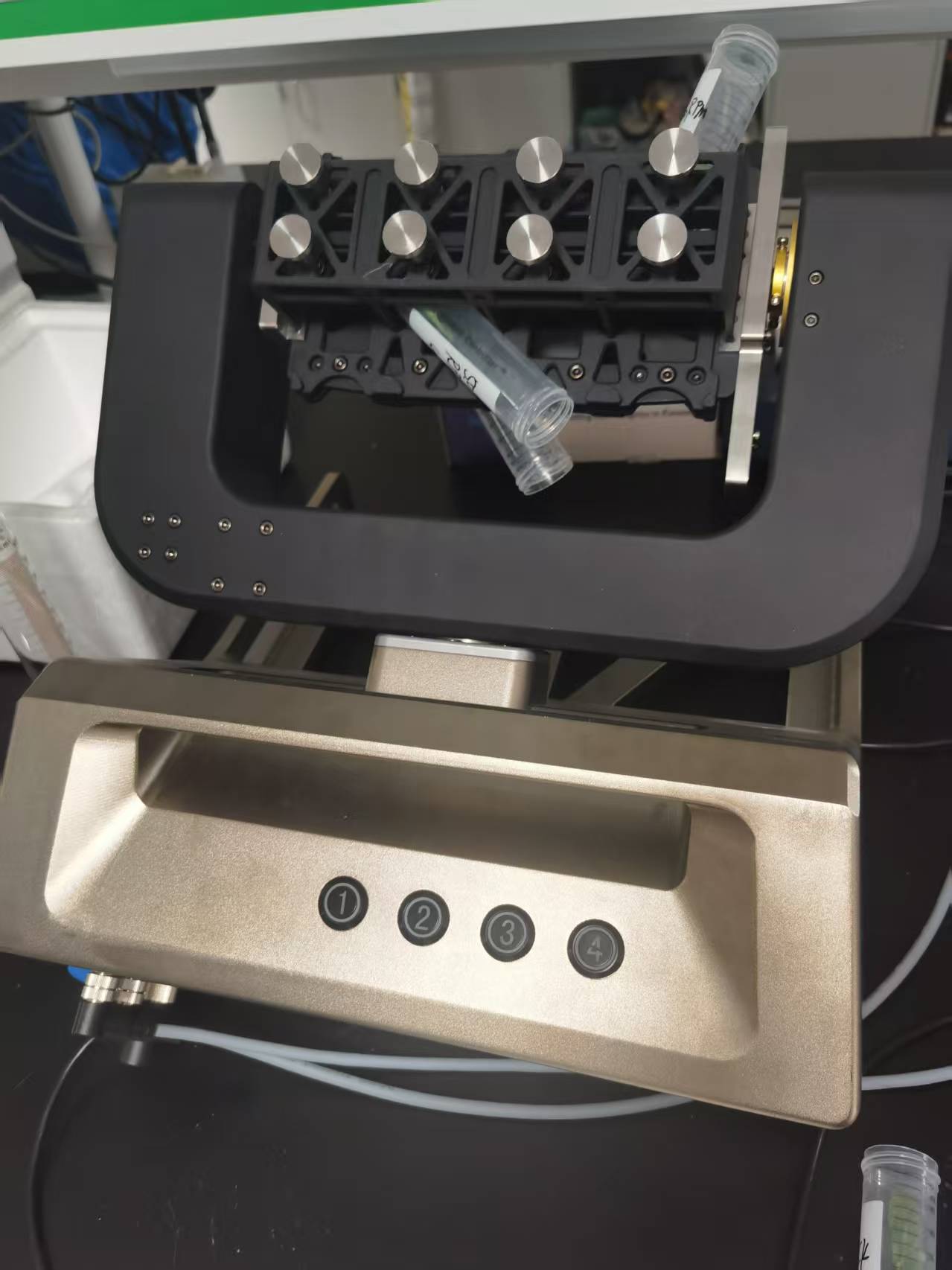
In the field of cardiac regenerative medicine, this technology demonstrates astonishing potential. The 'cardiosphere' structure formed by myocardial cells under microgravity conditions can better simulate the electrophysiological characteristics of real heart tissue than traditional methods. This not only provides a more reliable model for screening heart disease drugs, but also paves the way for future in vitro reconstruction of heart tissue. Preclinical studies have shown that the integration of cardiomyocytes cultured using this system with the host heart has increased by over 60% after transplantation.
The application prospects are equally exciting. From tumor model construction to stem cell differentiation research, from drug screening to toxicity testing, three-dimensional microgravity culture systems can provide experimental results that are closer to the human body than two-dimensional culture. Especially for studies sensitive to cellular function such as cardiac toxicity assessment, the advantages of the system are even more evident - the accuracy of detecting drug side effects on cardiac cells has been improved by nearly 40%.
With the continuous improvement of technology, microgravity 3D cultivation systems are moving from laboratories to industrialization. Beijing Keyu Xingye has achieved large-scale production of this system, making it not only suitable for scientific research institutions, but also able to meet the research needs of pharmaceutical companies and hospitals. The remote monitoring function equipped in the system allows researchers to observe the cell status at any time, greatly improving experimental efficiency.
Looking ahead, the microgravity 3D cell culture system is likely to become a standard configuration for regenerative medicine. When scientists are able to simulate the internal environment of the human body so accurately, organ reconstruction may no longer be out of reach. Especially for complex organs such as the heart, this technology may be the key to unlocking the code of regeneration. From the laboratory to the bedside, microgravity cultivation technology is ushering in a new era of cell therapy, bringing hope for millions of heart disease patients to regain their lives.