-
E-mail
cindy_yst@instonetech.com
-
Phone
18600717106
-
Address
109-878, Building 20, No. 9 Antai Street, Konggang Street, Shunyi District, Beijing
Beijing Yingsitao Technology Co., Ltd
Exploration of Diagnosis and Calibration Strategies for Data Drift in Impedance Analyzer
Date: 2025-11-17Read: 2
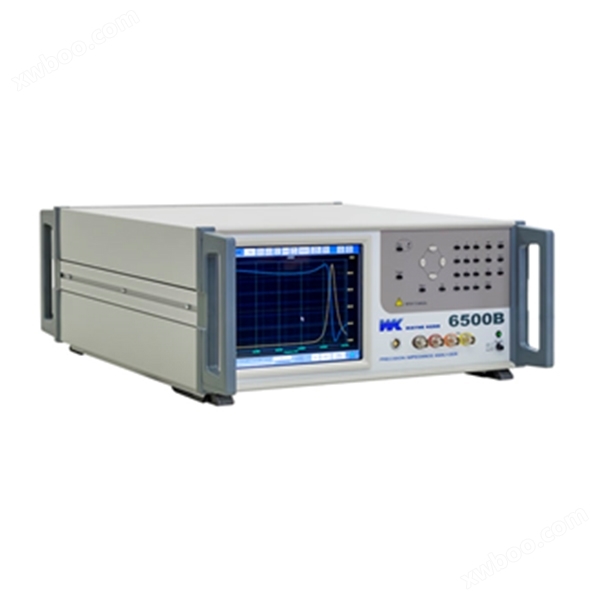
Impedance AnalyzerAs a core device for characterizing the dielectric, piezoelectric, and ion conductive properties of materials, its measurement accuracy is highly dependent on system stability. However, in long-term use, data drift (manifested as zero offset, gain variation, or phase error) often leads to unreliable test results, and systematic diagnosis and calibration are urgently needed.
The causes of drift mainly include:
Environmental factors: Temperature fluctuations (>± 2 ℃) affect the dielectric constant of internal reference components and cables;
Device aging: signal source oscillator frequency drift, amplifier gain attenuation;
Connection issues: oxidation of testing fixtures, changes in contact resistance;
Electromagnetic interference: Adjacent devices introduce noise, especially significant in low impedance measurements.
Diagnostic method:
Conduct regular comparative tests using standard impedance components such as 1 k Ω resistors and 100 pF capacitors;
Perform open/short/load three-step calibration and observe residual errors;
Enable the built-in self-test program of the instrument to monitor the local oscillator frequency and ADC status.
Calibration strategy suggestion:
Before daily use: Perform Short Open calibration;
Weekly: Verify full frequency accuracy using NIST traceable standard parts;
Quarterly: Send to metrology institutions for full parameter calibration;
Environmental control: Place the instrument on a laboratory bench with constant temperature (23 ± 1 ℃), low humidity, and good shielding.
Impedance AnalyzerSupports automatic calibration sequence and drift compensation algorithm, capable of real-time correction of measurement values. Meanwhile, adopting a four terminal pair connection method can effectively eliminate the influence of lead inductance and contact resistance.
In short, establishing a three in one maintenance system of "prevention monitoring correction" is the key to ensuring the long-term data reliability of impedance analyzers.