-
E-mail
18618288790@163.com
-
Phone
18618288790
-
Address
Room 1008, Yuanli Building, No. 23 Huixin East Street, Chaoyang District, Beijing
Beijing Tian'enhantou Technology Co., Ltd
In which industries is the nano homogenizer used?
Date: 2025-07-22Read: 1
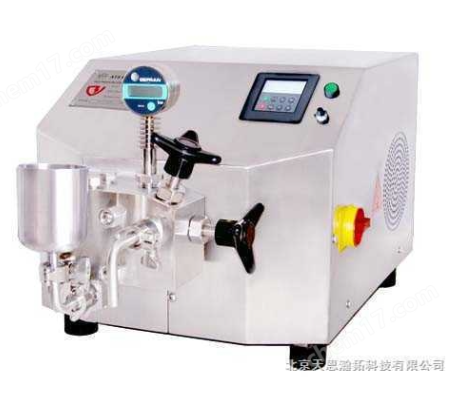
Nano homogenizer is a device capable of ultrafine processing of materials, dispersing them into a uniform system at the nanoscale through high-pressure, high-frequency shearing, and other processes. With its efficient and stable homogenization effect, nano homogenizers have been widely used in multiple industries, providing important support for product development and production in various fields.
1、 Food industry
Homogenizers can be used in the field of food processing to produce high-quality dairy products, beverages, seasonings, and more. For example, in milk production, through nano homogenization treatment, the fat balls in milk can be broken into smaller particles, making the milk more uniform and stable, with a more delicate taste, and extending the shelf life of the product. In beverage production, homogenizers can evenly disperse fruit pulp particles, suspended solids, and other substances in juice, improving the taste and stability of the beverage while avoiding sedimentation and stratification. In addition, for some functional foods, such as health foods with added nano level nutrients, homogenizers can ensure even distribution of nutrients, improving product quality and efficacy.
2、 Pharmaceutical industry
The pharmaceutical industry has high requirements for product purity and uniformity, and nano homogenizers are widely used in this field. It can be used to prepare nano drug carriers, such as liposomes, nanoparticles, etc., to encapsulate drugs in nano scale carriers, improve drug stability and bioavailability, and reduce drug degradation and inactivation in vivo. In vaccine production, the homogenizer can evenly mix the antigen and adjuvant to form a stable lotion and improve the immune effect of the vaccine. In addition, for some poorly soluble drugs, homogenizers can refine them into nanosuspensions or nanoemulsions, increasing the solubility and stability of the drugs and improving their efficacy.
3、 Cosmetics industry
The texture and stability of cosmetics directly affect the effectiveness and user experience of the product. Homogenizer can be used to prepare lotion, cream, essence and other products in cosmetics production. For example, in the production of lotion, the homogenizer can fully emulsify the oil phase and water phase to form a stable lotion system, making the product texture more delicate, smooth and easy to apply and absorb. In the production of essence liquid, the homogenizer can evenly disperse the effective ingredients in the liquid, improving the stability and efficacy of the product. In addition, homogenizers can also be used to prepare nanoscale cosmetic materials, such as nano titanium dioxide, nano zinc oxide, etc. These nano materials have better optical properties and skin affinity, which can improve the quality and added value of cosmetics.
4、 Chemical industry
In the field of chemical engineering, nano homogenizers can be used to produce various fine chemicals and nanomaterials. For example, in the production of coatings, homogenizers can evenly disperse solid particles such as pigments and fillers in the coating base material, improve the covering power and glossiness of the coating, reduce pigment agglomeration, and enhance the stability of the coating. In the preparation of nanomaterials, homogenizers can crush large particles into nanoscale particles through physical shearing and high-pressure homogenization, producing high-performance nanomaterials such as nano silica, nano calcium carbonate, etc. These nanomaterials have broad application prospects in electronics, optics, energy and other fields.
5、 Energy industry
With the development of new energy technology, the application of homogenizers in the energy field has gradually attracted attention. For example, in the production of lithium-ion batteries, homogenizers can be used to prepare high-performance battery slurries. By uniformly dispersing positive electrode materials, negative electrode materials, conductive agents, etc. in a solvent to form a stable slurry system, the electrode performance and consistency of the battery can be improved. In addition, homogenizers can also be used to prepare key materials such as catalysts and electrolytes for fuel cells. Through nanoscale dispersion and homogenization treatment, the activity and stability of materials can be improved, promoting the development of new energy technologies.
6、 Agricultural industry
It can be used in the agricultural field to prepare nano pesticides and nano fertilizers. Nanopesticides have better dispersibility and permeability, which can improve the effective utilization rate of pesticides, reduce the amount of pesticide used, and lower environmental pollution. Nano fertilizers can turn nutrients into nano-sized particles, increasing the solubility of fertilizers and plant absorption rates, promoting crop growth and development. In addition, homogenizers can also be used to prepare agricultural biologics, such as nanoscale microbial agents, plant growth regulators, etc., providing technical support for the sustainable development of agriculture.
7、 Environmental Protection Industry
It can be used in the field of environmental protection to treat pollutants in wastewater and exhaust gas. For example, in wastewater treatment, a homogenizer can disperse pollutants in the wastewater into nano-sized particles, increase the contact area between pollutants and treatment agents, and improve wastewater treatment efficiency. In exhaust gas treatment, it can be used to prepare nanoscale catalysts for catalytic combustion, denitrification, desulfurization and other exhaust gas treatment processes, improving exhaust gas treatment efficiency and reducing pollutant emissions.
summary
Nano homogenizers have been widely used in various industries such as food, pharmaceuticals, cosmetics, chemicals, energy, agriculture, and environmental protection due to their efficient and stable homogenization effect. It can not only improve the quality and performance of products, but also promote the development of various industries towards refinement and high performance.
Last Article: How should different types of gas analyzers be calibrated?
Next Article: How to ensure dispersion effect of nano homogenizer