-
E-mail
fanweilong@bjsyhx.com.cn
-
Phone
15510414544
-
Address
Changyin Building, No. 88 Yongding Road, Haidian District, Beijing
Beijing Songyuan Huaxing Technology Development Co., Ltd
Analysis of the sequence of shutdown, exhaust, and valve closing for vacuum freeze dryer
Date: 2025-07-27Read: 0
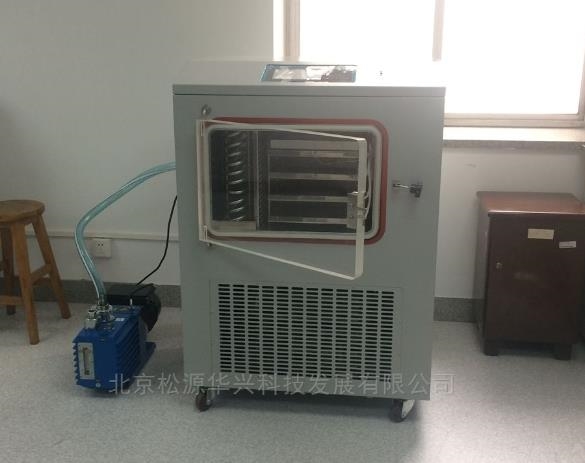
As a key equipment in laboratory and industrial fields, the shutdown process of vacuum freeze dryer directly affects the equipment life and sample integrity. The controversy over "exhaust first or close the vacuum valve first" has long existed, but according to the operating principle of the equipment and industry standards, the correct sequence should be: slowly inflate and exhaust first, and then close the vacuum valve. This operational logic can be analyzed from three aspects: device structure, safety risks, and sample protection.
1、 The equipment structure determines the operational logic
The core system of a vacuum freeze dryer consists of a vacuum pump, a cold trap, a drying chamber, and valves. When the vacuum pump is working, the air inside the drying chamber is extracted through the pipeline, creating a negative pressure environment. If the vacuum valve is directly closed, the system will be in a completely sealed state. At this time, if the vacuum pump stops due to malfunction or power interruption, the residual negative pressure in the pipeline may cause oil to flow back, contaminate the drying chamber, and even the sample. For example, a pharmaceutical company once closed the valve directly without inflation, causing the vacuum pump oil to pour back into the sample bottle, resulting in the entire batch of drugs being scrapped. Inflation and exhaust first can balance the internal and external pressure of the system, avoiding such risks.
2、 The inevitable choice for avoiding security risks
Samples pre frozen to below -40 ℃ are usually placed in the drying chamber. If the vacuum valve is directly closed, the pressure difference between the negative pressure inside the chamber and the external atmospheric pressure may exceed the equipment design limit (generally ≤ 0.1MPa), causing the glass cover to break or the sealing ring to deform. A case study in a university laboratory showed that after the operator closed the valve without inflating it, the pressure in the drying chamber suddenly rose to 0.12 MPa, causing the glass cover to burst and splashing fragments to cause minor injuries to personnel. In addition, the inflation and exhaust process should be carried out slowly (it is recommended to increase the pressure by ≤ 5kPa per minute) to prevent the sample from rupturing due to sudden pressure changes, especially for fragile cellular samples.
3、 The final guarantee of sample integrity
For biological samples that require long-term preservation, such as vaccines and enzyme preparations, the inflation and exhaust steps can avoid the phenomenon of "melting back". If the valve is directly closed, the residual water vapor in the chamber may re condense on the surface of the sample when the pressure rises, damaging its porous structure. Slowly filling with dry nitrogen or air can maintain the sample in a dry state and ensure rehydration. For example, a certain biotech company significantly extended the shelf life by optimizing the shutdown process and reducing the sample moisture content from 3.2% to 1.5%.
4、 Standardized operating procedures
1. Inflation and exhaust: Insert the inflation valve nozzle into the valve seat, slowly open the inflation valve, and allow air or nitrogen to enter the drying chamber at a rate of ≤ 5kPa/min until the pressure rises to atmospheric pressure (about 101kPa).
2. Turn off the vacuum pump: After the pressure stabilizes, turn off the power supply of the vacuum pump to avoid motor idling.
3. Close the vacuum valve: After confirming pressure balance, tighten the vacuum valve and cut off the connection between the vacuum system and the drying chamber.
4. Follow up processing: After removing the sample, clean the frost inside the cold trap and check if the sealing ring is intact.
The shutdown sequence of the vacuum freeze dryer is a dual guarantee of equipment safety and sample quality. Following the principle of "exhaust first, then close the valve" not only extends the service life of the equipment, but also ensures the reproducibility of experimental data, providing reliable support for scientific research and production.