-
E-mail
13911237038@163.com
-
Phone
13911237038
-
Address
Building 2, Chaomingyuan, Boxing 10th Road, Yizhuang Economic and Technological Development Zone, Beijing
Beijing Pusanda Instrument Technology Co., Ltd
Guidelines for Maintenance of Cold and Hot Shock Test Chamber with "Unqualified Temperature Rate"
Date: 2025-12-10Read: 0
thermal shock chamber
1、 Quick troubleshooting: first solve external issues that are easy to operate
Load exceeds the rated range of the equipment: Check if the volume of the test sample exceeds one-third of the working chamber volume (overloading will hinder temperature cycling), reduce the number of samples or replace with larger capacity equipment.
The ambient temperature does not meet the requirements: The operating environment of the equipment needs to be between 5 ℃ and 35 ℃. If the environment is too hot (such as near a heat source) or too cold, it will affect the cooling/heating efficiency. Adjust the ambient temperature or move the device position.
Air duct blockage or sealing failure: Open the equipment panel, clean the dust and sample debris at the inlet/outlet of the workshop, and check whether the air duct baffle is opened normally; At the same time, check whether the sealing strip of the box door is aging or damaged (poor sealing can cause temperature leakage), and replace the sealing strip if it is damaged.
Parameter setting error: Confirm whether the device is set to "fast temperature change mode", check whether the set temperature change rate exceeds the rated capacity of the device (such as the standard speed of 15 ℃/min but set to 20 ℃/min), and adjust the parameters to the allowable range of the device.
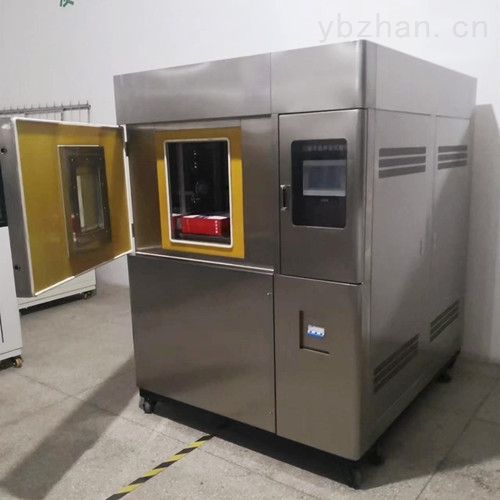
2、 Core component maintenance: targeted solutions for hardware failures
Refrigeration system failure (common causes) refrigerant
Shortcoming: Observe whether there is any leakage in the refrigeration pipeline (such as abnormal frosting or oil stains). If there is a leakage, it needs to be repaired first, and then the corresponding refrigerant models (such as R404A, R23) should be supplemented. compressor Efficiency decline: If there is abnormal noise or high exhaust temperature during compressor operation, it may be due to compressor wear or valve plate damage. Professional personnel should be contacted for maintenance or replacement of the compressor. condenser /Evaporator Dirty blockage: Dust accumulation on the condenser fins can lead to low cooling efficiency. Use a high-pressure air pump or brush to clean the dust; Excessive frosting on the evaporator (not required for normal testing), defrosting function can be activated or manually defrosted. Heating system malfunction heating tube
Damage: Use a multimeter to check the resistance value of the heating tube. If the resistance is infinite or abnormal, it indicates that the heating tube is burnt out. Replace it directly with a heating tube of the same power. Heating relay fault: Oxidation or adhesion of relay contacts can cause insufficient power supply to the heating tube. Disassemble the control panel to check the status of the relay. If damaged, replace the corresponding model of relay. Control and circulation system malfunction: Abnormal operation of the fan: Decreased or stopped speed of the circulation fan can cause uneven temperature circulation and slower speed. Check whether the fan motor is faulty or whether the fan blades are stuck by foreign objects. Repair the motor or clean up foreign objects. temperature sensor
Deviation: Sensor failure can cause inaccurate control signals. Use a standard thermometer to calibrate the device sensor. If the deviation exceeds ± 0.5 ℃, replace the temperature sensor with a new one.
3、 Professional Reminder
If the above troubleshooting still cannot solve the problem (such as locating leaks in the refrigeration system or repairing compressors), do not disassemble the core components (such as refrigeration pipelines and control panels) on your own to avoid secondary damage.
Regular maintenance can prevent this malfunction: clean the condenser and air duct once a month; Check the refrigerant pressure and heating tube status every 6-12 months; Replace the sealing strip once a year (adjusted according to the frequency of use).