-
E-mail
360091932@qq.com
-
Phone
13439993923
-
Address
B802-002, 8th floor, north side of Guangyang Street, Changyang Town, Fangshan District, Beijing
Beijing Pinzhi Chuangsi Precision Instrument Co., Ltd
Determination of surface tension of natural rubber latex and synthetic rubber latex
Date: 2025-12-16Read: 0
The interfacial tension meter is a precision instrument used to measure the surface tension (liquid gas phase interface) and interfacial tension (liquid-liquid phase interface) of liquids. Based on physical principles such as the ring method (platinum ring method), it is widely used in the fields of petroleum, power, chemical, pharmaceutical, and scientific research.
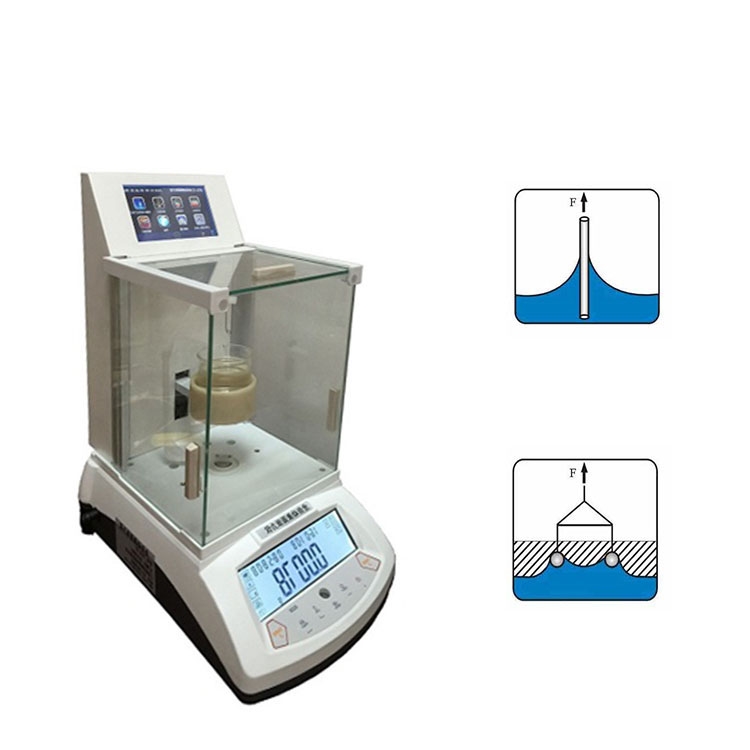
Working principle and measurement method
The interfacial tension meter evaluates the physical and chemical properties of liquids by detecting the tension values generated by intermolecular forces. The core methods include:
Circular Ring Method (Platinum Ring Method): After immersing a platinum ring in a liquid, slowly pull it up and measure the minimum force required to break the liquid film. Calculate the tension value using a formula, suitable for most liquids (such as mineral oil and water), with a measurement range of 0-200mN/m and a resolution of 0.1mN/m.
Platinum plate method: When the platinum plate comes into contact with the liquid surface, the surface tension causes it to sink, and the equilibrium depth is converted into tension value. It is suitable for high viscosity liquids (such as ink and paint), and the operation is faster.
Rotating Drop Method: High speed rotating sample tubes form liquid droplets, and ultra-low interfacial tension (as low as 10 ⁻⁶ mN/m) is calculated through image analysis of morphological parameters for tertiary oil recovery and liquid crystal material research.
Precautions for use:
When loading and unloading platinum rings/plates, the instrument power should be turned off to avoid damaging the sensors.
Clean platinum components by burning them with an alcohol lamp until they turn red hot, ensuring that there are no residues.
The sample capacity should not exceed 80% of the container to avoid overflow and affect accuracy.
Maintenance and upkeep:
Regular calibration: Using single point calibration technology, verify once a month.
Environmental control: Maintain a constant temperature in the laboratory (25 ℃± 5 ℃) and avoid vibration.


Last Article: Automatic surface tension tester
Next Article: The advantages of non-contact roughness profilometer in optical components