-
E-mail
tina.lu@dataphys.com.cn
-
Phone
18811105083
-
Address
Room 1208, Satellite Building, Building 51, No. 63 Zhichun Road, Haidian District, Beijing
Beijing Oudelino Instrument Co., Ltd
Analysis of core functions of imported tension meters, integrated innovation of precise measurement and multi scene intelligent control
Date: 2025-08-25Read: 0
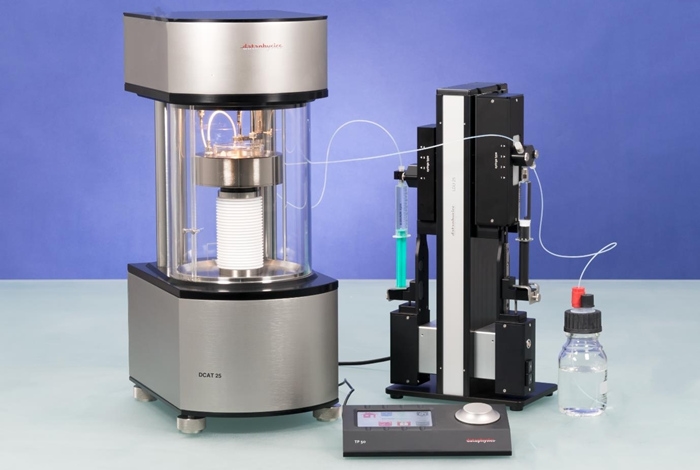
Imported tensiometers have become key equipment in material testing, industrial production, and scientific research fields due to their high precision, versatility, and environmental adaptability. Compared to domestic instruments, imported products usually have technical advantages in sensor sensitivity, dynamic response speed, and software algorithms. This article systematically outlines the core functional system of imported tension meters from four dimensions: basic measurement, dynamic control, data analysis, and industry customization.
1、 High precision basic measurement function
The core competitiveness of imported tensiometers lies in their micro Newton level measurement accuracy, which can cover testing needs from ultra-low tension to high-strength materials. The instrument adopts the double platinum plate method combined with temperature compensation technology, which can achieve a repeated measurement deviation of less than 0.2mN/m in surface tension within a temperature difference of 0.1 ℃. In addition, some models support multi parameter synchronous monitoring, such as simultaneously outputting surface tension, contact angle, and density data, providing comprehensive characterization capabilities for material research and development.
2、 Real time control function for dynamic processes
In response to the needs of industrial production lines, imported tension gauges are integrated with closed-loop feedback control systems, which can adjust process parameters in real time to maintain tension stability. For example:
During the film coating process, the PID algorithm is used to automatically adjust the oven temperature or coating head pressure to control tension fluctuations within ± 0.5%;
2. In the fiber drawing process, high-speed sampling (≥ 10kHz) and predictive control models are used to achieve micrometer level diameter uniformity control;
3. Some advanced models are equipped with multi axis collaborative control modules, which can synchronously manage the longitudinal and transverse tension ratios to avoid wrinkles or fractures in flexible materials.
3、 Intelligent data analysis and traceability function
Imported equipment is usually equipped with AI driven data processing platforms that support:
1. Automatically identify abnormal data points and trigger alarms;
2. Trend prediction based on machine learning;
3. Generate electronic reports that comply with GLP/GMP standards, including raw data, calibration records, and uncertainty assessments;
4. Seamless integration with LIMS (Laboratory Information Management System) to achieve full process data traceability.
4、 Industry customization function expansion
For specific field requirements, import manufacturers provide modular functional extensions:
1. Pharmaceutical industry: equipped with sterile compartments and steam sterilization interfaces to meet FDA 21 CFR Part 11 compliance requirements;
2. Semiconductor manufacturing: adopting anti-static design and vacuum compatible sensors to adapt to ultra clean environments;
3. Abnormal condition testing: Supports dynamic tension monitoring in high temperature environments ranging from -196 ℃ to 1000 ℃.
Technological trend: Currently, imported tensiometers are developing towards miniaturization, wireless technology, and self calibration. When selecting equipment, users should focus on evaluating its measurement range, response speed, and compatibility with existing production systems to achieve a greater return on investment.