Introduction: Why are your skincare products "incompatible"?
——Uncovering the scientific code of skin friendliness
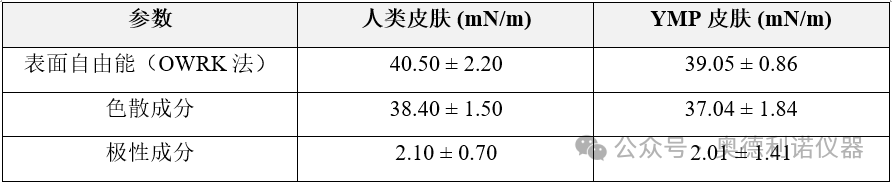
Why do some toners absorb immediately while others float on the surface? Why use refreshing face cream in summer, but in winter, how to wipe it? These annoying little problems actually hide the secret of "fitness" between skin and skin care products.We always choose skincare products based on our feelings: listening to friends say or reading advertising slogans that say 'suitable for all skin types'. But the skin is not static. "Young skin that is hydrated at the age of ten may become sensitive by the age of thirty; the T-zone, which produces abundant oil in summer, may become dry and peel off in winter.The "temperament" of the skin is so variable, and the texture and ingredients of skincare products vary greatly. Relying solely on experience to judge is like guessing a riddle, no wonder one always steps into the pit of "incompatibility". Did you know?The degree of "adaptation" of skincare products (such as whether they can be smoothly pushed away or float on the surface) is closely related to the condition of the skin surface. The traditional selection method of "following the feeling" has long been unable to keep up with the "face changing speed" of the skin.At this point, the power of science came into play. Just like making for the skin and skincare productsPersonality TestQuantify their 'fit' using precise methods - no longer relying on 'I think', but using data to speak for itself; Predict in advance the performance of skincare products under different skin conditions. The true meaning of scientifically predicting the friendliness of skincare products is to make every skincare experience feel like finding the "right person" for the skin, in harmony and comfort.The "old and difficult" problem of traditional testing: why is the evaluation of skincare product friendliness always "unreliable"? The difference between the "buyer show" and "seller show" of skincare products lies in two "old and difficult" problems of traditional skin friendliness testing: "Although it is a 'refreshing' skincare liquid recommended by my best friend, I use it myself and my hair sticks to my cheeks.1、 Individual differences: Your skin is not a 'standard sample' Everyone's skin is a "dynamic canvas" - it produces more oil in summer and dries more easily in winter, the collagen barrier is full at the age of 20 and fragile at the age of 40, and the differences in humid and dry environments in the south and north can cause significant changes in the surface characteristics of the skin. Traditional tests often struggle to cover these variables, resulting in a world of difference between the same bottle of skincare products appearing "refreshing" and "sticky" on different people's faces.2、 Laboratory data: 'Paper talk' detached from real-life scenarios More importantly, the 'data' in the laboratory often deviates from the actual user experience. For example, the core indicator for evaluating the stickiness of skincare products - adhesion testing. Currently, the mainstream peel test method essentially measures the adhesion strength between skincare products and glass or metal plates, rather than directly evaluating their adhesion to the skin. This testing logic of "answering irrelevant questions" makes it difficult for R&D personnel to guess the true feedback of consumers despite holding precise data.These challenges make skincare product development like guessing a blind boxFormulators are unable to accurately predict the usage experience of different groups of people, and it is also difficult to identify "skin sensation solutions" through laboratory data. It is precisely this' uncertainty 'that makes new methods for scientifically evaluating skin friendliness a necessity in the industry.Cracking the difficult problem: OWRK method - making skincare products and skin "shake hands" more tactfulImagine that choosing skincare products is like finding a "personality compatible" partner for your skin. Some ingredients are naturally "introverted" and prefer to "stand" far away (hydrophobic), while others are particularly "extroverted" and always want to "stick" to the skin (hydrophilic). The combination ratio of these two "personalities" directly determines whether skincare products will be obedient or unruly after being applied to the face. ButOWRK methodIt is a scientific tool that helps us see through this' personality fit '.Like conducting a "personality test" on skincare products,OWRKThe law will first analyze its two core "personality parameters":Dispersive component(Corresponding to "introverted personality", hydrophobicity) andPolar components(Corresponding to "outgoing personality" and hydrophilicity). Through these two parameters, scientists have constructed a special 'getting along map'——contour mapAbove, there are lines resembling contour lines, representing the "behavior trajectory" of skincare products on the skin surface (wetting range, adhesion strength). Core advantages:You don't need to directly apply skincare products to the skin, just measure their surface tension and "personality parameters", find the corresponding coordinates on the contour map, and you can predict their performance like looking at a navigation - whether they are "slipping in place" (large contact angle, difficult to push away) or "tightly embracing" (high adhesion, not easy to detach), making it easy to predict whether this skincare product is "obedient and compliant".Experimental verification: Is it reliable to use pig skin as a substitute?Why choose pig skin for experimentation? Scientists have found an unexpected 'ideal substitute' in skincare safety testing——Yucatan miniature pig (YMP) skinIt is capable of fulfilling this role, and behind it lies a triple scientific logic:First of allPersonality similarityThe "stickiness" and ingredient distribution on the surface of the skin determine whether skincare products can adhere evenly and be absorbed smoothly. Experimental data shows that the core parameters of human skin and YMP skin almost overlap, as compared in the following table:Next isStrong stabilityHuman skin samples are often influenced by age, gender, and living environment, while YMP skin can strictly control variables through standardized breeding to ensure comparability of each experimental result.FinallyEthical friendlinessCompared to directly using human skin or other primate models, YMP skin is easier to pass ethical reviews while also considering the authenticity of testing. Summary of core advantages:YMP skin relies on its high similarity to human skin (with only a difference in surface free energy)1.45 mN/m)Standardized experimental conditions and ethical acceptability have become the "golden substitute" for skincare product testing.During the experiment, scientists observed the behavior of skincare products through two types of "personality tests":1) The suspension drop method is used to measure the surface tension of skincare liquid in air and the interfacial tension between skincare liquid and perfluorohexane (Figure 1);2) Measure the contact angle between skincare solution and YMP skin using the seat drop method (Figure 2);(Image)1)Measurement of Surface Tension of Skincare Liquid and Interface Tension between Skincare Liquid and Perfluorohexane Using German OCA 25 Contact Angle Meter
(Image)2)Picture of measuring the contact angle between skincare lotion and YMP skin using the German Defei OCA 25 contact angle meter
Finally draw the reflection“affinity”The contour map. passYMPSkin this“Biological simulator”Researchers were able to accurately capture the true performance of skincare products in laboratory environments and draw contour maps of the relationship between surface tension, adhesion work, and contact angle of skincare liquids (Figure)3). This provides a reliable basis for determining its friendliness towards human skin in the future.
(Image)3)OCA 25Drawn by softwareYMPSchematic diagram of contour lines of contact angle (solid line) and adhesion work between skin and skincare lotion
Key finding: Prescription drugs vs Who is more 'skin friendly' to over-the-counter drugs?
When we are torn between choosing prescription drugs or over-the-counter medications, laboratory data may provide us with more intuitive answers. Through scientific testing of three prescription drugs (PD) and two over-the-counter (OTC) skincare lotions, we found that both types of products have their own strengths in skin "friendliness", forming an interesting "functional ranking list".Table 1. List of skincare liquid samples used in this studyWettability: The Secret of Over the Counter Medication - "Ready to Use"Non prescription drugs are picked up with a "moisturizing and silky" feeling of useWettability CrownThe key behind this is that they add more surfactants, such asMade®The ingredients such as polyoxyethylene hydrogenated castor oil contained in skincare lotion can significantly reduce the surface tension of the product. Experimental data shows that the surface tension of over-the-counter drugs is only25.97-27.46mN/mAnd prescription drugs are available32.91-35.84mN/mbetween. The lower surface tension allows over-the-counter drugs to spread out when in contact with the skin, with a contact angle of 0 ° (as read from Figure 3), achieving true "one touch opening"; In contrast, the contact angle of prescription drugs is about37°More application force is needed to push it away.Adhesion: Sumilu®Skincare lotion 3% - the advantage of "long-lasting retention without rubbing mud" In the competition of "long-lasting adhesion", prescription drugsSumilu®Skincare lotion 3% stands out and becomesadhesionThe product. Through adhesion function testing, it was found that its adhesion function is located at60-70mN/mIn the middle of the contour line, it is significantly higher than other skincare liquid samples (all at 60 ° C)mN/mNear the contour line. This meansSumilu®3% skincare lotion can adhere more firmly to the surface of the skin, reducing the phenomenon of "mud rubbing" caused by friction and allowing the effective ingredients to work for a longer period of time. Shopping Tips:If you pursue instant hydration and easy application, you can prioritize choosing products with lower surface tension, such as over-the-counter drugs used in experimentsMade®Skincare lotion; If you need products with long-lasting adhesion, long-lasting effects, and higher adhesion properties, such as prescription drugs used in experimentsSumilu®3% skincare lotion would be a more suitable choice.
From laboratory to dressing table: what can this method change?
Imagine that in the future, when buying skincare products, you may be able to easily find the "surface energy parameter" label like checking the ingredient list - this new method that has emerged from the laboratory is quietly rewriting our relationship with skincare products. The changes it brings will permeate into consumers' dressing tables, researchers' laboratories, and even the future of the entire skincare industry.
For Consumers: Your Skin Has' Personality Parameters'Everyone's skin "personality" is different, and "skin surface energy detection" is like giving the skin a precise "personality test". In the future, you only need to obtain your skin surface energy data through simple testing, and then compare it with the surface tension ingredients on the skincare product label to find suitable products like a "key with a lock". skin“Personality parameters”Match skincare product labels, choose high polarity ingredients for dry skin and low surface tension formulas for oily skin.
For developers: the 'formula accelerator' in the laboratoryIn the past, the development of skincare products often fell into a cycle of "human trial and error", but this method makes formula optimization as precise as "making coffee". Developers no longer need to rely on a large number of volunteers for testing,By adjusting the ratio of dispersion components to polar components, key factors such as adhesion and permeability can be quickly optimized to improve product performance.
Industry: Personalized skincare has a 'universal language' The difference in the use of "thousands of people, thousands of faces" has always been the biggest pain point for personalized skincare. And this method is like establishing a "universal language" for the industry: for example, the skincare lotion that claims to be "special for sensitive skin" no longer relies solely on vague descriptions of "mild formulas", but proves its compatibility with the surface energy of sensitive skin through surface energy detection data, ensuring warmth and stability; Customized products for different skin types can also be validated through a unified surface energy parameter system, making "personalization" no longer a marketing gimmick, but a measurable and replicable standard.Perhaps soon, when you pick up a bottle of skincare lotion, in addition to the text description of "suitable for dry skin", you will also see a clear label: "Surface energy parameters:35-40mN/m(High polarity formula). At that time, skincare will truly enter the era of precision driven by data - microscopic research in the laboratory will eventually become intimate companionship on the dressing table.Future outlook: Beyond skincare products, make topical medications more 'skin friendly'When the tentacles of science extend from daily skincare to clinical treatment, we are witnessing an important leap from "skincare" to "skin treatment". The value of the OWRK method is not limited to helping us select milder moisturizers, its core logic is being expanded to a broader field of topical medications - whether it is ointments for treating eczema, patches for repairing wounds, or other semi-solid preparations, precise optimization can be achieved through this scientific method.For people who suffer from skin problems, this technological extension means a more intimate treatment experience. For example, patients with eczema have fragile skin barriers and require irritation and adhesion to medication. Through the scientific evaluation of drug formulations using OWRK method, doctors can match patients with low irritation and high adhesion treatment plans, allowing drugs to exert therapeutic effects while minimizing additional burden on sensitive skin. Trauma patients can also benefit from it, as topical medications that better meet the needs of the skin will improve wound repair efficiency and accelerate the recovery process. Core breakthrough:From "passive adaptation" to "active matching", the OWRK method has made topical medications no longer "standardized products", but "personalized solutions" that can be dynamically adjusted according to different skin conditions (such as sensitivity, damage, dryness), truly achieving a precise leap from "skincare" to "skin treatment".This technological innovation is blurring the boundary between daily care and clinical treatment. In the future, whether it's the moisturizer on your dressing table or the ointment prescribed by a doctor, they may become more "intimate" through this method. The scientific temperature is making life better through precise matching of skin and formula every time.If you are interested in measuring this product,
Please contact us to provide testing services for you