-
E-mail
sales@opton.com.cn
-
Phone
13126536208
-
Address
Oubotong Group, Building 2, No. 1100 Huihe South Street, Chaoyang District, Beijing
Beijing Obotong Optical Technology Co., Ltd
Application of Thermo Fisher Scanning Electron Microscopy in Nanomaterial Analysis
Date: 2025-11-10Read: 1
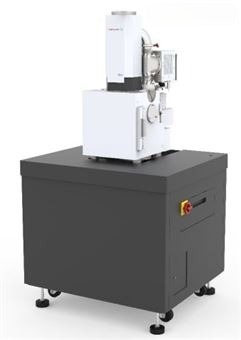
Thermo Fisher scanning electron microscope is a powerful microscopic analysis tool widely used in the field of materials science, with important application value in the characterization and analysis of nanomaterials. Due to its high resolution, sensitivity, and versatility, it has become a key tool in the research and development of nanomaterials. By scanning the sample surface with an electron beam, images are generated using electronic signals reflected or emitted from the sample surface, such as secondary electrons, reflected electrons, and X-rays.
Thermo Fisher scanning electron microscopeThe applications in the analysis of nanomaterials are mainly reflected in the following aspects:
(1) Morphological analysis of nanoparticles
Nanomaterials typically have unique morphological and dimensional characteristics that determine their physical, chemical, and biological properties. It can provide high-resolution images of nanoparticles, accurately revealing information such as particle shape, size, surface structure, etc. In the research of nanomaterials, morphological analysis is crucial for understanding their properties. For example, the morphological characteristics of nanomaterials such as metal nanoparticles, carbon nanotubes, and quantum dots directly affect their catalytic activity, optical properties, and conductivity.
(2) Crystal Structure and Phase Analysis of Nanomaterials
The equipped backscattered electron detector (BSE) can analyze the crystal structure of the sample. By observing the scattering effects of different crystal planes or grain boundaries, researchers can obtain information on the crystal structure, phase transition process, and crystal defects of nanomaterials. For example, in the research of semiconductor materials, ceramic materials, and nanoalloys, it can help researchers analyze the distribution of different phases, grain size, and lattice defects, all of which have important impacts on the mechanical, electronic, and thermal properties of the materials.
(3) Elemental composition analysis of nanomaterials
Thermo Fisher scanning electron microscopes are typically equipped with energy dispersive spectroscopy (EDS) systems, which enable rapid elemental analysis within the scanning electron microscope. Through X-ray energy spectrum analysis, researchers can quantitatively analyze the elemental composition of nanomaterials. EDS can provide element distribution maps on the surface or inside of nanomaterials, which helps identify the position and concentration changes of different elements in the material. Elemental analysis is a key technique in the research of composite materials, nanoalloys, and functionalized nanoparticles.
(4) Analysis of Surface Morphology and Treatment Effect of Nanomaterials
The surface properties of nanomaterials determine their ability to interact with other substances, and surface modification techniques are widely used to improve the functionality of nanomaterials. Through high-resolution images, the microstructure of the surface of nanomaterials can be clearly displayed, such as surface roughness, porosity, molecular coatings, etc. For surface treated nanomaterials, it can help researchers observe the changes after surface modification and evaluate their modification effects.
(5) Defects and stress analysis of nanomaterials
The performance of nanomaterials is often closely related to their internal structural defects and external stress. By using it, researchers can identify crystal defects in nanomaterials and further analyze their impact on material properties. In addition, stress analysis can be combined with other technologies to understand the behavior of nanomaterials under different stress conditions, especially in the study of strength and toughness of nanostructured materials, which is an important tool.
Thermo Fisher scanning electron microscopy, as a powerful analytical tool, plays a crucial role in the research and development of nanomaterials. Whether in the morphological analysis and crystal structure research of nanoparticles, or in surface treatment, defect analysis, elemental composition analysis, etc., high-resolution and multifunctional characterization methods can be provided to help scientists better understand the microstructure and properties of nanomaterials.