-
E-mail
marketing@ecotek.com.cn
-
Phone
18710042796
-
Address
22F, Block A, Chengming Building, No. 2 Xizhimen South Street, Xicheng District, Beijing
About Us
Beijing Ligotai Technology Co., Ltd
Date: 2021-04-20Read: 19
原文以 Diel magnesium fluctuations in chloroplasts contribute to photosynthesis in rice
The title was published in Nature Plants.
Author | Chen Zhichang's research group from Fujian Agriculture and Forestry University/Ma Jianfeng's research group from Okayama University, Japan/Molecular Plant Science, Chinese Academy of SciencesZhuo YueInnovation Center Zhu Xinguang
Translation | Ziyi
Plant photosynthesis provides the necessary food, fiber, and fuel for human society. A deep understanding of the regulatory mechanisms behind this process is key to improving photosynthetic efficiency.
There is a circadian rhythm in plant photosynthesis, which is closely related to the changes in environmental light intensity. In terms of internal factors, gene expression and post-translational modification (PTM) of key enzymes play important roles.
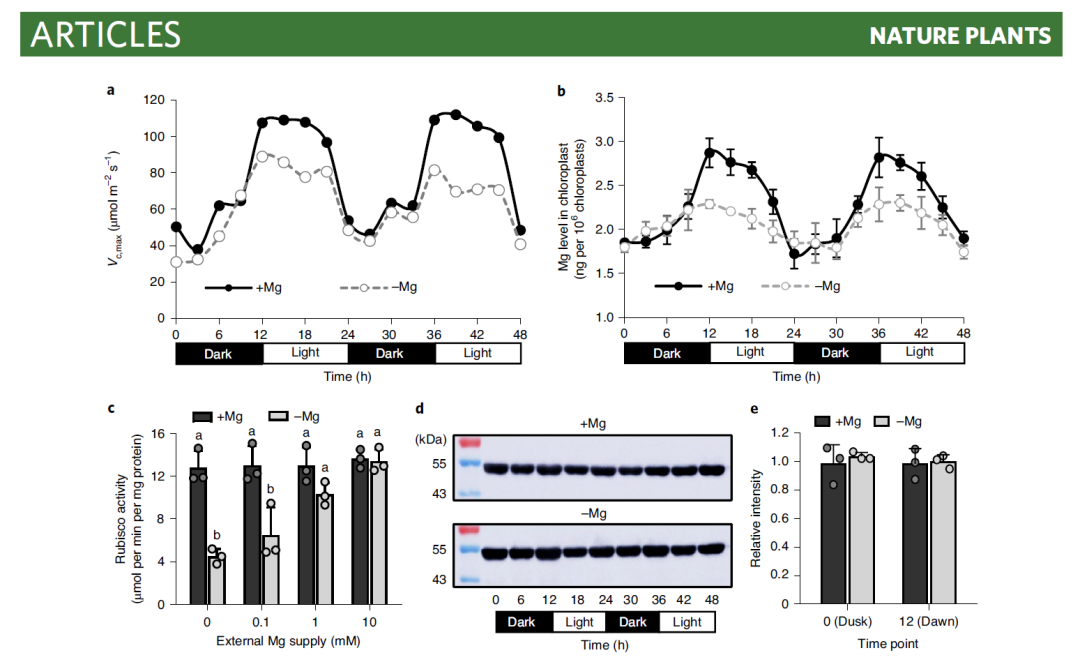
In this study, researchers found that Mg in rice chloroplasts exhibits diurnal fluctuations. This phenomenon is caused by CO in rice2The 'rhythm regulator' of assimilation.
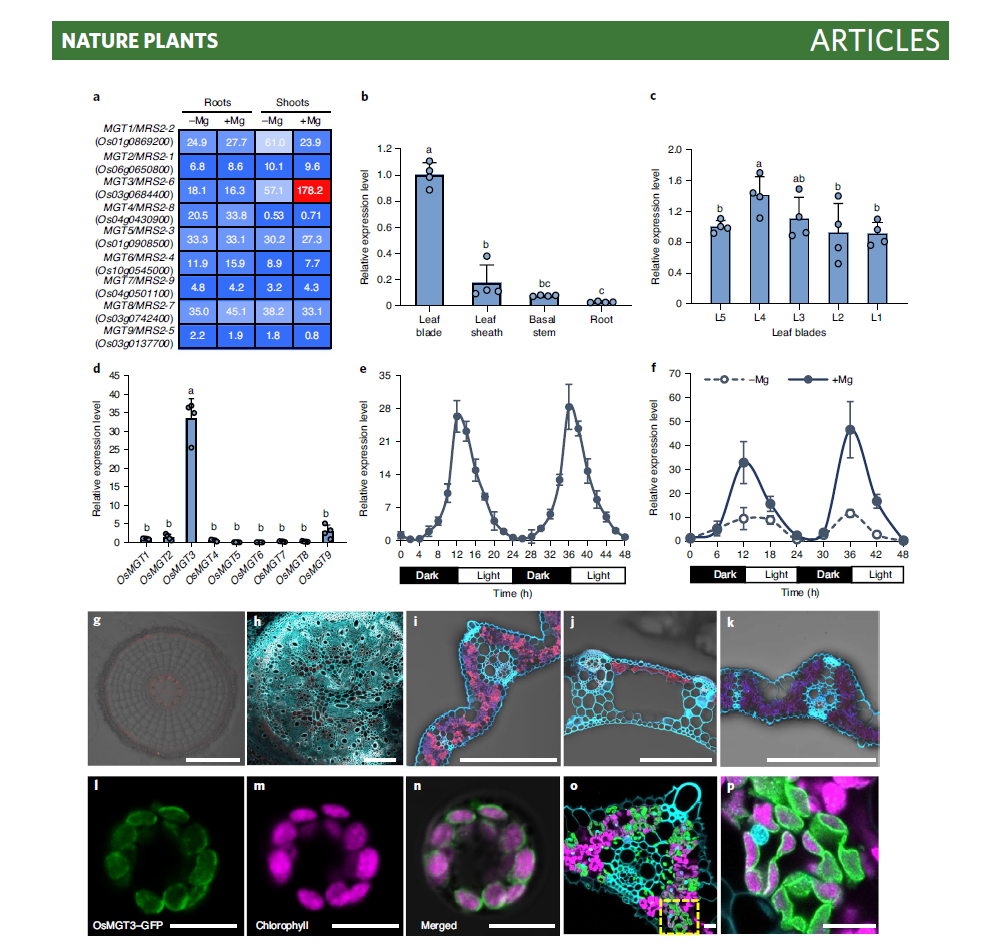
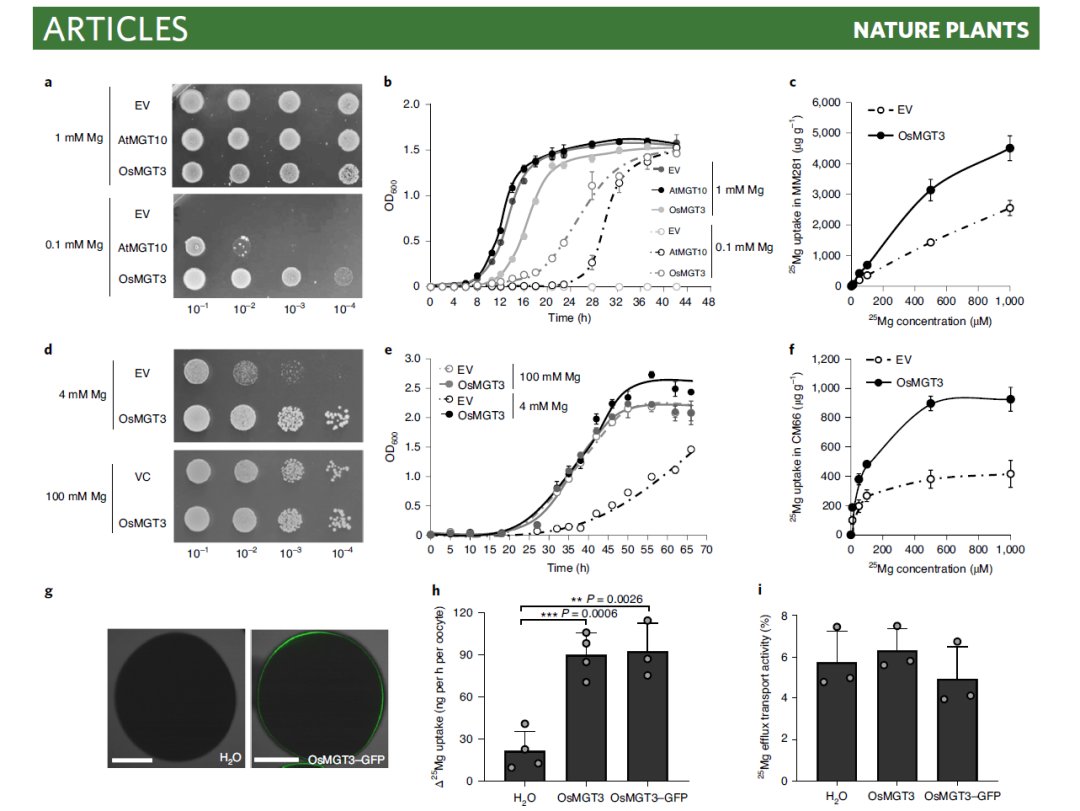
The Mg2+ion transporter gene OsMGT3, located within the chlorophyll body, is rhythmically expressed in leaf mesophyll cells, which to some extent regulates the fluctuations of Mg.
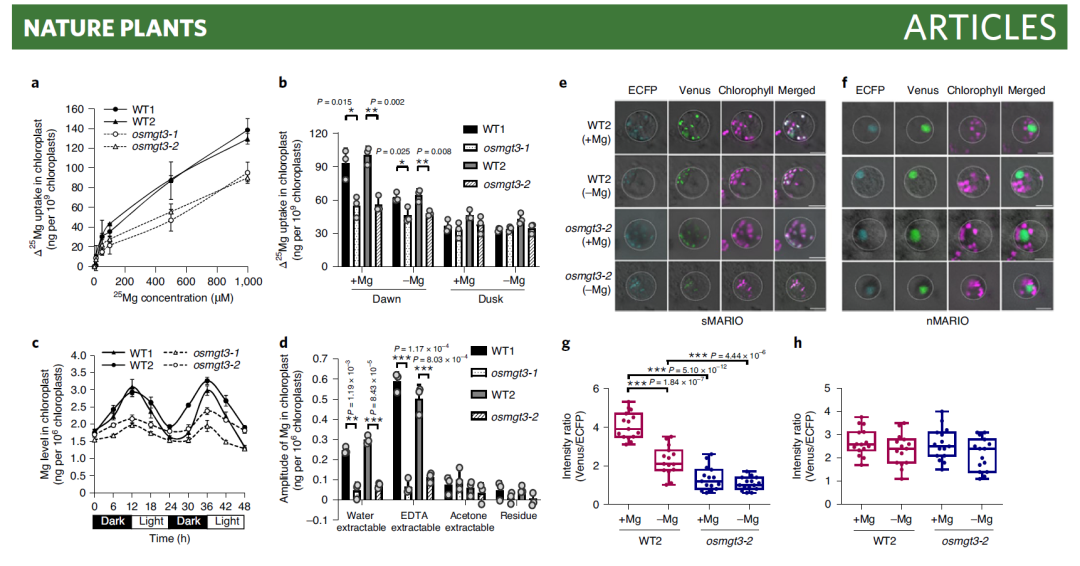
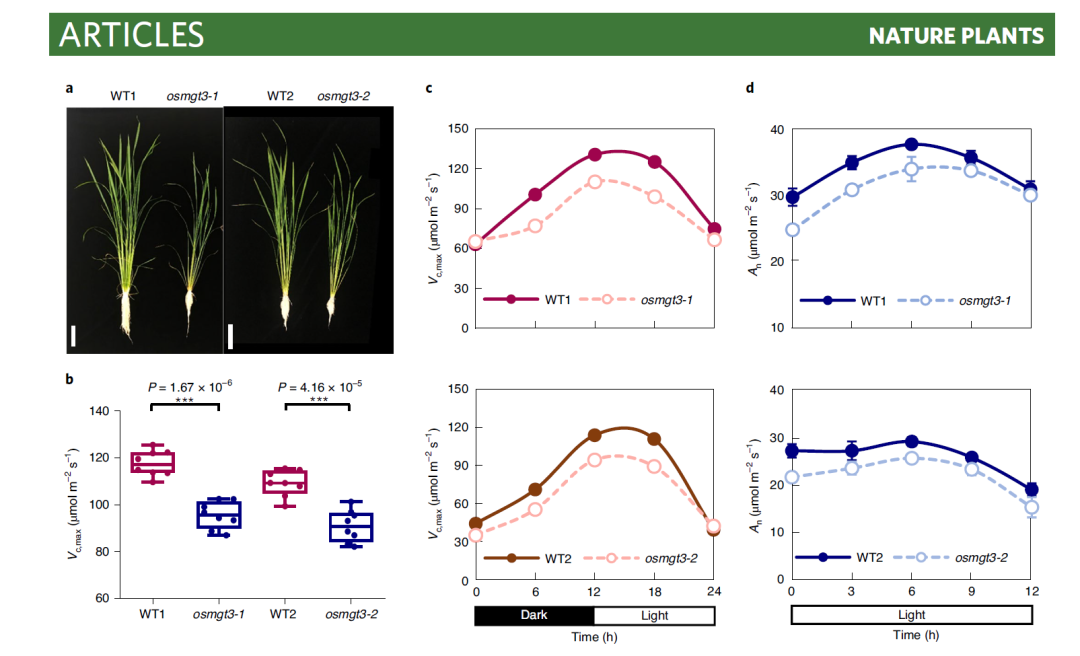
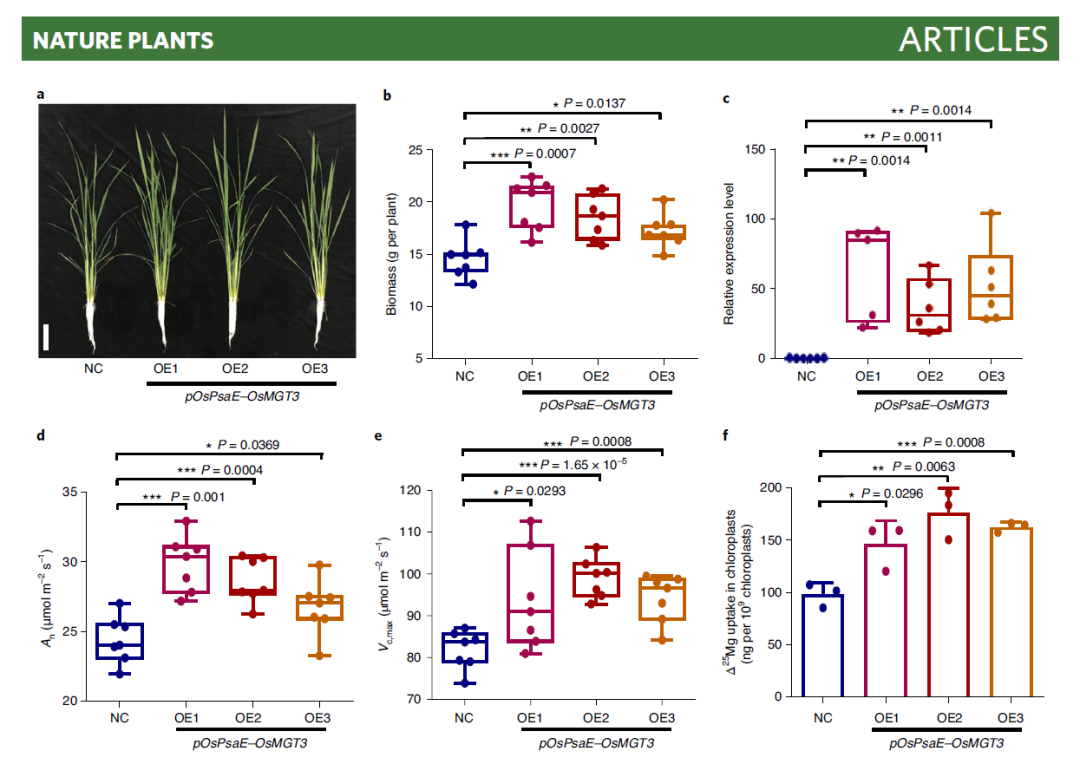
Knocking out OsMGT3 will reduce the absorption of Mg2+ions and weaken the fluctuation amplitude of free Mg2+ions in chloroplasts. Meanwhile, the activity of in situ ribulose-1,5-diphosphate carboxylase/oxygenase (Rubisco) also decreases, ultimately leading to a decrease in the rate of photosynthetic carbon assimilation. Overexpression of OsMGT3 in specific mesophyll cells significantly promotes the photosynthetic efficiency of rice.
The above phenomena indicate that in chloroplasts, Mg diurnal fluctuations dependent on the OsMGT3 transport gene regulate plant photosynthesis by affecting enzyme activity. Increasing Mg2+ion input may be a potential method to enhance plant photosynthetic efficiency.

Measurement of rice photosynthesis using LI-6800 advanced photosynthesis fluorescence measurement system
The role of LI-6800 advanced photosynthesis fluorescence measurement system in this study
Measure leaf transpiration rate E, stomatal conductance gsw, maximum carboxylation rate Vc, max, and chlorophyll fluorescence parameters using LI-6800. Control leaf temperature at 30 ℃ and relative humidity at 60%.
When measuring net assimilation rate A, transpiration rate E, and stomatal conductance gsw, leaf chamber CO2Set the concentration to 400 μ mol/mol and the light intensity to 1000 μ mol/m2/s。
Carbon dioxide response curve measurement: light intensity set to 2000 μ mol/m2/s, Initial CO2Set the concentration to 400, then set it to 300, 200, 100, 50, 0, 400, 400, 600, 800, 1000, 1200 (above CO)2The concentration units are all in μ mol/mol. After sufficient dark adaptation, measure the potential maximum photoelectrochemical quantum efficiency Fv/Fm of PSll using LI-6800.