-
E-mail
kanglinkeji@163.com
-
Phone
15601093858
-
Address
Room 707, Building B, Yangming International Apartment, No. 10 Xiaoying Road, Chaoyang District, Beijing
Beijing Kanglin Technology Co., Ltd
Solid phase extraction equipment and operating procedures
Date: 2015-05-06Read: 69
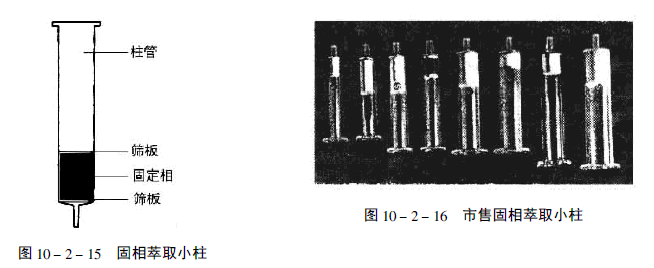
A simple solid-phase extraction device is a small column with a diameter of several millimeters (Figure 10-2-15), which can be made of glass, plastic such as polypropylene, polyethylene, polytetrafluoroethylene, or stainless steel. There is a sintered sieve plate with a pore size of 20 μ m at the lower end of the small column to support the adsorbent. If there is no suitable sintered sieve plate for the self-made solid-phase extraction column, glass wool can be added instead of the sieve plate to support the solid adsorbent and allow the liquid to flow through. Fill a certain amount of adsorbent (100-1000mg, depending on the need) on the sieve plate, and then add another sieve plate on top of the adsorbent to prevent damage to the column bed when adding samples (glass wool can also be used as a substitute if there is no sieve plate). There are currently various specifications of solid-phase extraction columns equipped with various adsorbents available for sale, which are very convenient to use (Figure 10-2-16).
The general operating procedure of solid-phase extraction is divided into the following steps.
1. Activate adsorbent
Before extracting the sample, rinse the solid-phase extraction column with an appropriate solvent to keep the adsorbent moist, which can adsorb the target compound or interfering compound. Different modes of solid-phase extraction require different solvents for column activation.
① The weakly polar or non-polar adsorbents used in reverse phase solid-phase extraction are usually rinsed with water-soluble organic solvents such as methanol, followed by rinsing with water or buffer solutions. It is also possible to rinse with a strong solvent (such as hexane) before rinsing with methanol to eliminate impurities adsorbed on the adsorbent and their interference with the target compound.
② The polar adsorbent used in solid-phase extraction is usually rinsed with the organic solvent (sample matrix) containing the target compound.
③ The adsorbent used in ion exchange solid-phase extraction can be rinsed with the sample solvent when used for samples in non-polar organic solvents; When used for samples in polar solvents, water-soluble organic solvents can be used for rinsing, followed by rinsing with an appropriate pH value and an aqueous solution containing certain organic solvents and salts.
In order to keep the adsorbent in the solid-phase extraction column moist from activation to sample addition, approximately 1ml of the solvent used for activation treatment should be maintained on top of the adsorbent after activation treatment.
2. Sample loading
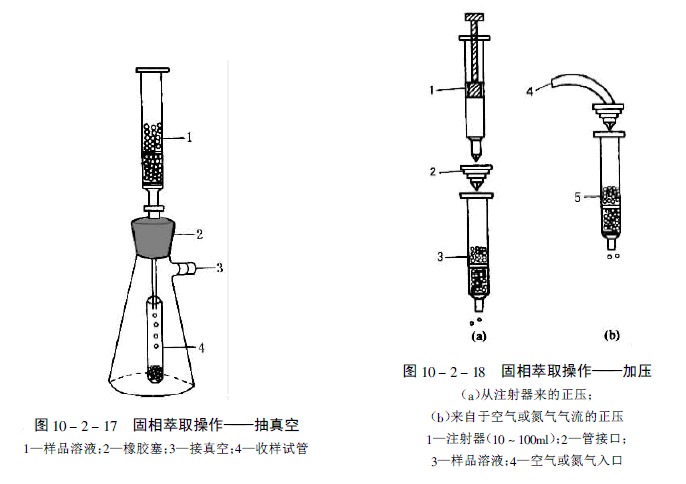
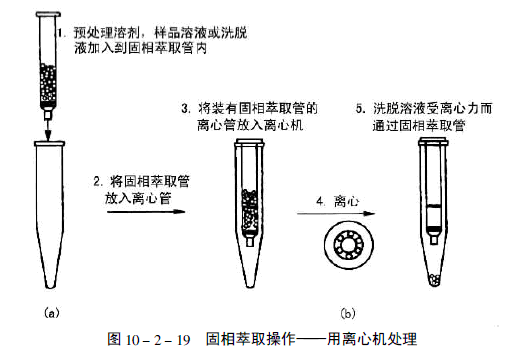
Pour the liquid or dissolved solid sample into the activated solid-phase extraction column, and then use vacuum (Figure 10-2-17), pressure (Figure 10-2-18), or centrifugation (Figure 10-2-19) to introduce the sample into the adsorbent.
3. Washing and elution
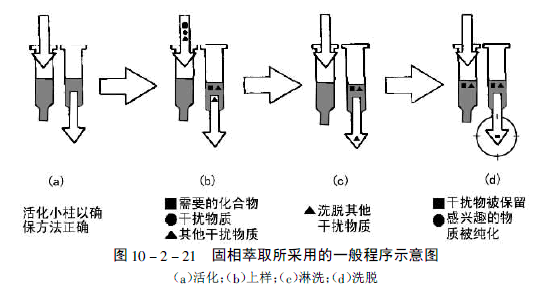
After the sample enters the adsorbent and the target compound is adsorbed, the weakly retained interfering compound can be washed off with a weaker solvent first, and then the target compound can be washed off with a stronger solvent and collected. Rinsing and elution, as described above, can be carried out by vacuum pumping, addition or centrifugation to allow the eluent or elution solution to flow through the adsorbent.
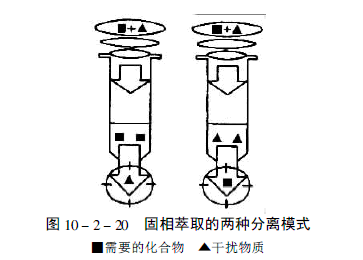
If the adsorbent is chosen to have weak or no adsorption on the target compound, but strong adsorption on the interfering compound, the target compound can be washed down and collected first, while the interfering compound is retained (adsorbed) on the adsorbent, and the two can be separated. Figure 10-2-20 shows schematic diagrams of two methods. In most cases, the target compound is retained on the adsorbent and then eluted with a strong solvent, which is more conducive to sample purification. Figure 10-2-21 shows a schematic diagram of the general procedure used in solid-phase extraction.
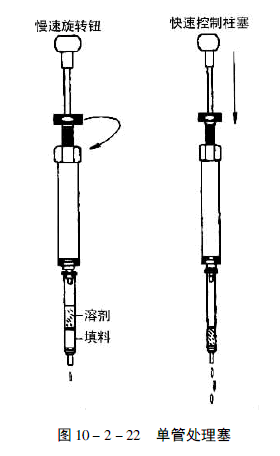
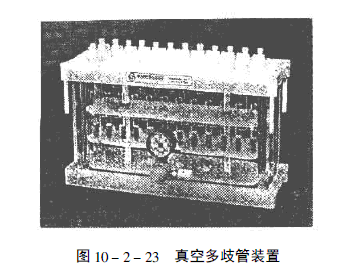
In order to facilitate the use of solid-phase extraction, many manufacturers have not only produced various specifications and models of solid-phase extraction columns, but also developed many solid-phase extraction devices to make solid-phase extraction more convenient and simple to use. Supelco provides a single tube processing plug (Figure 10-2-22) for pressurizing a single solid-phase extraction column, which can be easily used in conjunction with the solid-phase extraction column. For example, in order to enable multiple solid-phase extraction columns to be evacuated simultaneously, Supelco provides vacuum multi manifold devices with 12 and 24 apertures (Figure 10-2-23), which can simultaneously process multiple solid-phase extraction columns. Dalian Institute of Chemical Physics, Chinese Academy of Sciences (National Chromatographic Research and Analysis Center) has also developed a vacuum solid phase extraction device.
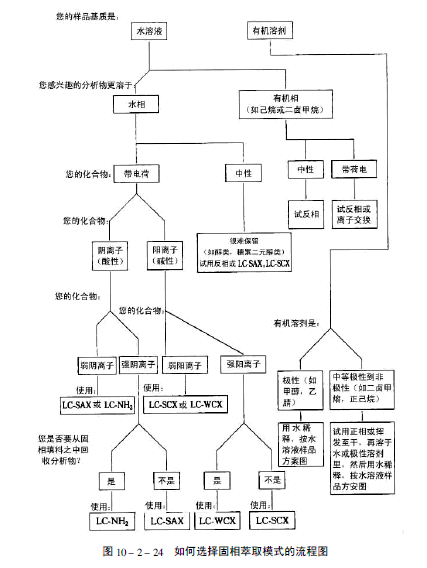
Figure 10-2-23 shows a flowchart on how to select the solid-phase extraction mode based on the properties of the sample matrix (solvent), target compound, and interfering compound.