-
E-mail
acrichi@qq.com
-
Phone
18401471972
-
Address
801A, Building A, U Valley Science and Technology Innovation Center, Xingmao 1st Street, Tongzhou District, Beijing
Beijing Juxin Chasing Wind Technology Co., Ltd
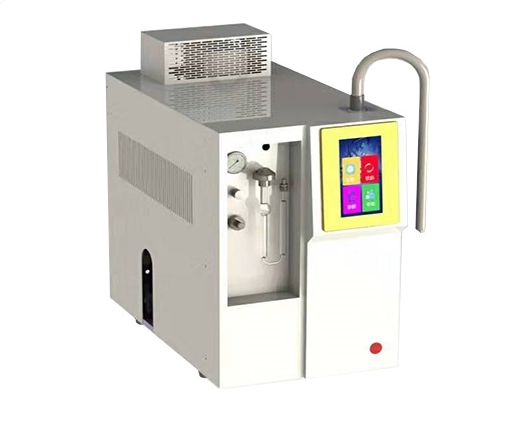
The guarantee method for the safe operation of the fully automatic solid-liquid integrated blowing and capturing instrument
Date: 2025-11-19Read: 3
The guarantee of the safe operation of the fully automatic solid-liquid integrated blowing and capturing instrument needs to start from core aspects such as operation specifications, equipment maintenance, and environmental control. The specific guarantee methods are as follows:
1、 Operating standards: Strictly follow standard procedures
1. Power on self-test and preheating
After turning on the power, wait for the instrument to complete self inspection to ensure that all components (such as the air circuit, temperature control system, sensors) are in normal condition.
Some instruments need to be preheated to the set temperature (such as the temperature of the blow off tube and capture tube) to ensure the accuracy of the analysis results.
2. Parameter settings
Reasonably set parameters such as blowing temperature, time, and capture temperature based on the properties of the sample (such as volatility and concentration) and analysis requirements. Avoid blindly pursuing high sensitivity while ignoring the limits of the equipment.
For example, for liquid samples, the supernatant should be taken to avoid particles blocking the gas path; Solid samples need to be ground to uniform particles to ensure gasification efficiency.
3. Sample processing and injection
Control the injection volume to avoid excessive sample residue or overflow. Regularly check the cleanliness of the injection needle to prevent blockage or contamination.
Ensure the correct position and depth of the needle during injection to avoid damaging the instrument due to operational errors.
2、 Maintenance of fully automatic solid-liquid integrated blowing and capturing equipment: regular inspection and maintenance
1. Maintenance of pneumatic system
Airtightness inspection: Apply soapy water to the gas path joints (such as chromatographic column interfaces, trap tube flanges), observe for the formation of bubbles, and promptly tighten and loosen the joints or replace seals (such as O-rings).
Air path cleaning: Regularly clean the injection pipeline to remove particulate matter or condensed water and prevent blockage. Replace filter cartridges (such as activated carbon and moisture filters) to ensure gas purity.
Flow calibration: Use soap foam flowmeter or standard flowmeter to calibrate the blowing gas flow rate (with an error within ± 5%), to avoid flow fluctuations affecting the analysis results.
2. Maintenance of temperature control system
Temperature calibration: Use a standard thermometer or thermocouple to check whether the temperature of the purge tube, trap tube, transmission line, etc. is consistent with the set value (deviation should be ≤± 2 ℃). If there is an abnormality, contact the manufacturer to adjust the temperature control module.
Heating element cleaning: Regularly clean the dust on the cooling fan, heating block and other components to prevent overheating and performance degradation.
3. Replacement of core components
Capture column maintenance: The capture column is the core component of the instrument and needs to be regularly purified (such as high-temperature baking) or replaced to avoid saturation of the adsorbent and loss of target compounds.
Injection needle and transmission pipeline: Regularly clean the injection needle to prevent sample residue; Replace aging or contaminated transmission pipelines to avoid cross contamination.
3、 Environmental Control of Fully Automatic Solid Liquid Integrated Blow and Capture Instrument: Optimizing Operating Conditions
1. Temperature and humidity requirements
The normal working conditions of the instrument are: ambient temperature of 5 ℃~35 ℃, relative humidity ≤ 85%. Avoid operating in high temperature, high humidity, or strong magnetic field environments to prevent electronic components from getting damp or interfering.
2. Ventilation and dust prevention
Maintain good ventilation around the instrument to avoid dust accumulation. Regularly clean the instrument casing and internal components (such as circuit boards and cooling fans), and use a vacuum cleaner or soft bristled brush to remove debris.
3. Power supply and grounding
Ensure stable power supply and good grounding to avoid electrical shock or voltage fluctuations that may damage the instrument.