-
E-mail
acrichi@qq.com
-
Phone
18401471972
-
Address
801A, Building A, U Valley Science and Technology Innovation Center, Xingmao 1st Street, Tongzhou District, Beijing
Beijing Juxin Chasing Wind Technology Co., Ltd
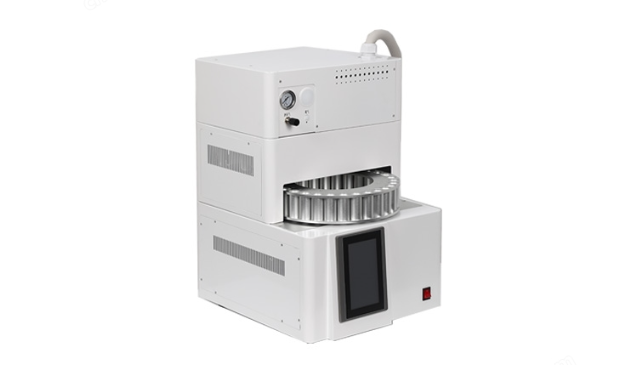
A fully automatic headspace sampler typically consists of the following core systems
Date: 2025-10-24Read: 2
The fully automatic headspace sampler is a pre-processing device used for analytical instruments such as gas chromatography (GC) and liquid chromatography (LC), which can automatically complete the extraction and injection process of volatile components in sample bottles. It usually consists of the following core systems, which cooperate with each other to achieve efficient and accurate sample pre-processing:
1. Sample loading and positioning system
Function: Responsible for accurately placing the test sample bottle in the heating or sampling position, and ensuring that each sample enters the injection process in sequence.
Key components: including circular or linear turntables, robotic arms, and positioning devices driven by stepper motors. The system can automatically identify sample information through barcode recognition or RFID technology, avoiding human errors. For example, in batch analysis, the system will grab sample bottles one by one according to the preset program and perform precise alignment.
Features: Supports multiple specifications of sample bottles (such as 20mL and 40mL headspace bottles), suitable for containers of different heights and diameters; Equipped with anti-collision design to prevent damage.
2. Fully automatic headspace sampler constant temperature incubation/equilibrium system
Function: Heating and insulation of the sample at a controllable temperature to promote the full escape of the tested component from the liquid matrix to the top gas space (i.e. "headspace"), achieving gas-liquid equilibrium.
Implementation method: Adopting a closed metal heating module array, each position is independently temperature controlled (accuracy ± 0.5 ℃), covering the range from room temperature to high temperature (such as room temperature~200 ℃). The internal circulating fan ensures uniform heating and reduces errors caused by temperature gradients. Some high * models are also equipped with oscillation function to accelerate the diffusion process.
Application scenario: Suitable for experiments that require strict control of volatilization conditions, such as drug residue detection and food packaging migration analysis.
3. Sampling needle and valve control system
Function: Extract a certain volume of gas sample from the top of the sample bottle and transfer it to a chromatograph or other detection equipment.
core components
High precision quantitative ring: A stainless steel quantitative ring with a fixed volume (such as 1mL, 5mL) ensures consistency in sampling volume each time; It can also be paired with electronic pressure sensors to achieve dynamic pressure compensation sampling.
Multi way valve group: By switching the path through an electromagnetic valve, complete the operation steps of flushing, filling, injection, etc. For example, a six way valve can alternately connect the sample circuit and the carrier gas flow path to avoid cross contamination.
Inert gas protection: Use high-purity nitrogen or helium as the carrier gas to prevent oxygen from interfering with the reaction of sensitive compounds.
Advantages: Supports multiple extraction modes (multiple sample inputs and outputs to improve recovery), suitable for trace analysis needs.
4. Fully automatic headspace sampler transmission pipeline and interface system
Function: Safely and quickly transport the extracted gas sample to the analytical instrument, while minimizing dead volume and adsorption losses.
Design points: Use low adsorption inert materials (such as PTFE pipes), optimize the inner diameter to reduce peak broadening effect; Configure temperature control and heat tracing devices to prevent high boiling point substances from condensing and blocking pipelines. In addition, it is possible to integrate a dehumidification filter to remove moisture and impurities.
Compatibility: Compatible with GC/LC automatic sampling port standard interfaces from different manufacturers, supporting customized connection solutions.
5. Automation control and software management system
Hardware foundation: A microprocessor based control motherboard coordinates the timing of various component actions, including motor rotation, valve opening and closing, temperature regulation, etc. The touch screen human-machine interface provides intuitive operation guidance and real-time monitoring screens.
Software functions:
Method editing: Users can customize parameter combinations such as heating time, sampling depth, and flushing frequency.
Sequential operation: Automatically queue tasks for batch processing of multiple samples and record operation logs.
Fault diagnosis: Real time monitoring of abnormal pressure, gas leakage, and other situations to alert maintenance needs.
Data export: Generate GLP compliant report files, including sample ID, concentration values, chromatogram overlay comparison, and other functions.