-
E-mail
dfyuantong@163.com
-
Phone
13301057943
-
Address
1-603 Jialian Times Square, No. 6 Gulou South Street, Changping, Beijing
Beijing Dongfang Yuantong Technology Development Co., Ltd
The meaning and working principle of radioimmunoassay
Date: 2025-12-06Read: 0
1、 What does radiation immunity mean?
Radioimmunity is The combination of "radioactive isotope labeling" and "immune response" technologies.
²Immunity:Refers to utilizing the interaction between antigens and antibodiesHighly specific binding reactionJust like a key can only open one lock, an antibody typically only recognizes and binds to a specific antigen (analyte).
²Radiation:Refers to the use of放射性同位素As you mentioned, iodine-125) As a "marker" or "label", it provides a signal that can be detected with high sensitivity for immune responses.
Simply put,Radioimmunoassay is the use of radioactive substances asLuminous marker pen "is used to track and measure extremely small amounts of target substances in immune reactions.
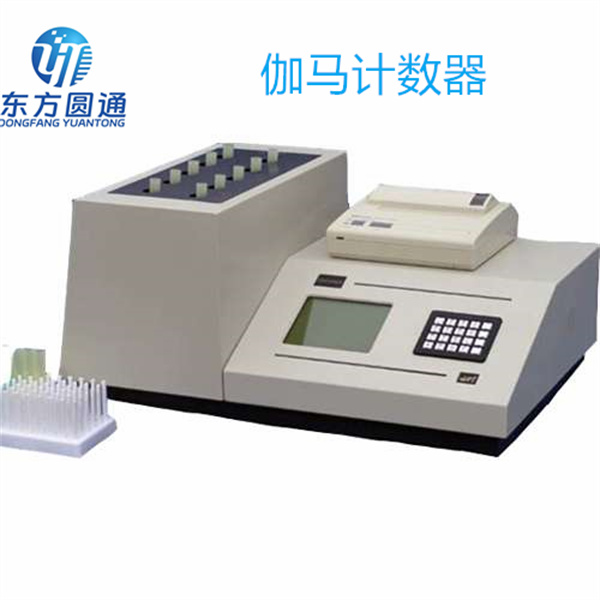
Its two main branches are:
1. Radioimmunoassay: It labels antigens.
2. Immunoradiometric analysis: labeled with antibodies.
(The differences will be explained in detail later)
2、 Core working principle: Competitive combination analysis
Taking the classic radioimmunoassay as an example, its core idea is Competition.
Imagine a scene:
²fixed quantitySeat ": Adding a limited number of specific antibodies (fixed on the test tube wall or particles) to the reaction system for the test substance.
²two kindsCompetitors ":
²Known quantityLabeled competitors ": labeled antigens with radioactive isotopes (such as I-125) that have the same structure as the analyte. It is radioactive.
²Unknown quantityUntamed competitors ": The real antigen to be tested in the sample (such as a certain hormone in the patient's blood). It is not radioactive.
²Competition rule: The labeled antigen and the test antigen will competitively bind to the limited number of antibodiesThe seat.
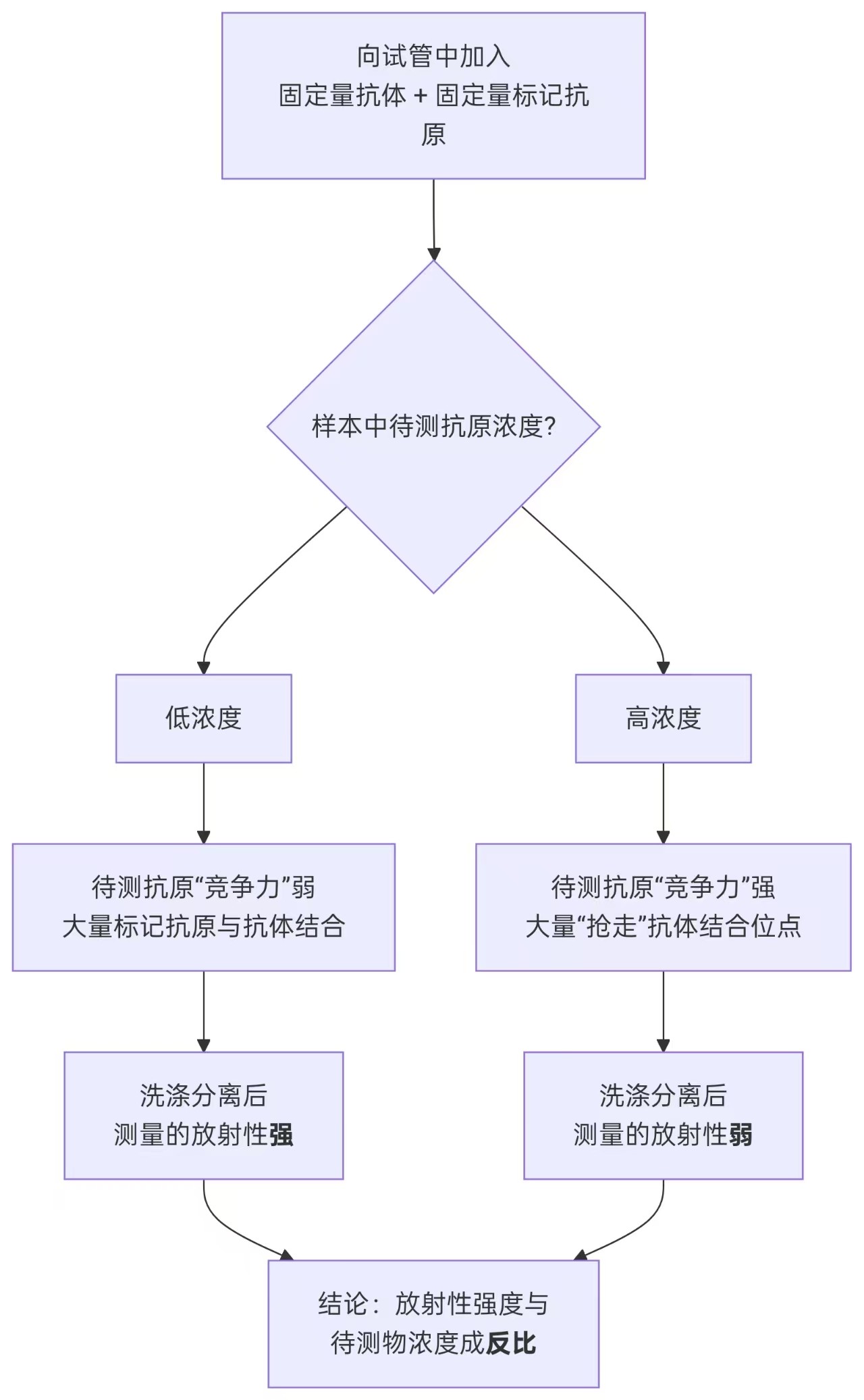
Key logic (backward relationship):
²If the concentration of the antigen to be tested in the sample is high, it willTake away most of the antibody seats.
²Result: The number of labeled antigens that can bind to antibodies decreases.
²Finally, by measuring the radioactive intensity bound to the antibody, the concentration of the antigen to be tested in the sample can be calculated in reverse.
²The stronger the measured radioactivity, the more labeled antigens are bound, which means that there are fewer test antigens in the sample. Vice versa.
This process can be visually demonstrated in the following figure:
3、 Key steps and equipment roles
1. Incubation and competition:Mix the sample, labeled antigen, and antibody, and incubate under certain conditions to allow the competitive reaction to fully proceed.
2. Separation:This is the most crucial step. After the reaction is complete, it is necessary toThe parts that bind to antibodies and those that do not bind(Free)Part of itSeparate them. Common separation methods include centrifugation (using magnetic particles coated with antibodies or secondary antibodies), adsorption, filtration, etc.
3. Measurement:Place the binding part (or free part, usually measuring the binding part) inGamma immune counterIn the middle.
²The instrument will detect labeled isotopes (such asI-125) emits gamma rays and provides a counting rate.
²There is an inverse relationship between the radioactive intensity and the concentration of the antigen to be tested in the sample.
4. Quantification:By simultaneously measuring a series of known concentrationsreference standard, can draw a linestandard curve(Based on radioactive intensity)Y-axis, with standard concentration on the X-axis. By substituting the measured radioactive intensity of an unknown sample into the curve, the precise concentration can be calculated.
4The difference between RIA and IRMA
²RIA:As mentioned above, the antigen was labeled using a competitive method. Suitable for detecting small molecule antigens (such as hormones and drugs).
²IRMA:Labeling antibodies using non competitive methods (also known asThe sandwich method.
²Using excessive labeled antibodies, directlyCapture the antigen in the sample to form an "antibody antigen labeled antibody" complex.
²measureThe measured radioactive intensity is directly proportional to the concentration of the antigen being testedThe more antigens, the more complexes are formed, and the stronger the radioactivity.
²Sensitivity is usually higher and suitable for large molecular proteins.
Summary and Significance
The essence of the principle of radioimmunoassay lies in:
Using radioactive isotopes to provide ultra-high sensitivity detection signals and utilizing antigens-The specific binding of antibodies achieves precise recognition, and through competition or sandwich design, difficult to measure biomolecule concentrations are converted into radioactive physical signals that can be accurately counted.
InIn the mid to late 20th century, it was used to measure blood and body fluidsExtremely trace substances(such as hormones, tumor markers, viral antigens)gold standardThe sensitivity can reachPick levelThe gamma immune counter you mentioned is the core measuring device designed for this purpose.
Although many tests have been made safer and faster nowadaysNon radioactive immune methodsAlthough replaced by methods such as chemiluminescence and fluorescence immunoassay, the principle of radioimmunoassay remains the cornerstone of all modern quantitative immune analysis techniques, and its design philosophy still has a profound impactIn the field of in vitro diagnostics.
For technical issues related to gamma technology, please consult Genesys China agent: Technical Consultant of Beijing Dongfang Yuantong Technology Development Co., Ltd