-
E-mail
2212240822@qq.com
-
Phone
18911395947
-
Address
514, Unit 1, Building 2, Xingfu Square, Gu'an County, Langfang City, Hebei Province
Beijing Beiguang Jingyi Instrument Equipment Co., Ltd
The core characteristics of broadband impedance dielectric spectrometer
Date: 2025-12-11Read: 0
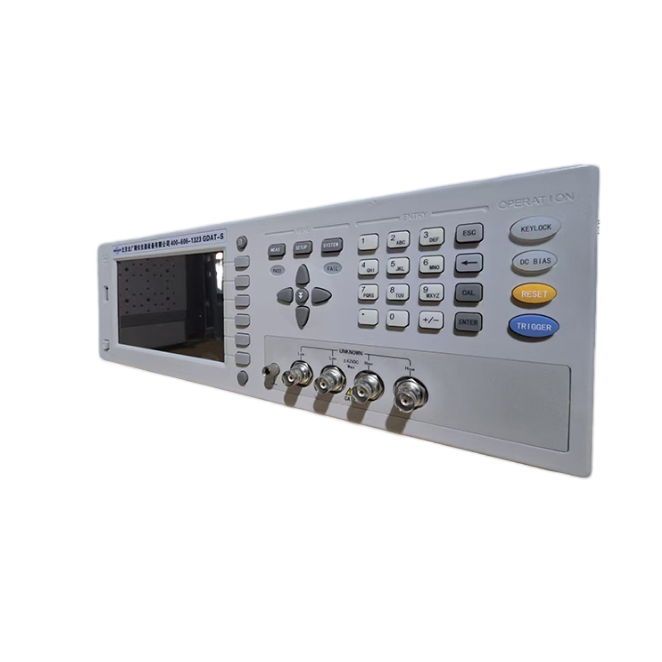
The core characteristics of a broadband impedance dielectric spectrometer can be summarized as "three widths and one height": ultra wide frequency range, ultra wide impedance measurement range, wide temperature range, and high accuracy.
Extremely wide frequency range: covering an ultra wide frequency range from μ Hz (microhertz) to GHz (gigahertz), such as 3 μ Hz to 40MHz or 3 μ Hz to 3GHz, capable of capturing the dielectric response of materials at extremely low to high frequencies.
Wide impedance measurement range: The measurement range ranges from extremely low 0.01 Ω to 100T Ω (teraohms), and can analyze various materials from conductors to insulators.
Temperature control: Equipped with a high-precision temperature control system, the temperature range is usually -160 ℃ to 400 ℃, and the temperature control accuracy can reach ± 0.01 ℃, used to study the performance changes of materials at temperature.
High measurement accuracy: With measurement accuracy, such as loss accuracy (tan δ) of up to 10 ⁻⁵, it can accurately characterize the extremely low loss characteristics of materials.
These characteristics make it a powerful tool for studying the dielectric properties, impedance characteristics, and temperature dependence of materials.
The core principle of broadband impedance dielectric spectrum analyzer is based on alternating electric field, which evaluates the dielectric and conductive properties of materials by measuring their impedance characteristics at different frequencies (such as complex impedance, dielectric constant, loss tangent, etc.).
Specifically, the instrument will apply a variable frequency AC test signal to the material being tested, and synchronously measure the voltage and current flowing through both ends, as well as the phase difference between them. According to Ohm's law and phase sensitive detection technology, the complex impedance parameters of the material can be obtained by calculating the ratio of voltage to current and the phase difference. By scanning at different frequencies, the impedance spectrum of the material can be obtained to analyze its frequency dependence.
The core keywords of a broadband impedance dielectric spectrometer are: ultra wide frequency range, ultra wide impedance measurement range, high accuracy, wide temperature range, four electrode method, equivalent circuit analysis, dielectric relaxation, complex impedance, dielectric constant, and loss tangent.
These keywords cover its technical characteristics from hardware design (such as four electrode method to eliminate contact impedance) to software analysis (such as 70 equivalent circuit models), as well as core application scenarios in materials science, electrochemistry, and other fields.